
Angela Rayner concludes her resignation speech in Commons
Angela Rayner is to launch a battle against Sir Keir Starmer after the Governent watered-down her workers’ rights laws. The former Deputy Prime Minister championed Labour’s Employment Rights Bill before she was forced to resign from the Cabinet. But last week the Government said it would scrap a key part of the Bill, giving workers protection against unfair dismissal from their first day in the job. Instead, this protection will come into force after six months.
Ministers said the climbdown was essential in order to prevent the entire Bill being blocked in the House of Lords, but angry unions and left-wing MPs condemned the u-turn. And now, Ms Rayner is to take on the Government in her first major intervention since resigning in September. She will push for part of the workers’ rights Bill to be brought in sooner.

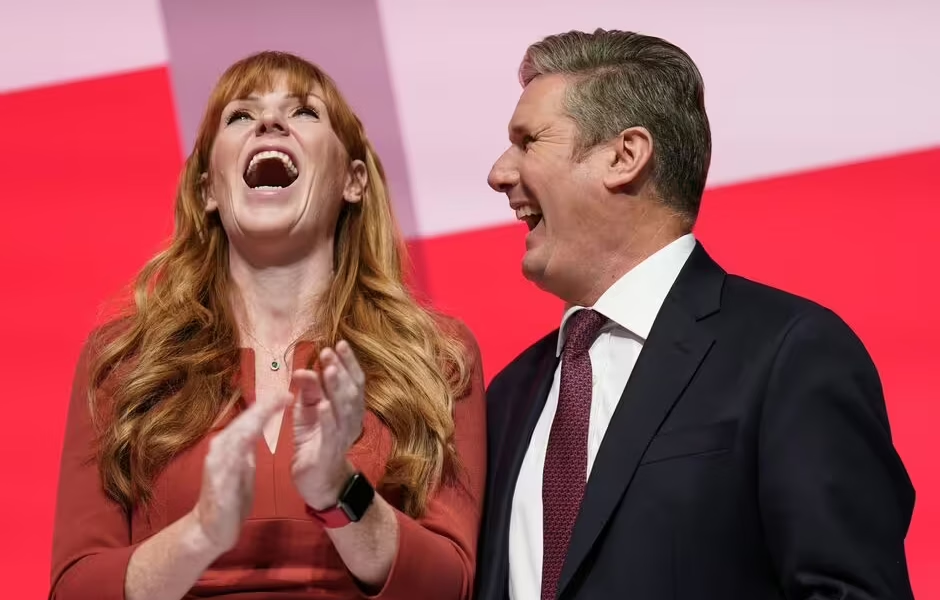
Angela Rayner and Keir Starmer, before her resignation from the Cabinet (Image: Getty Images)
The former deputy prime minister is to table an amendment seeking to have new protections apply from 2026, rather than 2027 as is currently planned. She and former minister Justin Madders are understood to have been speaking to MPs and union colleagues as they prepare the amendment together.
An ally of Ms Rayner said: “As key architects of the Bill, they know it inside out. They will be spearheading efforts to ensure the best possible package of reform is delivered and implemented to an ambitious timeline. They are expected to work with Labour colleagues to push for further commitments from ministers.”
The pair are set to argue that because the change is now a reduction of the existing qualifying period of two years, the time set out for widespread consultation and for employers to familiarise themselves with it is no longer needed. The two backbenchers will also push for workers on zero-hour contracts not to be locked out of new rights and make sure employers face fines if they stop trade unions from talking to workers.
A source said there was “considerable anger” among Labour MPs that a manifesto pledge had been blocked by peers, but also a “growing consensus” that parts of the Bill could be implemented faster to benefit working people.
One Labour MP involved in the discussions said: “This can’t be the thin of the wedge and we won’t let it be.
“Not only can there be no more watering down, but there is now growing appetite on the Labour benches to go further and faster in delivering tangible rights at work that people can feel in their day-to-day lives. We’re drawing a line in the sand.”
Another said: “Even with last week’s changes, reducing the qualifying period for protection from unfair dismissal from 24 months to six would benefit millions of working people with greater security at work. Why should they have to wait until 2027 for better protections? There’s nothing now stopping the Government from delivering at pace.”
Other day-one rights to parental leave and sick pay are still set to go ahead, coming into effect in April 2026. Elsewhere, Labour MP Andy McDonald has brought forward parliamentary plans to restore all day-one rights to the Bill as it continue to undergo scrutiny.
He has tabled a motion to disagree with the House of Lords, which removed the unfair dismissal rights.
Mr McDonald, the MP for Middlesbrough and Thornaby East, said: “This amendment restores the Bill to the version previously agreed by the Commons – it protects the general election manifesto commitment to day-one unfair dismissal rights.
“I have tabled it because the unelected House of Lords should not be able to undermine a central pledge that our party has repeatedly reaffirmed. The Lords’ changes would weaken the rights proposed in the manifesto and risk entrenching insecurity for workers, contrary to the New Deal for Working People.
“Unions need partners in Parliament—Labour MPs who are prepared not just to vote for the New Deal for Working People, but to defend it, make the case for it, and challenge any attempt to water it down.”