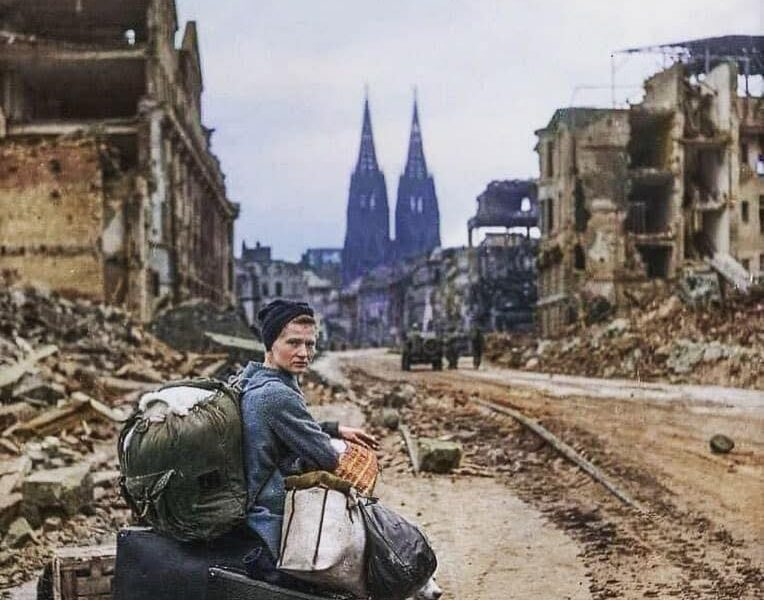
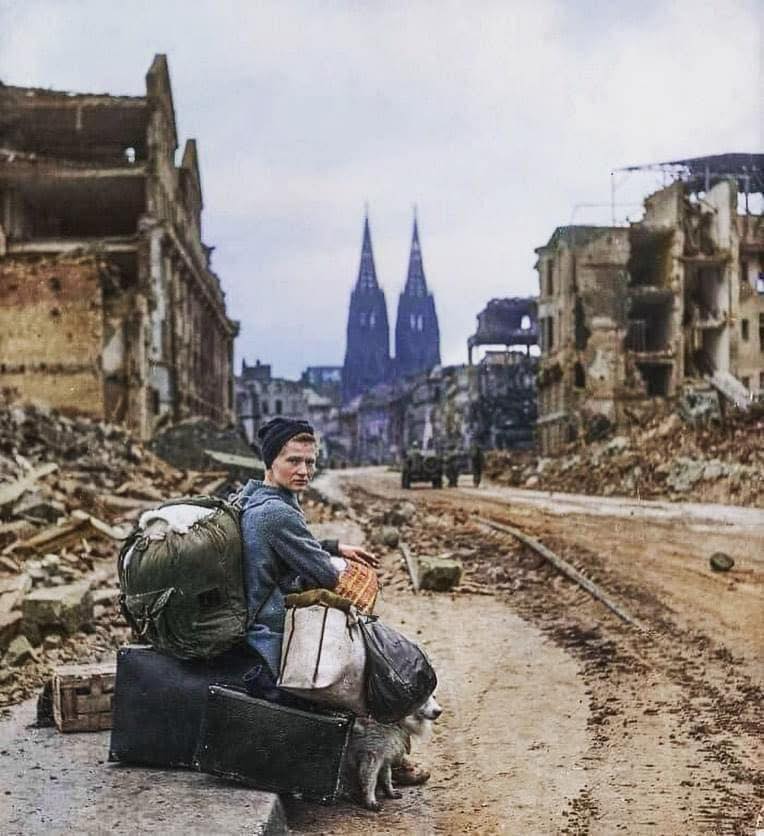
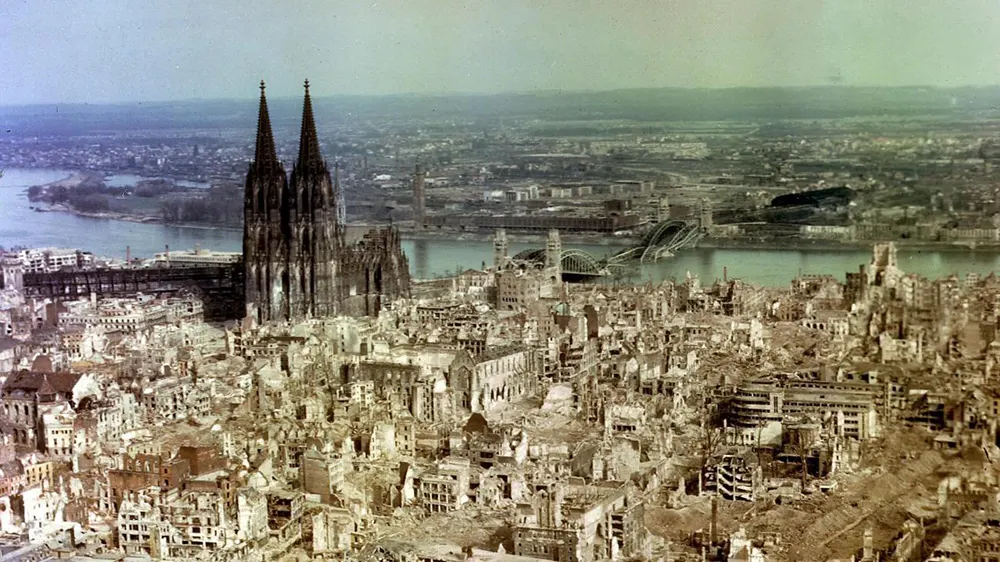
Cologne Cathedral rises high above the ruins of the city after the Allied bombing raids in 1944.

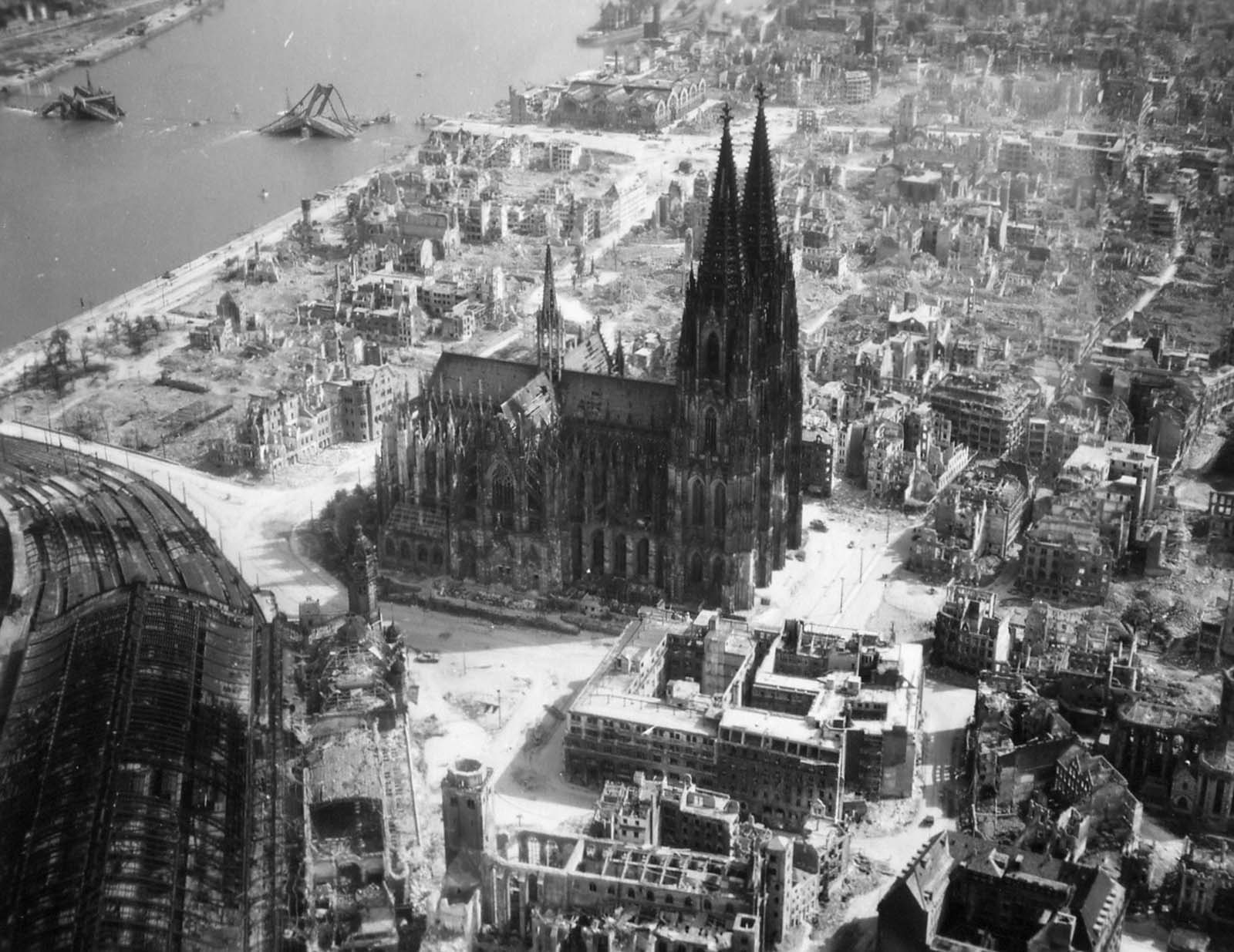
Here is a black and white aerial photograph of the famous Cologne Cathedral from the Second World War. The cathedral was hit by bombs fourteen times during the war. It did not collapse, but instead stood tall above a city otherwise razed to the ground.
The twin towers are believed to have served as an easily recognizable navigational landmark for Allied aircraft that penetrated deeper into Germany in the later years of the war. This could be one reason why the cathedral was not destroyed.
The attacking pilots used the cathedral as a landmark, but in the final days, when the Allies had complete air superiority, this was probably less important. Many military personnel wanted to pay their respects to the buildings because of their cultural significance.
Bombers at lower altitudes were more accurate in hitting their targets, but those at higher altitudes were notoriously inaccurate. Pilots were lucky if even a fraction of their bombs landed on their intended targets. Targeting a cathedral, even one as large as this, was simply very difficult with the technology of the time.
.jpg)
The city of Cologne was completely bombed.
After the war, repairs to the building were completed in 1956. An emergency repair carried out in 1944 in the base of the northwest tower, using inferior bricks from a nearby war ruin, remained visible as a reminder of the war until 2005, when it was decided to reconstruct this section to its original appearance.
Construction of Cologne Cathedral began in 1248 and was interrupted in 1473, leaving it unfinished. Work resumed in the 19th century and was completed in 1880 according to the original plan.
It is 144.5 m long, 86.5 m wide, and its towers are approximately 157 m high. The cathedral is the largest Gothic church in Northern Europe.
.jpg)
Allied bombers over Cologne, 1944.
In early 1942, the RAF Bomber Command under Sir Arthur Harris began to intensify the growing strategic air offensive of the Allies against Germany.
These attacks targeted factories, railway depots, shipyards, bridges, and dams, as well as the towns and cities themselves. Their aim was to destroy the German armaments industry and deprive the civilian population of their homes, thereby weakening their willingness to continue the war.
The characteristic feature of the new program was the emphasis on area bombing, in which city centers were the target of nighttime attacks.
On the night of May 30th to 31st, over 1,000 bombers were sent to Cologne, where they caused severe damage to a third of the city’s built-up area.
In total, the German city of Cologne was bombed in 262 separate Allied air raids during World War II, all by the Royal Air Force (RAF).
In total, the RAF dropped 34,711 tons of bombs on the city. During the war, 20,000 people died in Cologne as a result of air raids.
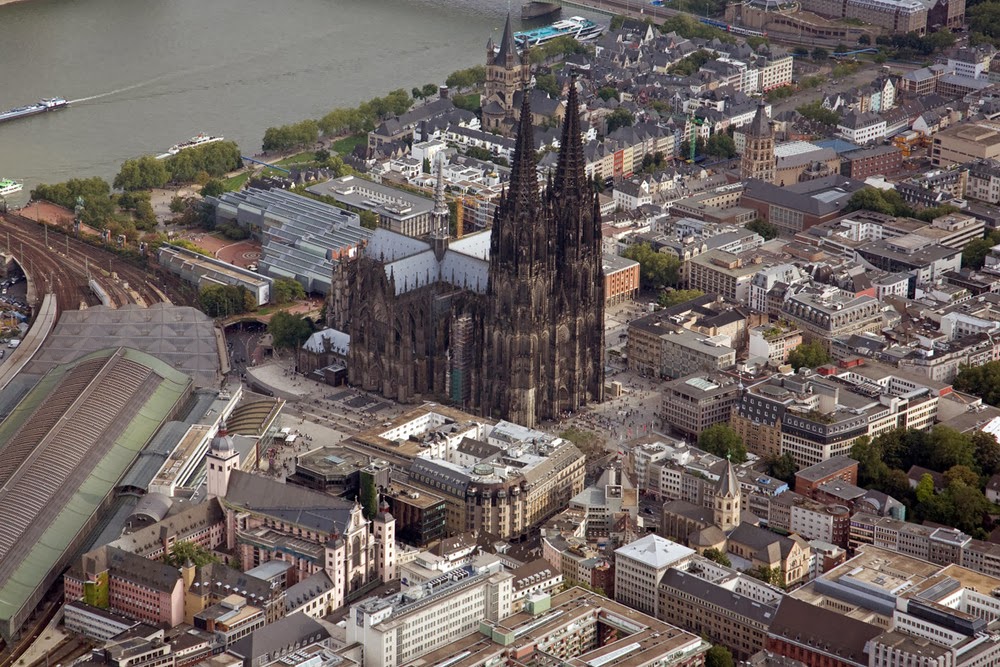
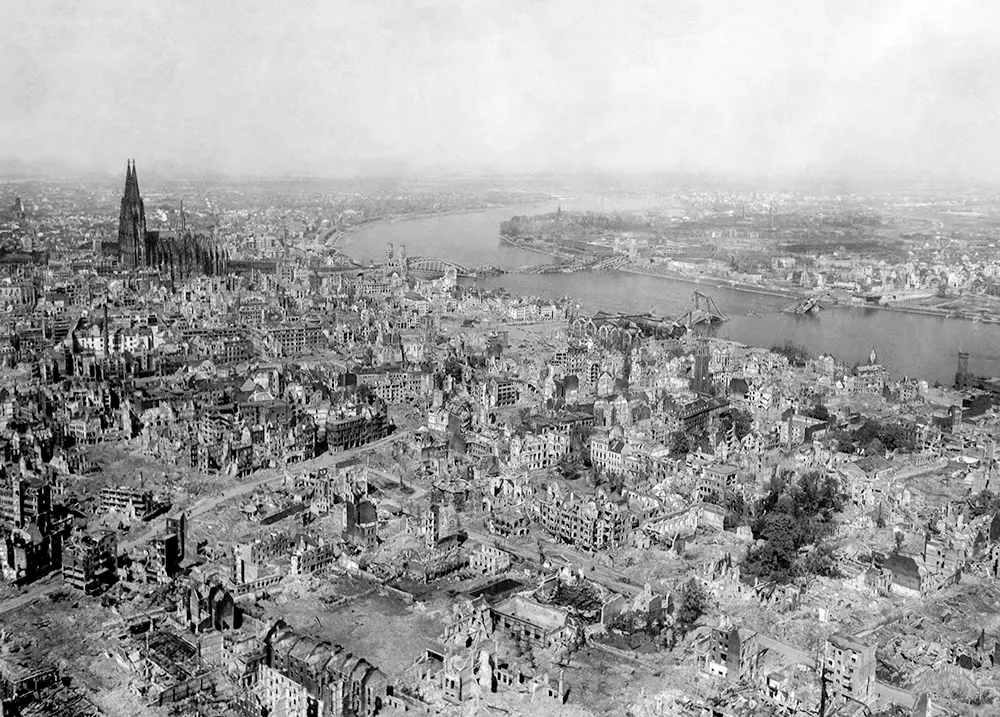
Cologne was destroyed in 1945.
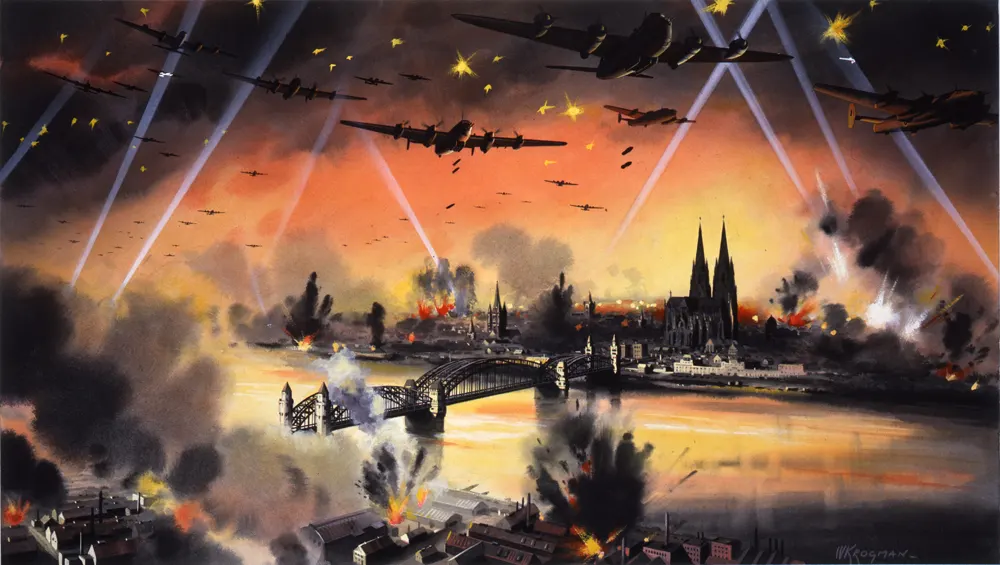
Official British war art depicting a bombing raid on Cologne. Cologne Cathedral is clearly visible. It survived the war despite being hit dozens of times by Allied bombs.

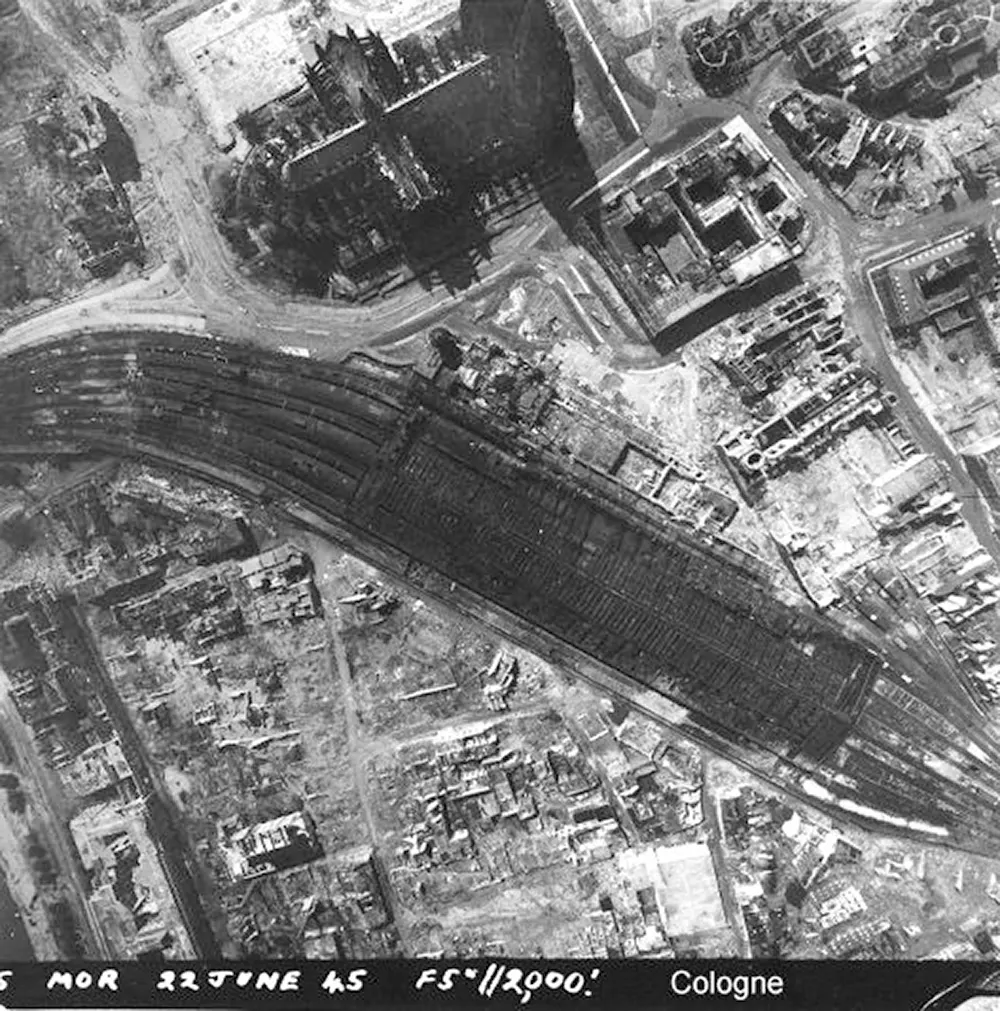
Cathedral and main train station.

A photo showing the damage to the cathedral.

Image of the cathedral. Note the bomber’s shadow.


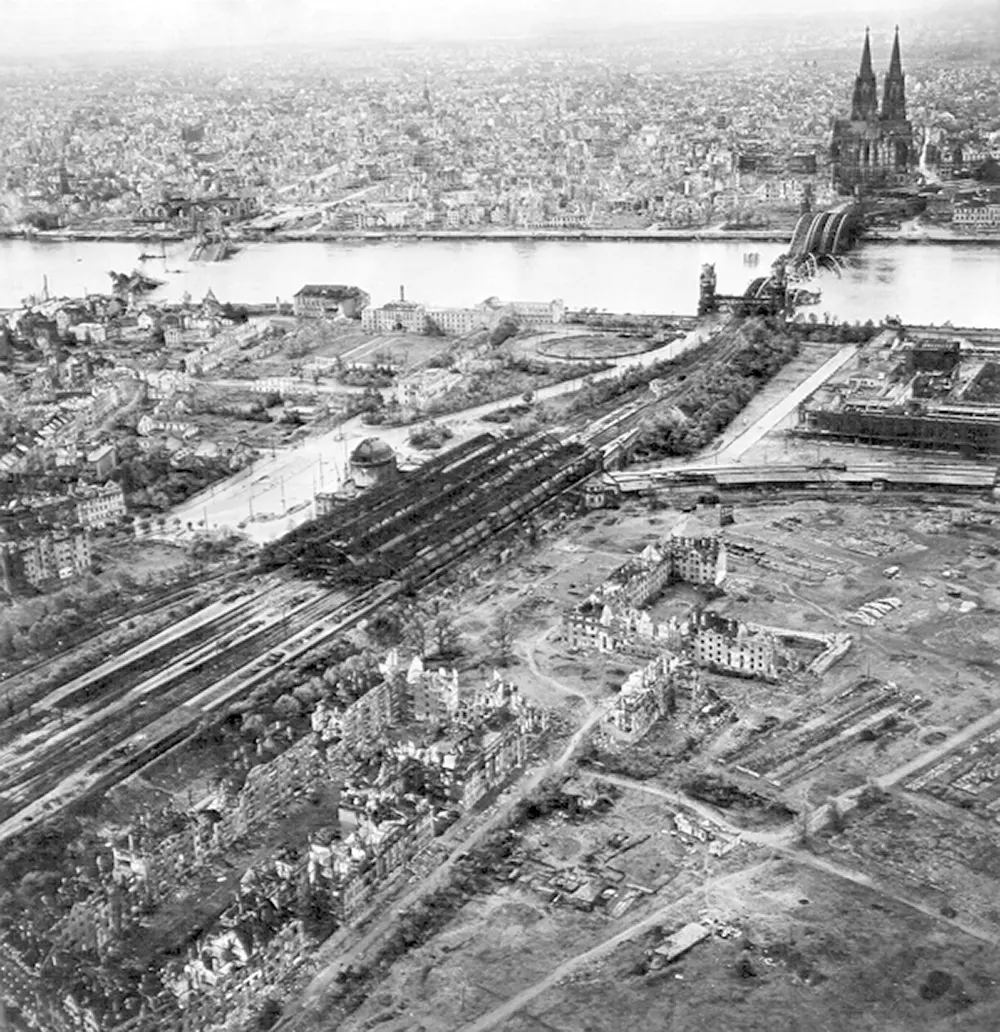

American soldiers in Cologne Cathedral, 1945.

On March 6 and 7, 1945, Allied troops captured the western part of Cologne. The German army still held the eastern bank of the Rhine and attacked the Allies with artillery. The rest of Cologne was taken between April 12 and 15, 1945. By April 16, a strip of land approximately 500 meters wide along the Rhine had been declared a restricted zone, and the cathedral was located precisely within this area.


Related Posts
THE LAST MOMENTS OF WILLI HEROLD: The story of the “Executioner of Emsland” and his crimes in the Second World War _de503
WARNING: VERY SENSITIVE HISTORICAL CONTENT!  This article deals with events from the final weeks of World War II and a post-war trial. The text serves solely for historical context and…
THE BEAUTIFUL SOLDIER, THE FIRST WOMAN TO BE PUBLICLY EXECUTED BY THE NAZIS IN WORLD WAR II: After three days of torture, Elżbieta Zahorska – the courier who never spoke a word – became a symbol of martyrdom for a free Poland. _de507
EXTREMELY SENSITIVE CONTENT – ONLY FOR INDIVIDUALS 18 YEARS OLD AND OVER This article deals with the first public execution of a woman in occupied Europe during the Second World War. The…
FROM ATTRACTIVE PILOT TO NAZI MONSTER: Herbert Cukurs – The “Butcher of Riga”, who, despite 20 years in hiding, was tracked down and executed by Israeli agents for the murder of 30,000 Jews _de504
WARNING: VERY SENSITIVE HISTORICAL CONTENT This article deals with the genocide during the Holocaust in Latvia and the fate of one of the perpetrators after the war. It is intended solely for…
THE TRAGIC FATE OF THE PRISONED SOVIET WOMEN SOLDIERS IN THE WAR: How the Germans treated them – The forgotten sides of history _de502
WARNING: VERY SENSITIVE HISTORICAL CONTENT This article deals with the treatment of prisoners of war on the Eastern Front (1941–1945). It is for educational and commemorative purposes only. There is absolutely no intention to incite violence…
JUSTICE FOR 6,000 LATVIAN SOULS: The horrific execution of the Nazi butchers in the Latvia massacre – The darkest chapters of world history remain unrevealed _de501
WARNING: This post contains sensitive information about the genocide of World War II. It serves solely for historical education and commemoration of the victims. The Liepāja Massacres (1941)…

FROM ARROGANT OFFICER TO GROVELING COWARD BEFORE THE GUN: Maximilian Grabner – The Nazi officer who knelt, kissed boots, and begged for the life he had denied millions _de500
WARNING: This article deals with war crimes in Auschwitz and the post-war trials. It serves solely for historical education and commemoration of the victims. Maximilian Grabner – Head of the Political…