FROM ANONYMOUS EVIL TO A NAMED MONSTER: The 8-Decade Hunt for a Holocaust Killer Ends

Content Warning: This article discusses historical events involving collaboration, persecution, and the Holocaust, which may be distressing. It aims to educate on the complexities of survival under occupation and the importance of human rights, encouraging reflection on the dangers of discrimination and the moral choices in times of crisis.
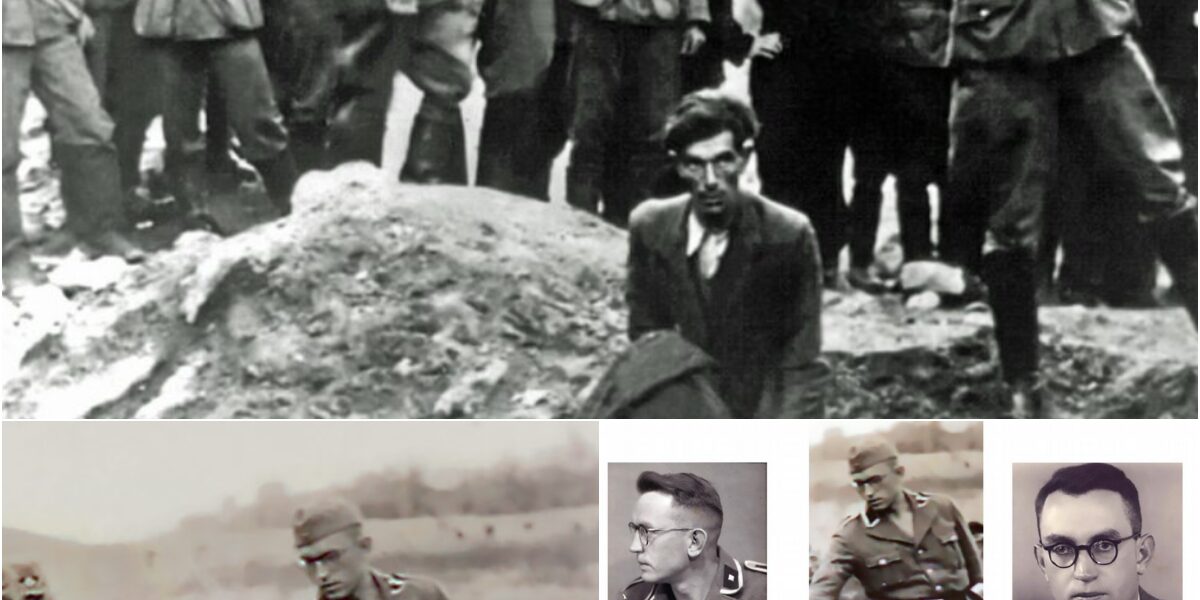
The photograph “The Last Jew in Vinnitsa”—a man kneeling at a mass grave, pistol to his head—remains one of the most haunting images of the Holocaust in Eastern Europe. Long mislabeled, recent research by Jürgen Matthäus, former head of research at the United States Holocaust Memorial Museum (USHMM), has corrected its location to Berdychiv, Ukraine, and identified the perpetrator with 99% certainty as SS officer Jakobus Onnen. The victim remains unknown. This analysis, based on Matthäus’s 2023–2024 publications in Zeitschrift für Geschichtswissenschaft and Holocaust and Genocide Studies, integrates AI facial recognition, family testimony, and archival evidence to reveal new truths about Nazi mobile killing units, fostering discussion on interdisciplinary Holocaust research and the ethics of memory.
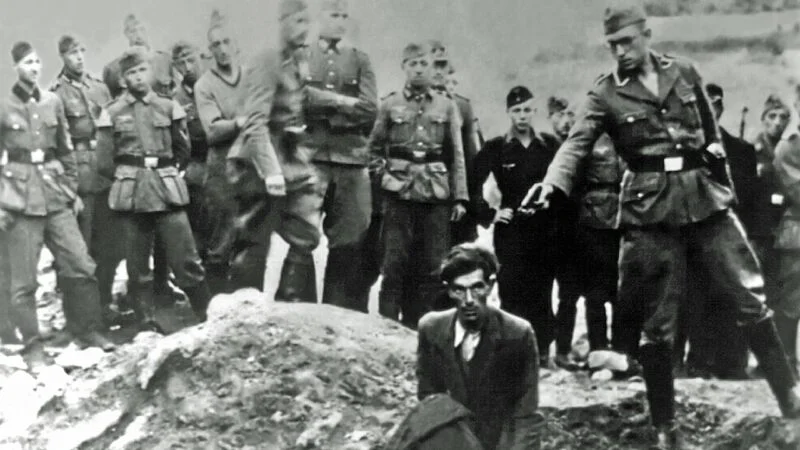
The Last Jew in Vinnitsa. ‘I think this image should be just as important as the image of the gate in Auschwitz,’ says the US-based German historian Jürgen Matthäus. Photograph: Metropol
The Iconic Image and Its Misidentification
First publicized during the 1961 Eichmann Trial in Israel, the photo was supplied by Al Moss, a Chicago Holocaust survivor who received it in Munich in 1945. Labeled “The Last Jew in Vinnitsa” and dated 1941–1943, it was long assumed to depict a massacre in Vinnytsia, Ukraine.
In 2023, Matthäus discovered the truth via the war diaries of Austrian Wehrmacht soldier Walter Materna, donated to USHMM. A high-quality print in Materna’s collection was captioned on the back:
“Late July 1941. Execution of Jews by the SS in the citadel of Berdychiv. July 28, 1941.”
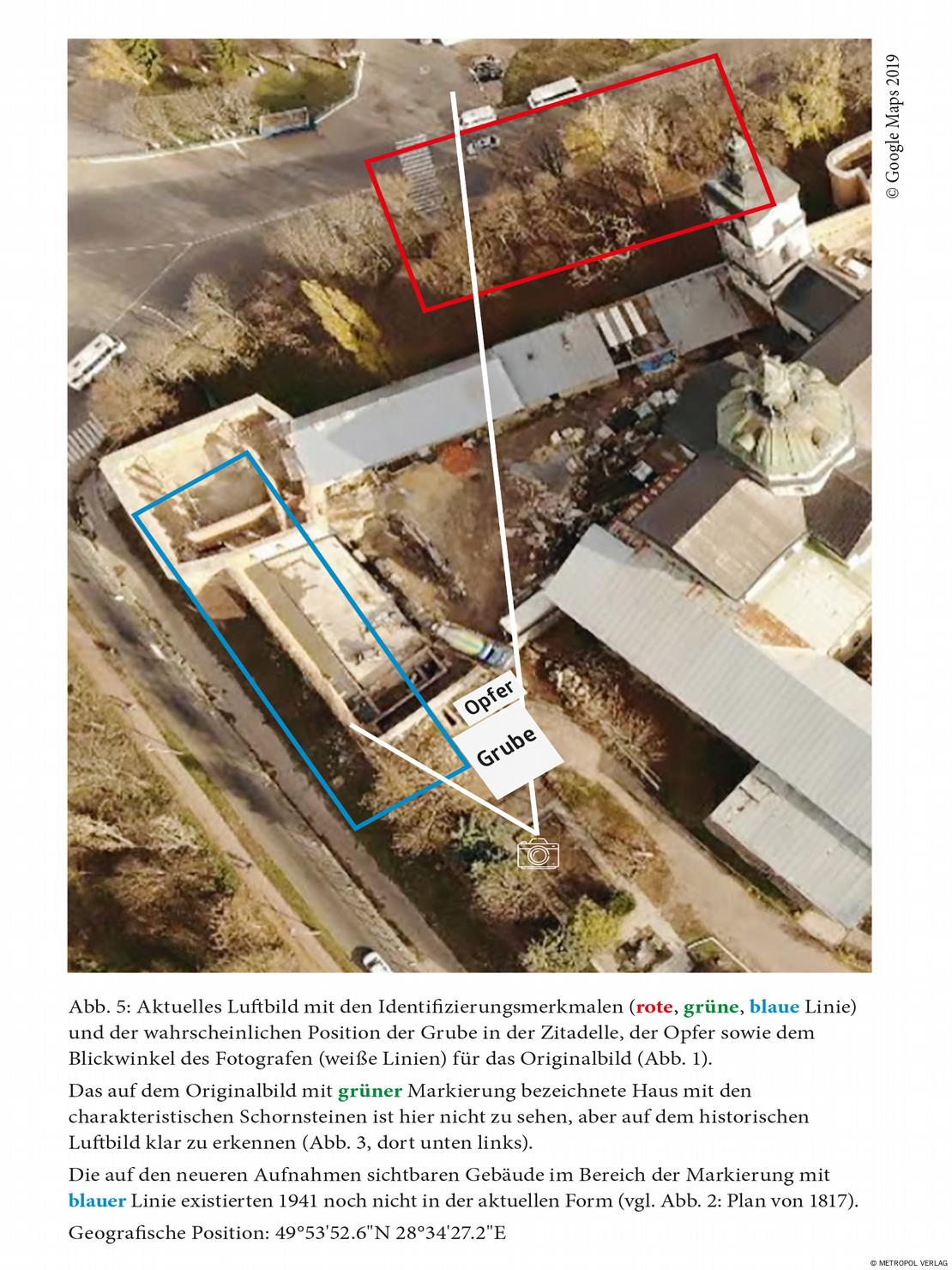
Materna’s diary entry from the same day described hundreds of Jewish victims shot into a pit at Berdychiv Citadel, 150 km from Kyiv. Aerial comparisons of historical and modern Berdychiv confirmed the site.
Identifying the Perpetrator: Jakobus Onnen

Reader tips after Matthäus’s 2023 publication led to Jakobus Onnen (1906–1943). A retired German teacher recognized the gunman as his wife’s uncle—an Einsatzgruppe C member stationed in Ukraine.
Onnen’s biography:
Born 1906 in Tichelwarf, East Frisia, near the Dutch border.
Studied French, English, and sports in Göttingen to become a teacher.
Joined SA (1931) and SS (1932); influenced by Nazi student movements.
Taught at the German Colonial School in Witzenhausen.
Assigned to Einsatzgruppe C in June 1941—responsible for hundreds of thousands of murders in Ukraine.
AI confirmation: Facial recognition software compared Onnen’s known photos to the gunman, yielding 99% similarity. Onnen died in combat in August 1943, evading trial. His sister destroyed his letters, eliminating further evidence.
The Victim: Still Anonymous
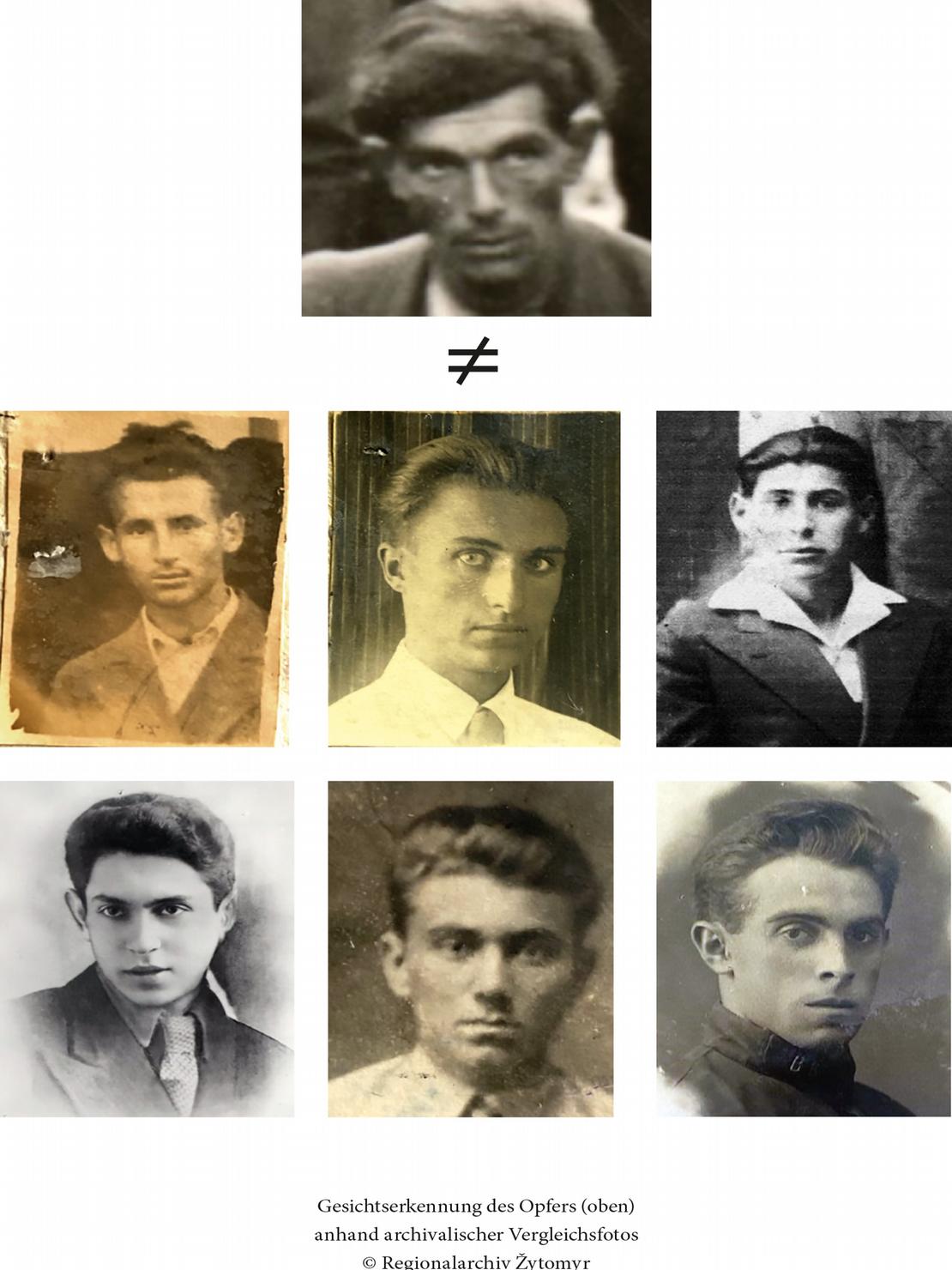
Despite the victim’s clear face, his identity remains unknown—typical of Eastern European killings where Nazis avoided recording names, unlike Western deportations. Matthäus notes ongoing efforts by Yad Vashem, Shoah Foundation, and USHMM to de-anonymize victims through survivor testimony and memoirs.
Methodological Breakthrough: Interdisciplinary Collaboration
The identification combined:
Archival discovery (Materna’s diary)
Family memory (teacher’s recognition)
AI technology (facial recognition)
Geospatial analysis (site mapping)
Matthäus calls this “a massive step forward”, emphasizing interdisciplinary Holocaust studies involving historians, AI experts, psychologists, and families confronting legacies.
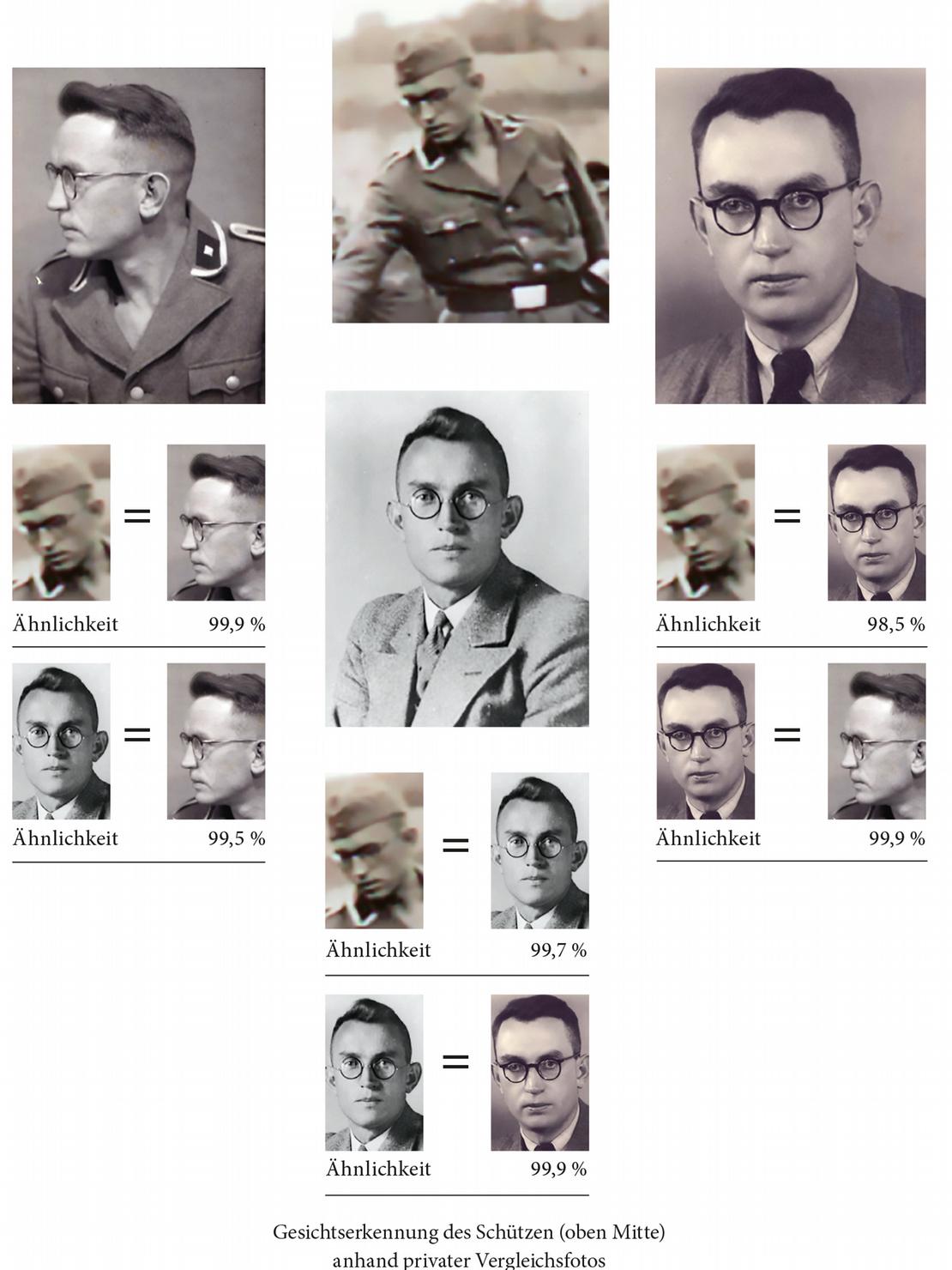
Comparison of many photos of a man, with a similarity of around 99% displayed.
The corrected story of “The Last Jew in Vinnitsa”—now “Execution at Berdychiv Citadel, July 28, 1941”—exposes the banality of evil in SS officer Jakobus Onnen and the erasure of victims. While the perpetrator is named, the kneeling man’s story is lost, symbolizing millions unremembered. For historians and activists, this breakthrough urges continued use of AI and hive intelligence to restore dignity to the nameless, combat Holocaust denial, and uphold human rights. Verified sources like USHMM and Metropol Verlag ensure rigorous truth-seeking, promoting memory, justice, and vigilance against hatred.