THE MINSK EXECUTION CASE: The Legend of Masha Bruskina – the 17-Year-Old Heroine Tortured and Executed with a Slanderous Sign “We Are Partisans” _us23

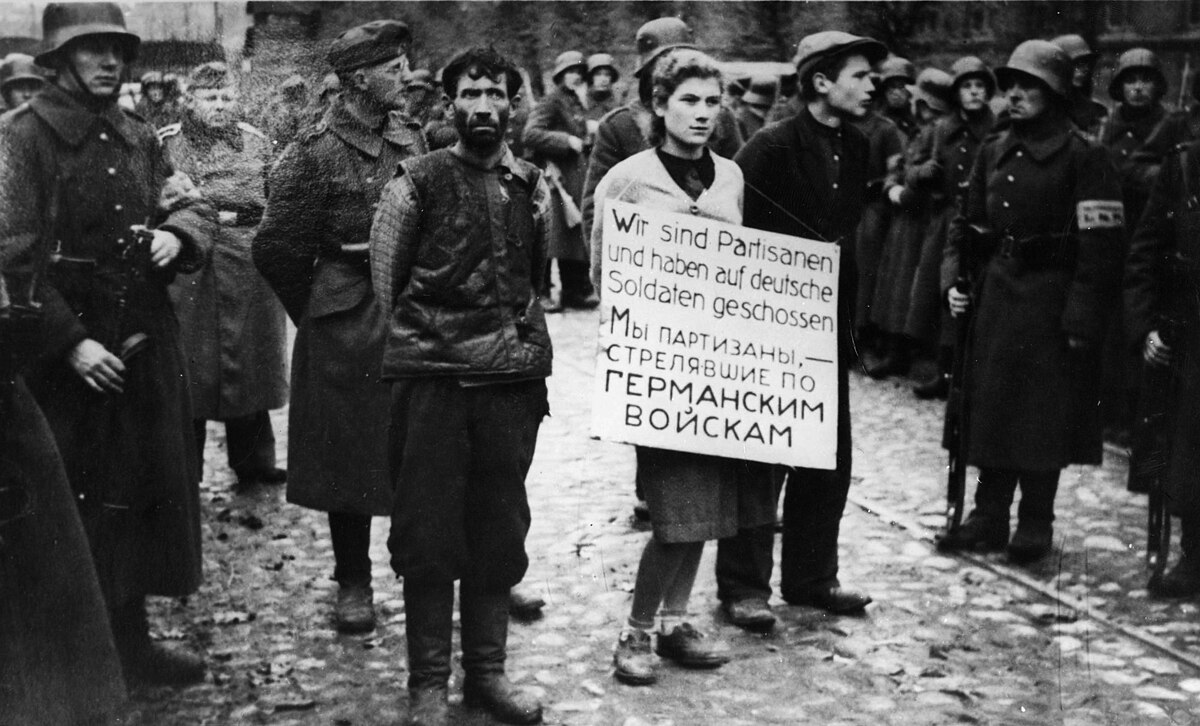
In the grim autumn of 1941, as the Nazi war machine ground through the Soviet Union, the occupied city of Minsk became a stage for one of the first public spectacles of terror designed to crush resistance. On October 26, three figures—two men and a young woman—were marched through the streets, their necks burdened with placards bearing a lie in German and Russian: “We are partisans who shot at German troops.” The woman, barely 17, was Masha Bruskina, a Jewish nurse whose quiet acts of defiance had already marked her as a threat. What the Nazis intended as a warning to the populace instead birthed a legend: a tale of unyielding courage that echoed through the Holocaust, the Nuremberg trials, and into modern memorials. This is the story of the Minsk Execution Case, where a teenage heroine transformed brutality into an enduring symbol of resistance.
A Youth Forged in Revolution
Maria Borisovna Bruskina—known to all as Masha—was born on July 31, 1924, in Minsk, the heart of Soviet Belarus. Raised in a Jewish family by her mother, Lucia Moiseyevna Bugakova, a senior editor at the Belarusian State Publishing House, Masha grew up immersed in the ideals of the Bolshevik Revolution. An avid reader and straight-A student, she was a proud member of the Komsomol youth league and the Vladimir Lenin Pioneer Organization, embodying the communist fervor of her generation. By 1938, at just 14, she was profiled in the Pioneer of Belarus newspaper as an exemplary eighth-grader, her face beaming with the promise of a bright socialist future.

Graduating from Minsk Secondary School No. 28 in June 1941, Masha’s world shattered weeks later with Operation Barbarossa. The Nazi invasion swept into Belarus, turning the city into a cauldron of occupation and ghettoization. Minsk’s Jewish population, including Masha’s family, was herded into the Minsk Ghetto, a prelude to annihilation. Yet amid the chaos, Masha refused to fade into victimhood. She volunteered as a nurse at a makeshift hospital in the Minsk Polytechnic Institute, tending to wounded Red Army soldiers who had been left behind in the retreat.
It was here, in the sterile wards shadowed by swastikas, that Masha’s secret life began. Posing as a dutiful caregiver, she smuggled civilian clothes and forged identity papers to Soviet prisoners and wounded fighters, enabling their escape from certain death or deportation to labor camps. She coordinated with a local underground network of communists and partisans, ferrying messages and supplies under the noses of German guards and their Lithuanian collaborators. Masha’s youth and unassuming role as a nurse made her an ideal operative—blending seamlessly into the civilian fabric of occupied life, much like her contemporary Zina Portnova, the teenage cook-turned-partisan executed in Belarus a year later. Both girls, scarcely out of childhood, operated in everyday guises while fueling the flames of Soviet resistance, their executions serving as grim bookends to a generation’s sacrifice.
Betrayal and the Shadow of the Gestapo
Masha’s luck ran out on October 14, 1941, just three months into the occupation. Betrayed by a captured Red Army soldier, Boris Mikhailovich Rudzyanko—who would later join in the mass murder of Minsk’s Jews—she was arrested alongside 11 other underground members by the Wehrmacht’s 707th Infantry Division and Lithuanian auxiliaries from the 2nd Schutzmannschaft Battalion, commanded by the notorious Major Antanas Impulevičius. Dragged to a Gestapo prison, Masha endured days of savage torture: beatings, starvation, and psychological torment designed to break her spirit and extract names. But the girl who had memorized Marxist texts as a child held firm. She revealed nothing, her silence a final act of loyalty to the cause.
From her cell, on October 20, Masha smuggled a poignant letter to her mother in the ghetto—a fragile thread of humanity amid the horror: “I am tormented by the thought that I have caused you great worry. Don’t worry. Nothing bad has happened to me. I swear to you that you will have no further unpleasantness because of me. If you can, please send me my dress, my green blouse, and white socks. I want to be dressed decently when I leave here.” The words, written with a child’s concern for appearances, masked the certainty of death. It was her last communication, a testament to her composure even as the noose loomed.
The Public Spectacle: Defiance in the Face of the Rope
The Nazis, eager to instill terror after early partisan skirmishes, chose Masha and two comrades for a public execution—the first of its kind in occupied Soviet territory. Her fellow condemned were 16-year-old Volodya Shcherbatsevich, a fellow Komsomol member, and Kirill Ivanovich Trus, a grizzled World War I veteran turned resistance fighter. On October 26, they were paraded through Minsk’s streets like criminals in a medieval morality play, placards around their necks proclaiming their “guilt” as partisans who had dared fire on German forces. For Masha, the label was a cruel slander; she had never held a gun, her weapons being thread, ink, and unshakeable will.

The procession ended at the gates of the Kristall yeast brewery on Oktyabrskaya Street (now a somber memorial site). A crowd of forced onlookers—workers, ghetto residents, and collaborators—watched as the trio was positioned on stools beneath hastily rigged gallows. Eyewitness Pyotr Pavlovich Borisenko later recounted the moment that sealed Masha’s legend: “When they put her on the stool, the girl turned her face toward the fence. The executioners wanted her to stand with her face to the crowd, but she turned away and that was that. No matter how much they pushed her and tried to turn her, she remained standing with her back to the crowd. Only then did they kick away the stool from under her.”
In that simple turn, Masha denied the Nazis their spectacle of submission. Her body swung for three days as a grotesque warning, until October 28, when two Jewish prisoners were forced to cut it down and haul it away in a truck. The same day, ten more resisters, including Volodya’s mother Olga, met the same fate nearby—a chain of executions meant to echo through the city.
From “Unknown Girl” to Eternal Heroine
Photographs of the hanging, snapped by German soldiers as propaganda trophies, backfired spectacularly. Smuggled out and preserved, they became damning evidence at the Nuremberg Trials, exposing the Nazis’ barbarity to the world. Yet in the Soviet Union, Masha’s story languished for decades. Referred to only as “the unknown girl” in official narratives, her Jewish heritage likely fueled antisemitic neglect by postwar authorities. It wasn’t until the 1960s, after persistent journalism by figures like Vladimir Freidin and Lev Kotlyar, that her identity was fully restored. In 1970, she was posthumously named a Hero of the Soviet Union, and a memorial plaque was erected at the execution site—updated in 2009 to honor her by name.
Today, Masha’s legend endures globally. A monument stands in HaKfar HaYarok, Israel, and a street in Jerusalem bears her name. Documentaries, books, and articles—from the U.S. Holocaust Memorial Museum’s archives to recent YouTube retellings—keep her flame alive. Like Zina Portnova, whose parallel tale of youthful subversion ended in public execution, Masha represents the quiet ferocity of those who fought not with bullets, but with borrowed shirts and stolen hours. The Minsk Execution Case was meant to silence; instead, it amplified a voice that still whispers defiance to tyrants everywhere.
In the words of a survivor who knew her: Masha didn’t just die—she chose how to face eternity, back turned to fear, eyes fixed on freedom. Her legend is no myth; it’s the unyielding truth of a 17-year-old who made monsters flinch.

Related Posts
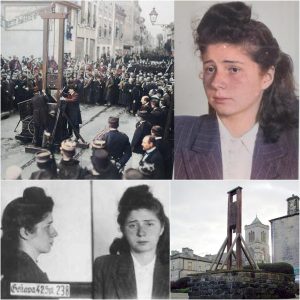
The ONLY WOMAN Beheaded in France for Abortion: The Heartfelt Decision of Marie-Louise Giraud That Led to Her TRAGIC End – A FEMALE MARTYR Under the Nazi-Collaborationist Vichy Regime (CONTENT WARNING: GRAPHIC DESCRIPTION OF EXECUTION) _us109
EXTREMELY SENSITIVE CONTENT – 18+ ONLY This post refers to the judicial execution of a French woman under the Vichy regime for performing abortions. Shared solely for…
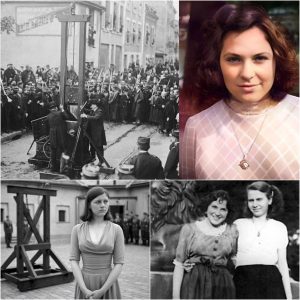
THE 19-YEAR-OLD MOTHER Who Stood Before the Guillotine with a CALM DEMEANOR: The Execution of Liane Berkowitz – Why Nazi Germany Insisted on Guillotining a Young 19-Year-Old Mother Who Had Just Given Birth at All Costs? (CONTENT WARNING: GRAPHIC DESCRIPTION OF EXECUTION) _us108
EXTREMELY SENSITIVE CONTENT – 18+ ONLY This post refers to the judicial execution of a young German resistance fighter and mother in Plötzensee Prison in 1943. Shared…
THE YOUNGEST GIRL Executed by a GERMAN GUILLOTINE in History: The Bitter Final Words of the 19-Year-Old Girl And an INJUSTICE That Took 47 Years to Be CLEANSED _us107
EXTREMELY SENSITIVE CONTENT – 18+ ONLY (CONTENT WARNING: GRAPHIC DESCRIPTION OF EXECUTION BY GUILLOTINE) This post refers to the judicial execution of a young German civilian woman…
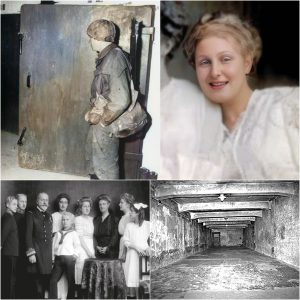
THE TRAGIC END OF THE EUROPEAN PRINCESS TAKEN BY THE NAZIS: For an Unbelievable Reason, the Innocent Princess Maria-Karoline Endured Final Moments in Stark Contrast to Her Silken Life _us107
EXTREMELY SENSITIVE CONTENT – 18+ ONLY This post refers to the murder of a disabled member of European nobility under the Nazi T4 euthanasia programme. Shared solely…
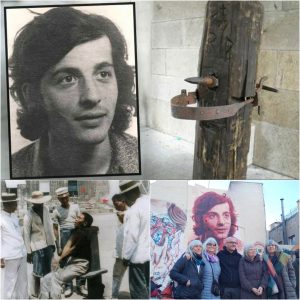
HISTORY’S LAST GARROTE EXECUTION: The Final, Echoing Words Through the Millennia of the Handsome Young Man Salvador Puig Antich Before His Death for Freedom _us106
EXTREMELY SENSITIVE CONTENT – 18+ ONLY This post describes a 20th-century judicial execution carried out under the Franco dictatorship in Spain. Shared solely for historical education and…
OPENING THE COFFIN OF MAGDA GOEBELS – THE FIRST LADY OF NAZI GERMANY: How Did the Woman With the Most Brainwashed, Fanatical, and Notorious Life in History Meet Her End? _us105
EXTREMELY SENSITIVE CONTENT – 18+ ONLY This article discusses sensitive historical events involving death and tragedy during World War II. It is intended for educational purposes only,…