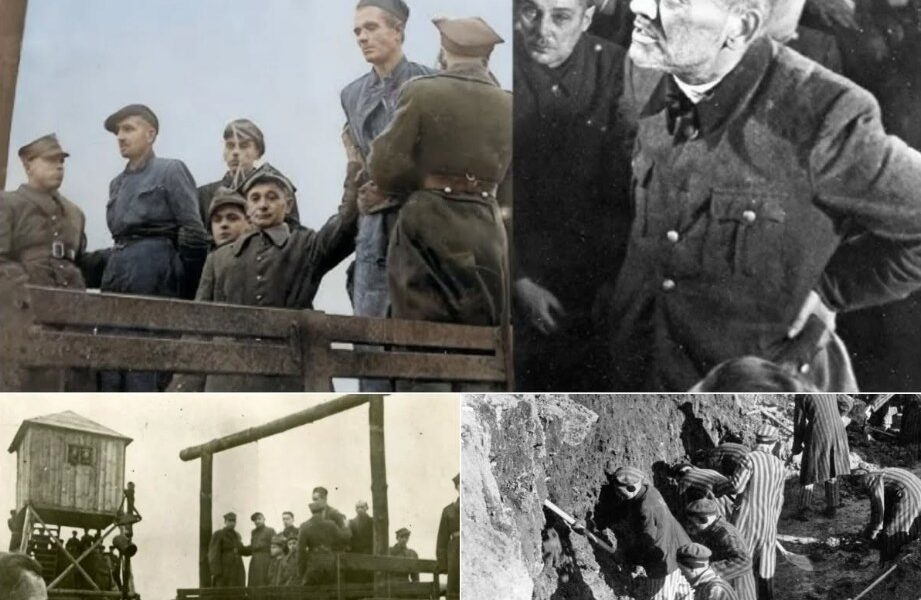
THE LAST SHOWCASE OF THE GALLOP: Eleven architects of the hell of Majdanek tremble as the noose executes a collective sentence on 79,000 souls.

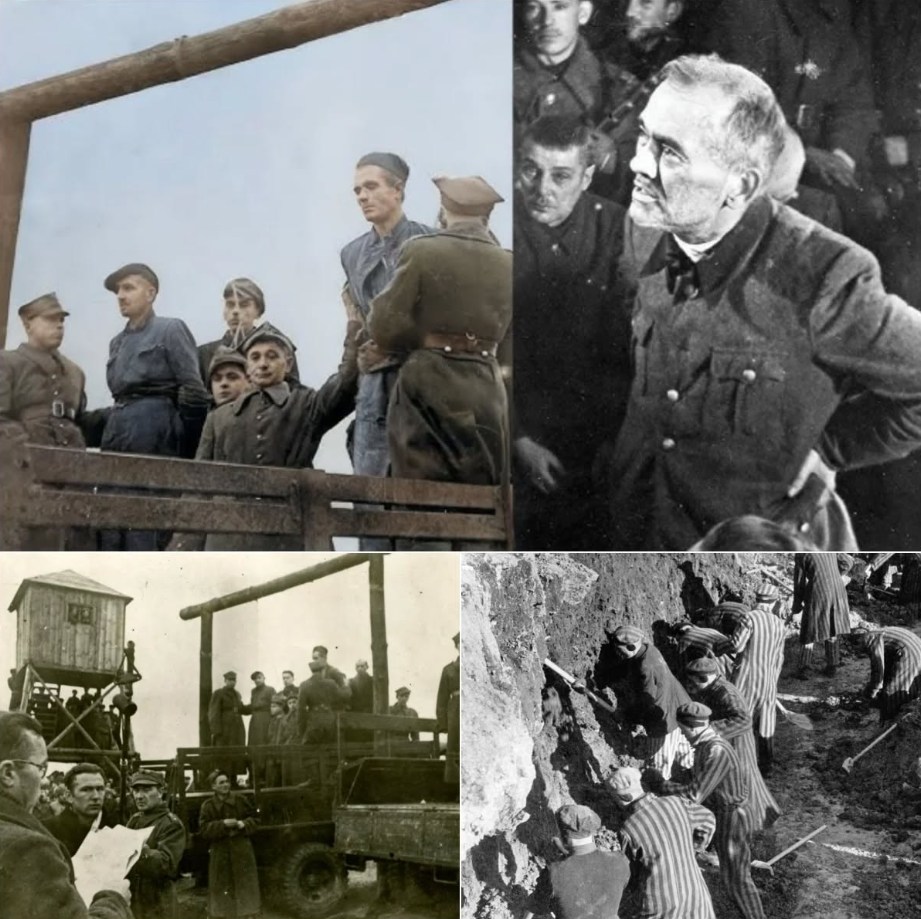
CONTENT WARNING: This article deals with the Majdanek concentration and extermination camp, war crimes, and the public execution of the perpetrators in 1944. Purpose: exclusively historical education and remembrance.
December 3, 1944 – Lublin, Poland: The first public execution of Majdanek guardsmen
Less than five months after the liberation of the Majdanek concentration and extermination camp by the Red Army (July 24, 1944), the world witnessed one of the earliest war crimes trials and the very first public execution of Holocaust perpetrators on Polish soil.
Majdanek – the second liberated camp – was recaptured almost intact: gas chambers, crematorium, mass graves, and tens of thousands of victims’ shoes.
Approximately 79,000 people were murdered here, including around 59,000 Jews .
A historical process
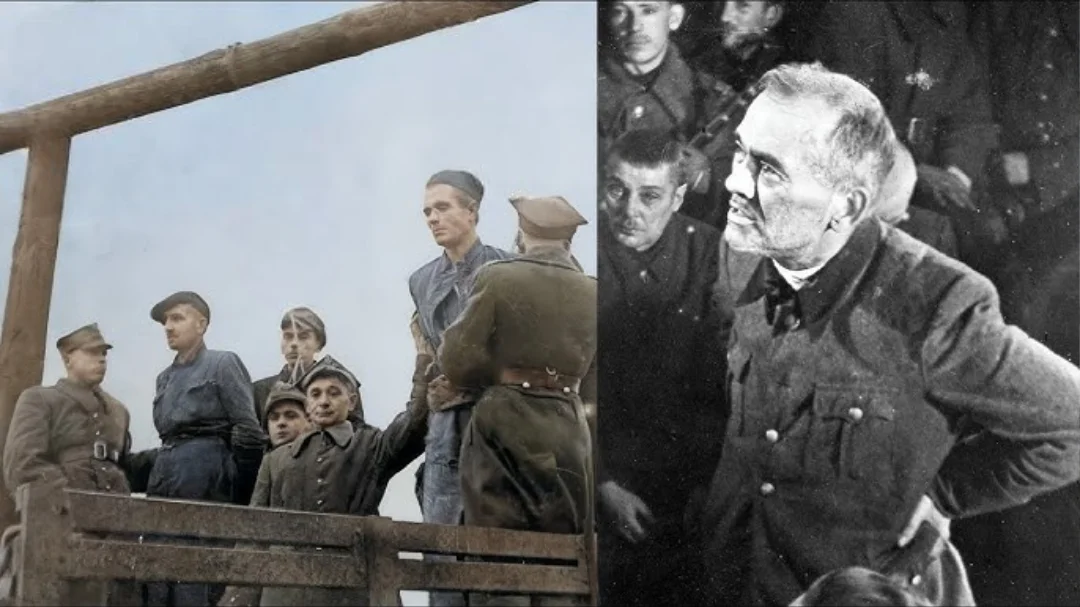
According to the August Decree of August 31, 1944, a special court was established in Lublin.
Six former employees of Majdanek were put on trial between November 27 and December 2, 1944:
Anton Thernes – deputy commandant, responsible for the gas chambers
Wilhelm Gerstenmeier – Zyklon B warehouse manager
Theodor Schöllen – notorious guard with a whip
Heinrich Stalp, Hermann Vogel and Kapo Edmund Pohlmann
They were convicted for operating the gas chambers, the selections, the mass murders, and brutal mistreatment.
On December 2, 1944, all six were sentenced to death.
Execution day – December 3, 1944
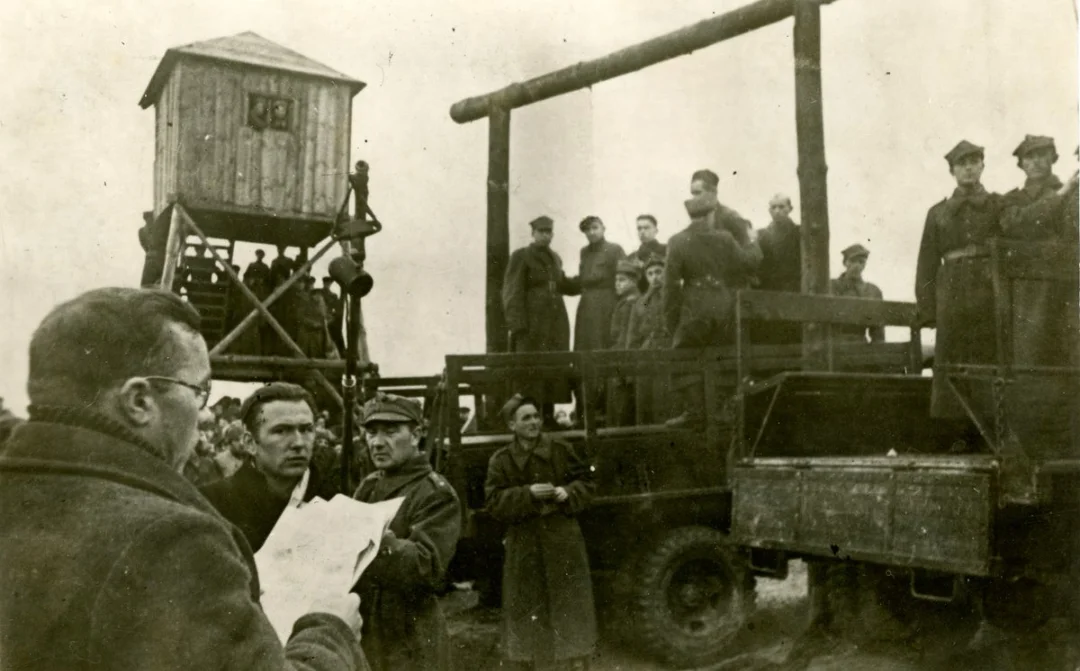
The gallows were erected right next to the crematorium in Majdanek – exactly where smoke once rose day and night.
Tens of thousands of Lublin residents, former prisoners, Red Army soldiers, and international journalists gathered.
The survivors were so overwhelmed by their emotions that security forces had to prevent the crowd from trampling the condemned men.
Five of the condemned men were hanged one after the other.
Kapo Edmund Pohlmann had taken his own life in his cell the night before.
As the trapdoors opened, a shout of jubilation rose from the crowd – not a cry of joy, but an expression of liberation after years of unimaginable suffering.
This was the first public execution of Holocaust perpetrators at the site of their crimes – a powerful symbol that justice, albeit belatedly, had finally arrived.
Today Majdanek is a state museum and memorial , where the gas chambers, the crematorium and the ashes of tens of thousands are preserved.
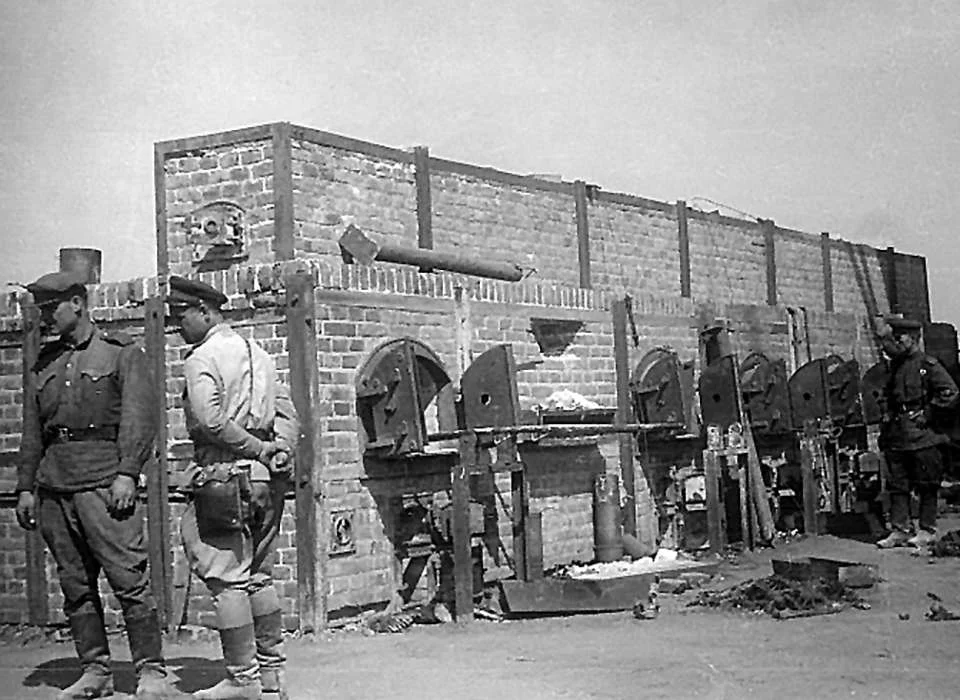
Every year on December 3rd, Poles and visitors silently lay flowers at the site where justice was administered.
We tell this story not to incite hatred, but to honor the 79,000 souls who rest forever in Majdanek, and to remind the world:
Justice must always be sought – wherever the crime was committed, whatever the cost.

Related Posts
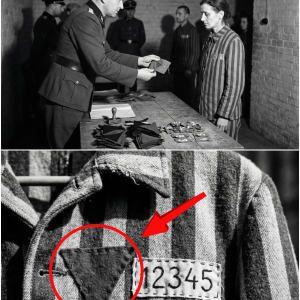
The classification system in Ravensbrück: Understanding the identifying characteristics of the camp _de611
In Ravensbrück, the largest Nazi concentration camp for women, the striped uniforms served as part of a systematic identification system. Colored triangles and fabric numbers were sewn or pinned onto the clothing. These…
The Life and Memory of Eva Edith Heimans: The Fate of a 15-Year-Old Girl, a Victim of the Shoah – Without a Grave and Without Official Records _de610
VERY SENSITIVE HISTORICAL CONTENT – ONLY FOR PERSONS OVER 18 YEARS OF AGE. This text serves solely for historical education and the commemoration of a child who was a victim of…
The 17-Day Life of a Man in the Auschwitz Concentration Camp: The Tragic Death of Stanisław Stimmler – The Baker with the Sad, Determined Look in His Final Moments (Content Warning: This article contains descriptions of the Holocaust). _de609
EXTREMELY SENSITIVE CONTENT – ONLY FOR INDIVIDUALS 18 YEARS OLD AND OVER. This article honors the memory of a Holocaust victim. December 8, 1901 | Stanisław Stimmler was born in Jarosław,…
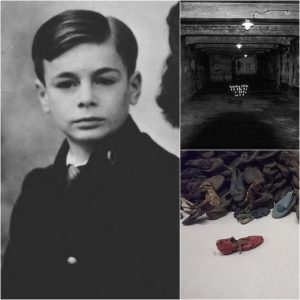
The MOST BEAUTIFUL BOY of AUSCHWITZ: The last moments of 12-year-old Gedale Hejblum in the GAS CHAMBER – NO PHOTO, NO GRAVE, ONLY THE NAME REMAINS (CONTENT WARNING: This post contains descriptions of the Holocaust). _de608
EXTREMELY SENSITIVE CONTENT – ONLY FOR INDIVIDUALS 18 YEARS OLD AND OVER. This post honors the memory of a victim of the Holocaust. December 7, 1929 | Gedale (Gdala) Hejblum…
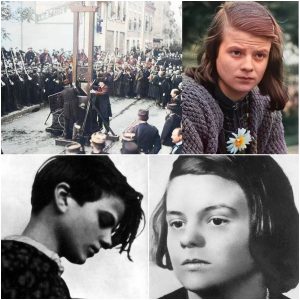
THE LAST WHISPER OF THE WHITE ROSE: The cursed prophecy that Sophie Scholl hissed at her executioners shortly before the noose silenced her forever _de85
CONTENT WARNING: This article describes the arrest, trial, and execution of a young woman by the Nazi regime—content that may be deeply disturbing. The purpose of this article…
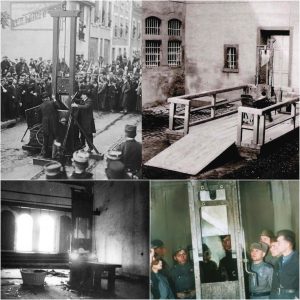
THE HORRORS OF THE GUILOMAT EXECUTION: The assembly-line guillotine of Nazi Germany, designed to kill in seconds – speed, efficiency, and psychological terror. _de607
EXTREMELY SENSITIVE CONTENT – ONLY FOR INDIVIDUALS 18 YEARS OLD AND OVER This article describes the guillotine (German type of hatchet), which was used by the Third Reich for executions between 1933 and 1945…
LEAVE A RESPONSE