
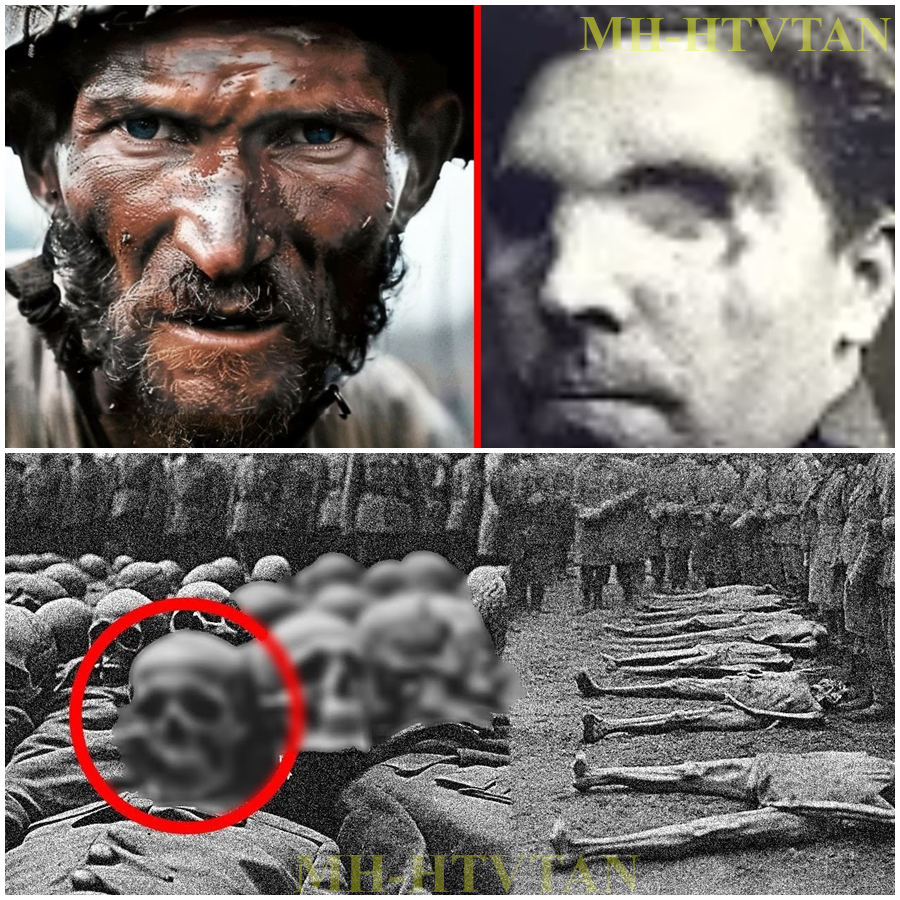
“The Brutal Fate of the 91,000 German Soldiers Captured at Stalingrad” After months of bloodshed in the frozen ruins of Stalingrad, over 91,000 German soldiers laid down their weapons, expecting mercy. But what came next was far more brutal. Only a fraction would survive, and those who did were never the same again.
It all began in the summer of 1942, when Adolf Hitler had a new goal in mind. He wanted the German army to push deep into the Soviet Union and take control of the city of Stalingrad. On paper, it was a strategic move, cutting off Soviet supply lines by controlling the Volga River. But this wasn’t just about military advantage. It was personal.
The city carried the name of Stalin himself, and Hitler wanted to crush it as a symbol of Soviet pride. He believed that if he took Stalingrad, it would break Soviet morale and show the world that Germany couldn’t be stopped. By August, more than 330,000 German soldiers rolled toward the city as part of the Sixth Army, led by General Friedrich Paulus. They came with tanks, artillery, and the full strength of the Luftwaffe bombing from above.
At first, the attack seemed to go well. The German air force dropped thousands of bombs, turning the city into ruins. Fires raged for days. Smoke covered the skies. German troops rushed into the broken streets, thinking they were close to victory. But the city’s destruction didn’t make the Soviets surrender. It only made them fight harder.
Soviet snipers picked off German soldiers from hidden corners. Grenades exploded inside burned-out buildings. Every block became a battlefield. It wasn’t a fast-moving war anymore. It was slow, bloody, and personal. And then the weather changed. The days grew shorter. The cold crept in. Winter in Russia is brutal, and the Germans weren’t ready for it.
Their clothes weren’t warm enough. Their supply lines were stretched thin. And the deeper they pushed into the city, the more vulnerable they became. They thought they were winning. But in reality, they were walking into a trap. Because far beyond the rubble, the Soviet Army was planning something big.
On the morning of November 19, 1942, as snowflakes drifted down over the frozen battlefields, the silence broke with a thunder of artillery. The Soviets had launched Operation Uranus, a carefully planned counterattack. It didn’t strike the city center; it hit the weaker flanks, where Romanian and Italian divisions guarded the German lines.
These units, under-equipped and unprepared for harsh winter fighting, collapsed quickly. Within hours, Soviet tanks and infantry began pouring through the gaps, driving deep into German-controlled territory. The assault was fast, brutal, and completely unexpected. Soviet troops came from both the north and the south, closing in around Stalingrad like a giant pair of jaws. By November 23, the trap snapped shut at the town of Kalach.
The German Sixth Army, along with Romanian and Italian allies, including over 250,000 troops in total, was now completely surrounded. They were trapped inside a destroyed city with no escape and no help on the way. Hitler gave a clear order: no retreat. He insisted that the army would hold its ground and be supplied by air.
But that promise quickly fell apart. The Luftwaffe tried to fly in food, ammunition, and fuel, but Soviet anti-aircraft guns and the brutal winter made flying dangerous. Planes crashed, supplies went missing, and most deliveries never reached the front lines. Each day, German soldiers got less and less to eat. By December, temperatures dropped below -30°C.
Soldiers lost fingers and toes to frostbite. Wounds that might have healed in better conditions became deadly. Ammunition began to run out, and weapons froze in the cold. But even worse was the mental collapse; men stopped believing they would survive. And yet, Hitler refused to surrender. He still believed his army could hold out.
But outside the city, the Soviet forces weren’t slowing down. Every day, they pushed closer, cutting off communication, tightening the noose, and preparing for the final blow. By January 1943, Stalingrad had become a graveyard. Snow covered the wreckage of entire neighborhoods, but under that snow were bodies, frozen soldiers, dead animals, and collapsed buildings hiding the remains of men who had frozen where they fell.
The cold was relentless, and the wind cut through even the thickest uniforms. But most German soldiers didn’t have proper uniforms anymore. Their boots were falling apart. Many had no gloves, no winter coats, just thin layers of fabric that did nothing to stop the cold. Food was nearly gone. The daily ration dropped to just 200 grams of bread, and even that was mixed with things like sawdust to stretch it further.
Men argued over crumbs. Some chewed on belts and leather straps, hoping to fool their stomachs into thinking they had eaten. Others caught rats and cooked them over makeshift fires. Worse than hunger was disease. With no clean water, no sanitation, and barely any medical care, illnesses spread fast.
Typhus, dysentery, and pneumonia, these diseases tore through the frozen shelters. Some men died within days of falling sick. There were no more bandages, no painkillers, no antibiotics. Doctors, themselves starving, could do little more than watch. Dead soldiers were stacked like firewood, frozen stiff, their faces still twisted in pain. The mental toll was just as devastating. Men began hallucinating.
Some sat motionless for hours, staring into nothing. Others screamed in the night or broke down crying. Some walked straight into Soviet fire, as if giving up was easier than going on. Commanders tried to keep discipline, but even the officers were falling apart. Orders meant nothing when men could barely stand. In the middle of this chaos, General Friedrich Paulus knew it was over.
His troops were dying faster than the Soviets could kill them. He sent message after message to Hitler, pleading for permission to surrender. Each time, the answer was cruelly simple: Fight to the last man. But there was no one left to fight. On January 31, 1943, Paulus surrendered the southern half of the pocket. He became the first German Field Marshal ever to be captured alive.
Hitler had expected him to die in battle, but Paulus no longer believed in Hitler’s promises. Two days later, on February 2, the last remaining German forces in the northern part of the city also laid down their arms. The Battle of Stalingrad was finally over. The city was silent, covered in ruins and bodies.
Out of more than 330,000 men who had entered Stalingrad months earlier, only 91,000 remained alive, but as Soviet prisoners. These weren’t ordinary prisoners of war. To the Soviets, they were the enemy responsible for burned villages, dead children, and years of pain. They weren’t treated with sympathy. There was no warmth, no comfort, and certainly no kindness.
The Soviets wanted revenge, and now they had tens of thousands of exhausted, helpless men in their hands. Most of the prisoners could barely stand. Some had open wounds frozen shut. Others were so weak they had to be carried by fellow soldiers. Their faces were hollow, their uniforms little more than rags. Many had gone days without food or water.
Yet despite their condition, they were ordered to march. The journey began in the bitter cold. Huge columns of prisoners moved slowly through snow-covered roads, guarded by armed Soviet troops. The marches were long and cruel. Those who collapsed were beaten. Those who couldn’t walk were dragged or abandoned. Sometimes they were simply shot and left behind.
There was no stopping, no rest, and no medical help. Some prisoners walked for days, others for weeks, not knowing where they were going, only that each step could be their last. Eventually, they arrived at transit camps, the first stop before being moved deeper into Soviet territory. These camps were overcrowded, filthy, and freezing. Wooden barracks were packed tight.
There were no real beds, just straw on the floor, soaked with urine and blood. Lice covered everything. Food came in tiny portions. For many, it was too late. The weak died quickly. The sick were ignored. The guards didn’t care. To them, every dead German was justice served. But this was only the beginning of their punishment.
By March 1943, the Soviets began transferring them deeper into the heart of the country, far from the battlefield, far from any hope. The goal was to spread them out across labor camps scattered throughout the Soviet Union. But getting them there was its own kind of torture. Most were crammed into cattle cars, the same kind once used to transport animals.
These boxcars had no heat, no insulation, and no windows, just solid metal walls that trapped the cold. Inside, men were squeezed shoulder to shoulder, packed so tightly they couldn’t sit or lie down. Temperatures dropped far below freezing. With no blankets or food, many simply collapsed and died on their feet. There were no toilets.
Just a bucket in the corner, which quickly overflowed. The smell was unbearable. The cries of the dying echoed in the darkness. Some went mad during the journey. Others just quietly stopped breathing. Many of these train rides lasted days or even weeks. The trains would sometimes stop in the middle of nowhere for hours or days, with no explanation, while the dead piled up.
By the time the cars reached their destinations, it was common for half the prisoners inside to be dead. The bodies were dragged out and dumped by the tracks without ceremony. Those not sent by train were forced to march. Thousands of German prisoners, barely clothed and barely alive, were ordered to walk across hundreds of kilometers of frozen land.
They trudged through snowdrifts and mud, with little more than scraps of food, often eating bark or weeds they found along the way. Many fell along the roadside and never got up. Their frozen corpses were left where they died. Wild dogs roamed freely, picking at the bodies. By April 1943, the number of living prisoners had dropped sharply.
From 91,000, only around 60,000 were still alive. That meant over 30,000 men had died in just two months, not from combat, but from cold, hunger, and neglect. And even for the survivors, there was no end in sight. They were not being taken home. They were scattered across a vast network of Soviet POW camps, mostly located in Siberia, Kazakhstan, and parts of Ukraine.
These weren’t just simple detention centers; they were full-scale labor camps, modeled after the Soviet Gulag system. The camps were surrounded by high fences, barbed wire, and armed guards. Watchtowers stood at the corners, always manned, always watching. Inside the camps, conditions were beyond harsh. The barracks were made of thin, rotting wood. There were no beds.
No heating meant the icy wind blew in through cracks in the walls, freezing the men as they slept. The wounded had no medicine, no treatment. Even small infections could become deadly. Prisoners who were sick were often ignored, left to die quietly in corners. Every able body was put to work. The Soviets had plans to rebuild the country after years of war, and they used the German prisoners to do it.
The men were sent to chop wood in frozen forests, dig deep into coal mines, or rebuild destroyed roads, bridges, and buildings. Some were forced to dig canals by hand in frozen soil. They worked through snowstorms, through fever, through exhaustion. Rest was a luxury no one could afford. The food they were given was barely enough to survive. Protein was rare.
Vitamins were nonexistent. As weeks turned into months, prisoners began to shrink. Their ribs stuck out. Their eyes sank. Some dropped to just 40 kilograms, nothing but skin and bone. Their teeth fell out, their skin turned gray, and their muscles wasted away. It was slow starvation. A few prisoners, desperate and hopeless, tried to escape.
But with nowhere to go, no food, and no maps, most froze or were captured quickly. Punishment was brutal. Beatings were common. Some were shot on the spot. After a while, most prisoners stopped trying. They knew what waited beyond the fences was no better than what they already faced inside. By early 1944, the death toll had become impossible to ignore.
Out of the 91,000 prisoners, only 35,000 were still alive. These men didn’t die from gunshots or executions. They died slowly, from freezing temperatures, rotten food, untreated diseases, and brutal labor. There were no proper graves. Corpses were often buried in shallow pits or simply left where they fell.
Back home in Germany, families were left in the dark. Many mothers received vague letters saying their sons were “missing in action.” Wives waited by the door for messages that never came. No one told them the truth that their husbands and sons were dying far from home, one by one, in silence. Even the Red Cross had trouble finding information.
The Soviets rarely released names or details. It was as if the prisoners had vanished into thin air. And for the men still alive, there was little reason to hope. They were still trapped behind barbed wire. Still starving. Still sick. And worst of all, forgotten. But Stalin wasn’t done with them yet. He wanted to break their minds.
In special camps run by Soviet political officers, select German prisoners were pulled from the regular labor groups and placed into a different kind of control. These weren’t typical camps. There were no picks or shovels, at least not at first. Instead, there were books, lectures, and long speeches about communism and the evils of Nazi Germany.
The Soviets wanted to reshape their thinking. They wanted these soldiers to turn against their homeland. This program was called the National Committee for a Free Germany. A few prisoners joined, often because they were promised better food, warmer clothes, or shorter work shifts. Some truly believed in the message. Others just wanted to survive.
Those who joined were paraded in front of cameras. They were used in radio broadcasts and propaganda films. Their faces were shown to German troops still fighting on the front lines, to weaken morale and push the idea that surrender might not mean death. But most prisoners didn’t buy into it. They stayed silent and loyal.
Or they simply couldn’t bring themselves to trust anything after what they had already endured. When the war ended in May 1945, the surviving German prisoners thought the nightmare was finally over. The guns had gone silent. Hitler was dead. Cities were celebrating across Europe. So the men waited, for trains, for orders, for any sign that they could go home.
But nothing came. Instead, Soviet guards handed them shovels. Stalin had no intention of letting them go. The Soviet Union was in ruins, millions of homes destroyed, bridges collapsed, and entire cities burned to the ground. Someone had to rebuild it. And Stalin decided it would be the Germans.
The prisoners were scattered across the Soviet Union. Some were sent to rebuild railroads. Others were forced to dig out collapsed mines, clear rubble, or cut timber deep in the forests. Many were sent to places even colder than before, including Siberia, Kazakhstan, or far-off labor camps near the Arctic Circle. They lived in wooden barracks with holes in the roofs. Blankets were thin.
Food was still just watery soup and a piece of bread. Most prisoners had no shoes, only rags tied around their feet. Their hands cracked from the cold. Their teeth fell out from starvation. But the work never stopped. Every day, more men died. Some froze to death in their sleep. Others collapsed at the work site and were never seen again.
No one mourned them. Their names were crossed off lists, and life went on. And the worst part was that they had no idea how long this would last. There was no timeline. No release date. No news from home. Many had already been missing for three years. Now the war was over, and they were still trapped.
By 1946, only a few Red Cross letters were allowed through. Some families back in Germany still didn’t know their sons were alive. Others had given up and assumed the worst. By 1948, only 15,000 prisoners were still alive. Just 16%. They were broken. Some hadn’t spoken their native language in years. Some no longer remembered what freedom felt like.
But, in early 1953, something changed. The men still in the camps had no warning. They woke up one cold morning, expecting another day of hard labor, but instead, the guards ordered them to pack their things. Some prisoners didn’t believe it. Others stood frozen, unsure if it was a trick. After all these years, hope felt dangerous. But it wasn’t a lie. Stalin was dead.
The dictator who had refused to release them, who had used them like tools to rebuild his shattered empire, was gone. He died on March 5, 1953. And the new leaders of the Soviet Union wanted to show a softer face to the world. Releasing foreign prisoners was part of that plan. Trains were suddenly arranged. Documents were signed. Clothes were handed out.
And the men, what was left of them, were told they were going home. For many, it didn’t feel real until the train started moving. Until they saw the Russian landscape rolling past the window, this time in reverse. Until they crossed the border. Until they heard German voices again that didn’t come from prisoners.
They had survived over a decade in captivity. But home didn’t feel like home anymore. Their towns were different. Their families had changed, or were gone. Some had no homes to return to. Some had wives who had remarried. Children who no longer recognized them. Germany itself had been split into East and West.
And for many returnees, the silence around what they’d been through was worse than the pain itself. They were seen by some as weak, or even as failures. They weren’t welcomed as heroes. In fact, many felt forgotten all over again. Some kept quiet for the rest of their lives.
Others wrote books, desperate to make the world understand. A few couldn’t take it and took their own lives within months of returning. Out of the 91,000 men, only a small number lived to tell their story. And yet, for decades, that story was barely told. Only now, years later, is the true horror being fully understood.