4,000 PEOPLE WITNESS the SHOCKING PUBLIC EXECUTION of 6 Nazi Collaborators by the French Resistance After Liberation: What Were Their Crimes That Made Them So Hated?

EXTREMELY SENSITIVE CONTENT – 18+ ONLY:
This article discusses sensitive historical events from World War II, including acts of judicial violence and post-liberation retribution. The content is presented for educational purposes only, to foster understanding of the past and encourage reflection on how societies can prevent similar injustices in the future. It does not endorse or glorify any form of violence, discrimination, or extremism.
During World War II, following the liberation of France from Nazi occupation, the French Resistance played a key role in addressing collaboration with the German forces. In the summer of 1944, as Allied troops advanced and cities like Paris were freed on August 25, resistance groups conducted trials and executions of those accused of aiding the enemy. One such event occurred in Grenoble, where six young members of the Milice française—a paramilitary organization under the Vichy regime—were executed by firing squad on September 2, 1944. These individuals, captured earlier in the year, were convicted of collaboration and faced a court-martial amid widespread public demand for accountability. Their story highlights the complexities of wartime justice, the fervor of post-occupation purges (known as l’épuration), and the human dimensions of ideological divisions within French society. Examining this episode objectively sheds light on the challenges of transitional justice and the importance of due process to avoid cycles of vengeance.
The Milice française was established in January 1943 by the Vichy government, led by Pierre Laval, to combat the growing French Resistance and enforce collaborationist policies. Comprising around 25,000 to 35,000 members by 1944, the Milice was notorious for its role in arrests, interrogations, and executions of resistants, Jews, and other perceived enemies of the regime. Recruited often from ideologically aligned or opportunistic individuals, its members were trained at centers like the one in Uriage, near Grenoble. The group operated with German support, participating in operations against maquis (resistance fighters) and contributing to the deportation of thousands. After the Allied landings in Normandy in June 1944 and the subsequent liberation of southern France, many Milice members fled or were captured, facing summary justice or formal trials.
The six executed men—Georges Azama, Jacques Gombert, Maurice Perriault, Robert Musnier, Bernard Chany, and Fernand Bouvery—were young recruits, aged 18 to 20, from various regions of France. Their backgrounds reflected a mix of personal circumstances and family influences. Georges Azama, 19, hailed from Perpignan in southern France. Jacques Gombert, 18, from Antibes, was the son of a senior Milice official. Maurice Perriault, 20, came from Le Creusot, an industrial town. Robert Musnier, 18, was from Pleignes but had family ties in Poitiers; his father was a general who served as secretary general in the Vichy Ministry of War Veterans, though his brother fought with General de Lattre’s forces after the Allied landings. Bernard Chany, 20, was from Lyon, and Fernand Bouvery originated from Mays in Limousin, with a brother who had been in North Africa with Allied forces since 1940. Most had a relatively high level of education for the era, which qualified them for training at the Uriage center, while less educated recruits handled logistical tasks.
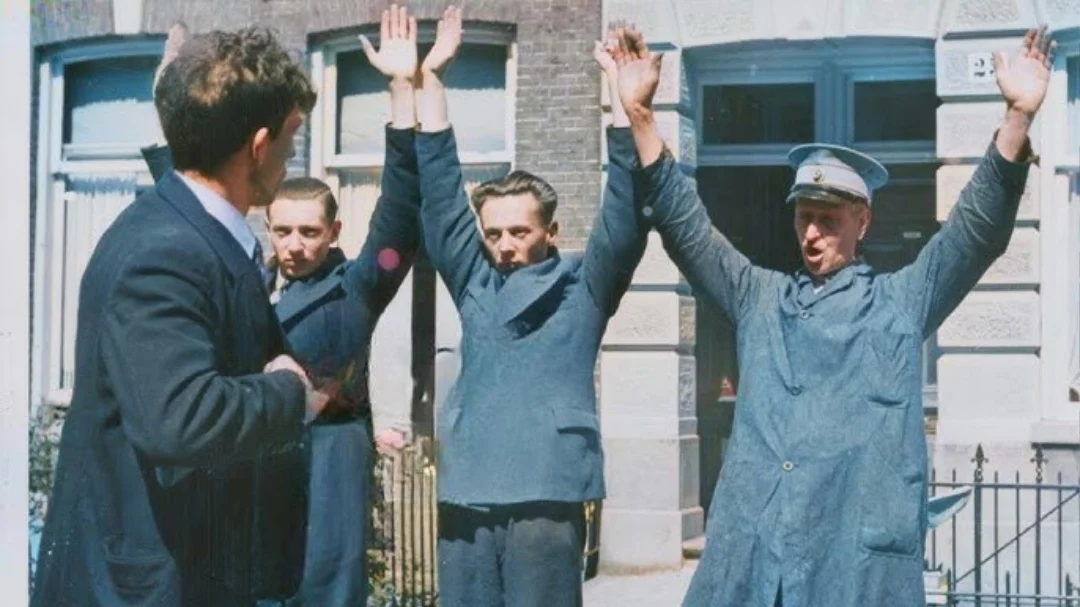
Their reasons for joining the Milice varied but often stemmed from misinformation or coercion. During interrogations, they claimed to have been misled about the nature of the Resistance, portraying its members as “terrorists” influenced by Jewish or Spanish communist elements. This narrative aligned with Vichy propaganda, which depicted the Milice as defenders of French order against internal threats. Some may have been drawn by economic incentives, family pressures, or a desire for structure amid the chaos of occupation. However, their involvement placed them in direct opposition to the Resistance, contributing to the group’s repressive activities.
The men’s capture occurred in June 1944 during an assault on the Milice training school at Uriage by a Resistance unit led by Captain E. Poiteau, known as “Stéphane,” a former Saint-Cyr military academy graduate. The attack resulted in the seizure of the facility, with several Milice members taken prisoner. Negotiations between Resistance leaders and captured Milice personnel failed to resolve their fates peacefully. Held for months as Grenoble was liberated on August 22, 1944, the prisoners were brought before a court-martial established under the auspices of the Forces Françaises de l’Intérieur (FFI), the unified Resistance military arm.
The trial, part of the first court-martials in liberated France, focused on their membership in the Milice and any actions against the Resistance. Evidence emphasized that they were unarmed during the Uriage assault and did not engage the attackers. Despite defenses arguing their youth and potential for rehabilitation, six were sentenced to death: Azama, Gombert, Perriault, Musnier, Chany, and Bouvery. Four others—Joseph Piroutet, Paul Galinié, Robert Avril, and Théophile Cléro—received lesser sentences: life imprisonment for the first two (later reduced) and five years of forced labor for the latter pair, who were amnestied by 1953. The verdicts sparked controversy, with some in the crowd and Resistance leaders criticizing the leniency toward the four spared execution, leading to calls for revising the tribunal’s composition.
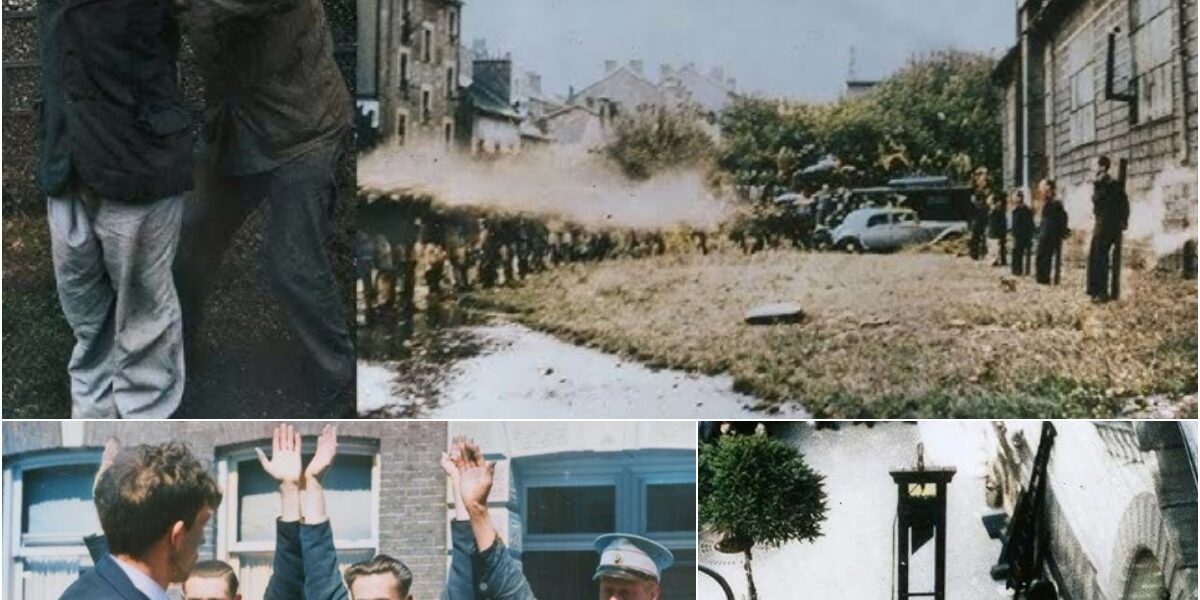
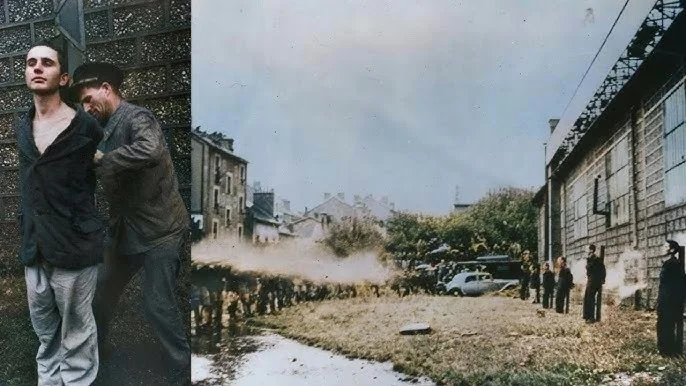
The execution took place on September 2, 1944, at the Bouchayer-et-Viallet factory site in Grenoble, a location previously used by the Gestapo for executing resistants. Over 4,000 spectators gathered despite rainy weather, reflecting the public’s thirst for retribution. The men, described as young, unshaven, and wretched, were tied to stakes and shot by a Resistance firing squad. Reports noted their composure or fear, with one account suggesting they faced their end with a mix of resignation and protestations of innocence. The event was documented by photographer Carl Mydans for Life magazine, published on October 2, 1944, and covered by international press like The Times, highlighting the raw emotions of liberation. This public spectacle adhered to Resistance guidelines that confirmed Milice members should be executed, but it also raised questions about the balance between justice and vengeance.
The execution of these six Milice members in Grenoble illustrates the turbulent transition from occupation to liberation in France, where the need for accountability clashed with the risks of extrajudicial excess. Their youth and manipulated enlistment underscore how ordinary individuals became entangled in collaboration, while the trial and public nature of their fate reflect the era’s demand for swift justice. By studying this event objectively, we recognize the value of established legal frameworks, like those developed post-war through the Nuremberg Trials and French épuration courts, to ensure fairness and prevent arbitrary punishments. Reflecting on such histories promotes reconciliation, tolerance, and safeguards against ideological divisions, helping societies build resilient institutions for peace.
Sources
Executed Today: “1944: Six Milice collaborators in France” (executedtoday.com/2012/09/02/1944-six-milice-collaborators-in-france/)
The Carter Museum: “Six Frenchmen Convicted of Collaboration Are Executed by Firing Squad” (cartermuseum.org/collection/six-frenchmen-convicted-collaboration-are-executed-firing-squad-1944-p19852795)
Grégoire de Tours: “The Six Militiamen of Grenoble, by Pascal Cauchy” (gregoiredetours.fr/xxe-siecle/seconde-guerre-mondiale/pascal-cauchy-les-six-miliciens-de-grenoble/)
Additional historical references from sources on WWII French Resistance and Milice, including Wikipedia and academic articles.