
There are stories that begin with kindness.
Stories that begin with generosity, compassion, and a belief that people deserve a second chance.
And then there are stories like this one — stories that begin with kindness, and end with violence so shocking it forces an entire community to reconsider what “helping” really means.
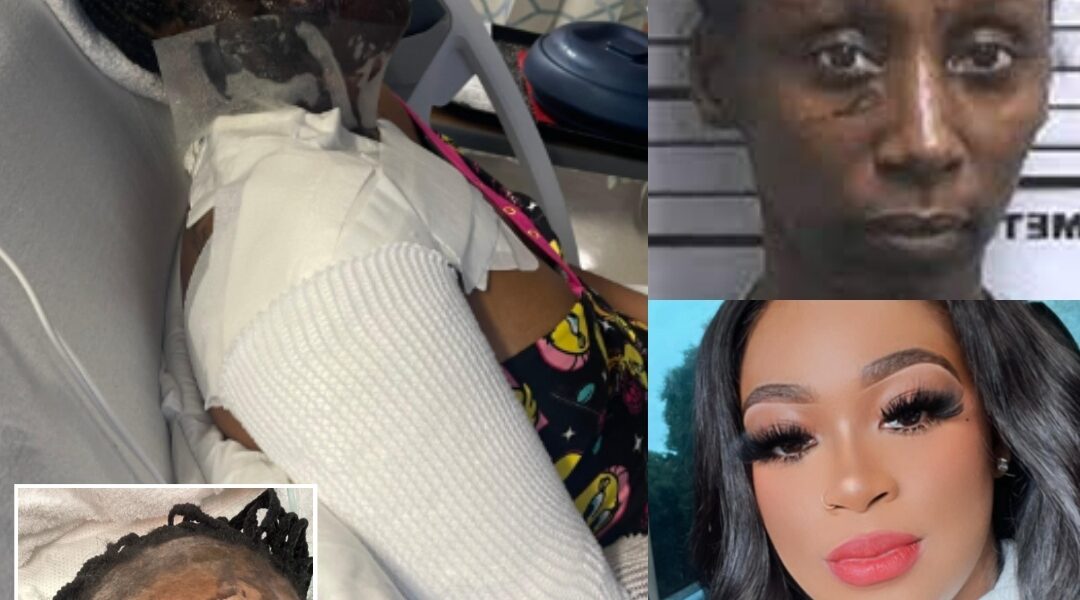
This is the story of 27-year-old nursing student and single mother, Jasmine Clausell — and the friend she tried to save, who nearly killed her instead.
It is a story about trust.
About boundaries.
About betrayal.
And about the terrifying truth:
Sometimes the people we try to rescue are the ones who turn on us the fastest.

A Mother, A Student, A Helper
If you ask anyone who knew Jasmine, they’ll tell you the same thing: she was the kind of woman who stepped up when others stepped back.
A full-time nursing student.
A single mother to her four-year-old son, Ace.
A young woman working hard toward a better life while still finding room in her heart for people who had lost their way.
One of those people was Quicheay Williams, someone Jasmine had known for years. So when Jasmine learned in early February 2025 that Quicheay was homeless — living out of her car near Atlanta with her dog — she didn’t hesitate. She didn’t overthink it. She didn’t ask for anything in return.
She simply said:
“Come stay with me. Just for a few weeks. I’ll help you get back on your feet.”
That’s who Jasmine was.
On February 11th, Quicheay arrived at Jasmine’s home on Springdale Road in Mobile, Alabama, carrying bags, uncertainty, and — as Jasmine would later realize — a darkness she wasn’t prepared for.
At first, everything seemed fine.
But only at first.

The Shift No One Saw Coming
For about two weeks, Jasmine noticed something was off.
Quicheay wasn’t looking for work.
She wasn’t grateful.
She wasn’t helping around the house.
She wasn’t trying to rebuild her life.
Instead, she complained.
Moped.
Brought a strange, heavy energy into the home.
Ignored Jasmine’s boundaries.
And acted as though Jasmine owed her something.
By February 24th, Jasmine had reached her limit. She had a child to raise, classes to attend, a life to protect. She couldn’t keep carrying someone who refused to stand on their own.
So that Monday morning, before dropping Ace off at school, Jasmine sat Quicheay down and told her gently — but firmly — that it was time to find another place to stay.
She expected sadness.
A difficult conversation.
Maybe even a small argument.
She did not expect what came next.
Because kindness had opened the door.
And now, rage was about to walk through it.

The Attack
While Jasmine was getting ready for school and daycare, she heard the microwave running in the kitchen. She assumed Quicheay was heating breakfast or warming something for herself.
But what she didn’t know — what she couldn’t have imagined — was that her friend was heating a chemical. Something corrosive. Something deadly. Something that, seconds later, would change Jasmine’s entire life.
When Jasmine’s grandfather came out of his room to see what the noise was, Quicheay snapped.
She began shouting:
“I’m not going nowhere!
You gonna put me out?
You think you’re gonna make me leave?”
Her voice was wild. Unhinged. Like she was fighting a battle that only she could hear.
Jasmine reached for her phone and dialed 911.
And that was the moment everything erupted.
Because before Jasmine could process what was happening, before she could defend herself, before help could arrive…
Quicheay threw the contents of the cup directly into Jasmine’s face.
The Pain No One Should Ever Endure
The burning was instant.
The chemical — which her mother later said may have been Drano or another corrosive cleaner heated in the microwave — tore into Jasmine’s skin.
Her right eye went blind immediately.
Blisters rose on her face in seconds.
Her neck, back, arms, and right leg burned so deeply that doctors said the chemical ate through to her fat tissue.
The liquid burned holes through her clothes.
Holes through her couch.
Holes through the floor.
But the attack wasn’t over.
Because through the pain, through the tears, through the shock, Jasmine saw something even more terrifying:
Quicheay reaching into her pocket — and pulling out a gun.

The Fight for Her Life
Jasmine’s grandfather lunged forward.
He managed to disarm Quicheay, grabbing the gun before she could pull the trigger.
But Quicheay wasn’t done.
She grabbed broken glass
and began stabbing at Jasmine’s hands
as Jasmine shielded her burned face.
Despite the agony tearing through her body,
despite only being able to see through one eye,
despite the shock threatening to shut her body down,
Jasmine fought back.
She managed to restrain her attacker.
Held her down.
Kept her from reaching for another weapon.
Even as Quicheay screamed:
“Let me go! Let me go!”
Jasmine, shaking and burned and barely standing, said the words of someone who knew she didn’t have another chance:
“No. I’m not letting you go.
You’re trippin’.
You need to chill out.”
When police arrived, they found chaos:
a burned room, a bleeding young mother, a terrified child, and a woman who had turned kindness into violence with no remorse.
Quicheay was arrested on the spot.
Her bond: $30,000.
Jasmine was rushed to the hospital with severe chemical burns requiring multiple surgeries.

What Jasmine Said From Her Hospital Bed
Doctors worked to save her eye.
To repair her skin.
To control the pain.
And through all of this, Jasmine had every right to be furious.
Every right to hate.
Every right to shut down emotionally.
But when reporters asked her how she felt…
Her answer broke everyone.
She said:
“My feelings are hurt… but I’m not angry.
I still care about her.
It’s crazy, cause she did me bad.
But it’s not in her heart to hate.”
This woman — a single mother, a nursing student, a kind soul who opened her home to someone in need —
was burned alive for her kindness.
And she still found grace.
Still found empathy.
Still refused to let hate win.

Why This Story Should Shake Every One of Us
Jasmine’s story is not just a headline.
It is a warning.
A reminder that not everyone wants to be saved.
That sometimes the people who need the most help are the ones who resent it the most.
That trauma, entitlement, and instability can twist gratitude into rage in an instant.
It’s a story about how generosity can put you in danger.
About how helping someone cannot fix what they refuse to fix in themselves.
About how quickly trust can turn into betrayal.
And it forces us to confront a heartbreaking truth:
You can’t help everyone.
And some people will punish you for trying.

A Mother Who Deserved Better
Jasmine should be in class.
She should be getting closer to her nursing degree.
She should be reading bedtime stories to Ace at night, not recovering from chemical burns that nearly blinded her.
She did everything right.
She offered help.
She opened her home.
She extended grace.
And still — she paid the price.
Her only mistake was believing that kindness would be enough.

The Question That Lingers
Why did this happen?
Why did helping a friend become a fight to survive?
Why do some people treat compassion like a weakness?
Jasmine still doesn’t have answers.
But she does have strength.
And a son who needs her.
And a future she is determined to reclaim.
Her story is a reminder — a painful, necessary one — that compassion is powerful…
But boundaries are lifesaving.
And in a world where desperation can turn unpredictable,
you must protect your peace, even from the people you want to save.


13-Year-Old Bryan Ceja Killed in Multi-Vehicle Crash on 210 Freeway in Sylmar.5806

The holiday season in Sylmar, Los Angeles, was meant to be filled with joy, shopping trips, and family gatherings.
Streets were lined with twinkling lights, and the spirit of Christmas seemed to hang in the air like soft snow — even in the sun-soaked city. But for the Siordia and Ceja families, that warmth was shattered in an instant.
On a Sunday afternoon, December 2025, a routine Christmas shopping trip ended in unthinkable tragedy.
Thirteen-year-old Bryan Ceja, full of energy, curiosity, and an unmistakable love for sports, was killed in a
multi-vehicle crash on the 210 Freeway, a collision that closed the freeway for hours and left multiple families reeling.
Bryan’s stepfather, Alfredo Siordia, spoke about the heartbreak with a voice thick with grief. “An amazing kid. I’m the luckiest stepfather ever to have him in my life,” he said.
The words were simple, yet heavy — the weight of loss palpable in the quiet pauses between sentences.

The Boy Behind the Tragedy
Bryan Ceja was more than just a number in a police report. He was a
vibrant, athletic teenager, whose energy lit up every room he entered. Friends and family remember him as playful, curious, and always ready for a game of baseball, football, or anything that challenged his boundless energy.
“He was just this energetic kid, and wanted to play sports. That was mostly his thing,” Siordia explained, recalling the countless afternoons spent cheering Bryan on from the sidelines, whether in football scrimmages or weekend baseball games. “Sorry, baseball, football, you name it. He was just very athletic.”
His love for activity was matched only by his warmth and kindness.
Those who knew Bryan described him as a teenager who could brighten a room with a smile, a boy whose laughter was infectious, and whose presence demanded attention not for mischief, but for the warmth he brought to family and friends alike.
For Siordia, the stepfather who had entered Bryan’s life years earlier, the bond was unbreakable. He recalls how, despite the typical challenges of blending families, Bryan taught him lessons of love, patience, and joy.
“For him being a little kid, he taught me how to love as well, and just like, I really miss him,” Siordia said.

The Day That Changed Everything
On that fateful Sunday, Bryan and his mother were out Christmas shopping. The mood was one of excitement and anticipation — the final touches before the holidays.
Gifts were selected, lists were checked twice, and the pair likely shared laughter over candies and trinkets along the way.
But on the 210 Freeway, a routine drive turned into
a scene of chaos and horror. Multiple vehicles collided in what authorities later described as a violent chain-reaction crash.
Emergency services were called immediately, and first responders rushed to the scene.
For the Siordia family, the day that had begun with anticipation and joy ended in devastation.
Bryan did not survive the crash. His mother, severely injured, was transported to a nearby hospital, where she began a long road to recovery.
Miraculously, she survived, but the emotional scars and trauma from witnessing her son’s death are immeasurable.

The Aftermath: Grief and Healing
In the days following the accident, the community of Sylmar rallied around the family. Friends, neighbors, and schoolmates offered support, prayers, and gestures of kindness, but none could bridge the gap left by Bryan’s absence.
For Alfredo Siordia, the grieving process was deeply personal, yet public in a way he hadn’t anticipated. Every conversation, every memory recounted to reporters or friends, became a testament to the life of a boy gone too soon.
“I go inside his room and, you know, picture the times he was there, and it’s just not going to be the same,” Siordia admitted.
The bedroom, once alive with the sounds of a young teenager — laughter, music, the shuffle of sports gear — now stands as a silent monument to memory.
Grief, Siordia notes, is not linear. It is a cycle of memories, reminders, and raw emotions that surface at the least expected moments: a stray baseball rolling across a driveway, the sight of a football helmet, or even the simple act of setting the table for Christmas dinner.

A Community in Mourning
While the Siordia family bore the personal grief, the accident reverberated across Sylmar. Highway closures on the 210 Freeway affected countless drivers, but beyond the inconvenience, the tragedy became a symbol of fragility in everyday life.
Local schools held moments of silence. Teachers spoke to students about safety, the unpredictability of life, and the importance of cherishing loved ones.
Church congregations offered collective prayers, lighting candles for Bryan and others injured in the crash. Social media feeds overflowed with messages of condolence, remembering a life cut short and a community united in sorrow.

The Father-Stepfather Bond
Alfredo Siordia’s role as stepfather was not just about guidance or discipline. It was about shared experiences, mentorship, and mutual respect.
Despite the legal distinctions of family, Siordia speaks of Bryan as a son, a friend, and a companion through life’s small and significant moments. From simple breakfasts to weekend sports games, their relationship was rooted in genuine love and understanding.
“He was just an amazing kid, and he brought joy into our home,” Siordia said. “It’s a void I don’t think can ever be filled, but I carry him with me in every decision, every thought, every day.”
In the wake of such sudden loss, Siordia also underscores the fragility of life and the importance of cherishing time with loved ones. Each moment — a hug, a conversation, a shared laugh — becomes infinitely more precious when the future is uncertain.

Remembering Bryan: Legacy Beyond Tragedy
Though his life was brief, Bryan left an indelible mark on everyone who knew him. Friends remember his sense of humor, his athletic prowess, and the way he could rally teammates or classmates with a single word of encouragement.
Teachers recall a student attentive and engaged, with a spark of curiosity that extended beyond the classroom. For family members, Bryan represented the very essence of joy, energy, and love.
In memory of Bryan, community members have suggested establishing scholarships, sports programs, or memorial events that honor his life.
Each act of remembrance is not only a tribute to him but also a testament to the collective healing of those affected by the crash.
The Accident and Safety Conversations
While grief remains the central focus, the crash also sparked broader conversations about road safety, highway conditions, and driver awareness. Multi-vehicle collisions, particularly during busy holiday weekends, underscore the fragility of life on the road.
Authorities have urged drivers to exercise caution, reduce distractions, and maintain safe speeds, especially in congested areas.
The Sylmar crash, with its devastating consequences, serves as a cautionary tale for the entire Los Angeles area. Though nothing can reverse the tragedy, the hope is that lessons learned can prevent similar losses in the future.
Coping, Healing, and Moving Forward
The Siordia and Ceja families have leaned on faith, counseling, and community support as they navigate the impossible task of mourning a child.
While grief is ongoing, there are moments of comfort, such as sharing memories, recounting stories of Bryan’s accomplishments, and celebrating the life he lived, however brief.
Siordia has also emphasized the importance of holding onto love in the face of loss. “He taught me how to love,” he said. “I carry that with me, and I will keep his memory alive in everything I do.”
As the holiday season approaches, the pain is undeniably sharper, but it is also tempered with gratitude for having known such a remarkable young boy.
The balance of sorrow and remembrance forms a delicate tapestry of love and loss, one that will endure for years to come.
A Call to Cherish Life
Bryan Ceja’s story is, at its core, a reminder of life’s fragility and the enduring power of love.
In a world often taken for granted, the events on the 210 Freeway illustrate how quickly circumstances can change, how precious each moment truly is, and how a single life can leave a lasting impact.
From his athletic feats to the warmth he shared with family and friends, Bryan’s legacy continues.
Though he is no longer present physically, his spirit and influence remain, a guiding force for those who loved him and for the Sylmar community.
Moving Forward, Together
The road to healing is long and uneven. Yet in every conversation, every tear, and every memory, Bryan’s life inspires action, reflection, and connection.
Family members are committed to honoring him, friends are motivated to cherish every moment, and the community is reminded to protect the most vulnerable among us — especially children.
Through tragedy, Sylmar has been forced to confront the intertwined realities of life, loss, and love.
And while nothing can replace the young boy whose energy once filled rooms and fields, his presence endures in every memory and story shared.
Bryan Ceja may have been only 13, but the life he lived, the love he gave, and the joy he brought continue to resonate, shaping a community forever changed by loss and strengthened by remembrance.