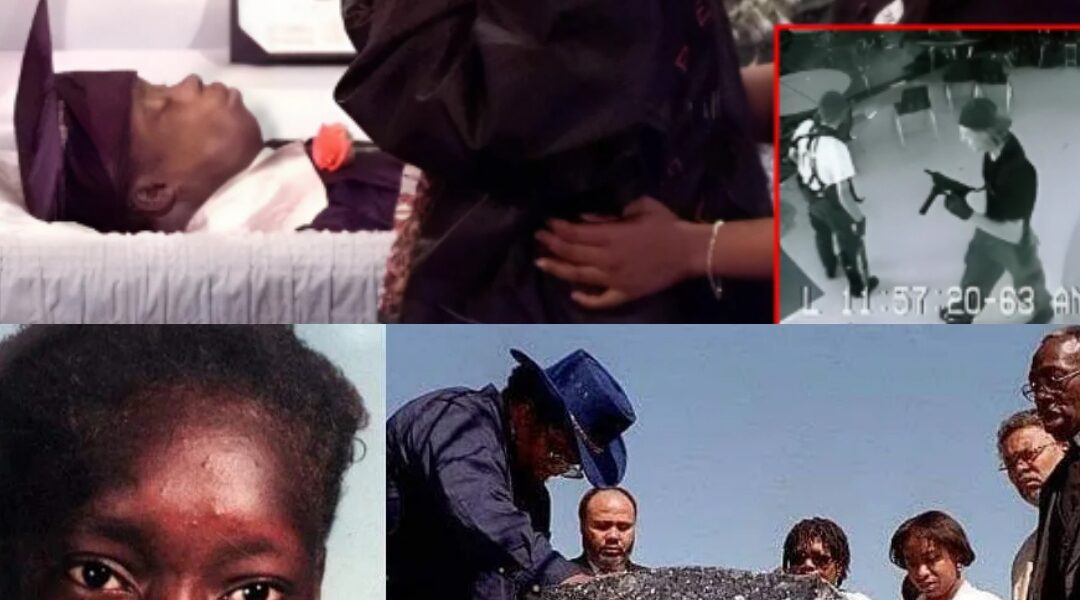

The Columbine shooting of April 20, 1999, is etched into the memory of a generation. For many, it was a tragedy of incomprehensible scale, a day when innocence was shattered, and the world changed forever. Among the thirteen lives lost was Isaiah Shoels, an 18-year-old with a laugh that could light up a room, a smile that drew people to him, and a dream of creating music that could heal hearts. Isaiah’s story is one of hope, talent, and the cruel randomness of violence, a reminder of both the beauty and fragility of life.

Isaiah was more than a student; he was a musician, a friend, and a young man filled with quiet optimism. He had dreams beyond the hallways of Columbine High School. Music was his sanctuary. From the rhythms of hip-hop to the melodies of R&B, Isaiah found ways to express the feelings too complex for words. He believed in the power of sound, in the ability of a song to soothe pain and bring people together. His friends often described him as someone who could make anyone laugh, who had a kindness that transcended the cliques and divisions that often mark high school life.

On that spring morning, Isaiah arrived at school with plans like any other day: classes, homework, hanging out with friends, and dreaming about his music. The air was crisp, sunlight spilling over the campus lawns, and yet, beneath the normalcy of the morning, a storm was quietly brewing. No one knew how violently life could change in an instant.

When the first shots rang out, chaos erupted. Students ran screaming, some hiding in closets, others ducking behind lockers. Isaiah, with two friends, made their way to the library, seeking shelter. Huddled under a table, their hearts pounding, they whispered prayers to survive. Isaiah’s mind must have raced, trying to reconcile the normalcy of school life with the terror now unfolding. He was known for his calmness under pressure, his ability to comfort those around him, and in that moment, he tried to be the anchor for his friends, even as fear gnawed at every nerve.

But the shooters found him. Their cruelty was immediate and targeted. One of the gunmen’s voice pierced the panic, calling out, filled with racial hatred: “There’s a n***er over here!” Isaiah’s friends froze, holding their breath, praying that somehow, their hiding place would protect them. The words themselves were a dagger, cutting deeper than any physical wound, exposing the darkness of hate that had been lurking unnoticed.
The shooters reached under the table, attempting to drag Isaiah out. “Come on, get up! You think you’re tough?” they sneered, their laughter a soundtrack to the unimaginable horror. Isaiah’s friends whispered for him to stay still, hoping against hope that somehow, this nightmare could end without taking him. But the hatred was relentless. Then came the shot — a single, fatal bullet that ended a life brimming with promise. Isaiah’s body fell silent, the dreams he had nurtured for years extinguished in a moment.

The aftermath was surreal. Smoke hung in the library, the echoes of gunfire replaced by sobs, screams, and stunned silence. One of the killers, oblivious to the humanity before him, remarked with twisted fascination: “Look at this
Black kid’s brain! Awesome, man.” Isaiah hadn’t even been hit in the head, yet the statement underscored the grotesque dehumanization that fueled the attack. It was a moment that highlighted not only the senselessness of the violence but also the racial hatred intertwined with it.
Isaiah’s loss rippled far beyond the walls of Columbine High. His family, friends, and community were left to grapple with grief, anger, and incomprehension. How could a boy so full of life, so talented, be taken so abruptly? His parents described him as a gentle soul, a child who loved unconditionally, who always sought to bring joy to those around him. The weight of his absence was palpable in every corner of their lives, a constant reminder of the day when the world seemed to stop spinning.

Yet, in grief, there is also memory, and in memory, a form of resistance against the erasure that violence seeks to impose. Isaiah’s friends recalled his laughter, his infectious energy, and the way he would hum melodies while walking down the hall. They spoke of his dedication to music, of how he would spend hours writing lyrics and experimenting with beats, imagining a future where his songs could connect people, comfort them, and heal wounds. Even in the shadow of his death, Isaiah’s spirit lived on through the music he loved, the stories his friends told, and the lessons of courage and kindness he had imparted.

The Columbine tragedy, with all its horror, also became a catalyst for reflection and change. Isaiah’s story, and the recognition of the targeted nature of his murder, brought attention to the intersection of gun violence and racial hatred. His life reminded a grieving nation that victims are not statistics; they are humans with dreams, passions, and families who continue to mourn them long after the headlines fade.

Isaiah’s friends often speak of him not as a victim, but as a force of joy and inspiration. He exemplified resilience in a world that can be cruel, showing that even in ordinary life, one can embody extraordinary light. Every beat of music he created, every smile he shared, and every act of kindness he performed continues to echo, defying the attempt to erase him.
The legacy of Isaiah Shoels is complex, poignant, and enduring. He represents the countless young lives cut short by violence, the unfulfilled potential of a generation, and the resilience of the human spirit in the face of hate. Schools, communities, and individuals continue to honor his memory, not just as a reminder of tragedy, but as a testament to what it means to live fully, love generously, and pursue dreams relentlessly, no matter how brief life may be.

Isaiah’s story challenges us to confront hatred, to acknowledge the fragility of life, and to recognize the enduring impact one person can have, even in the face of unimaginable loss. He was a boy with music in his soul, laughter in his heart, and a light that, though extinguished too soon, continues to illuminate the lives of all who remember him.
In remembering Isaiah Shoels, we are reminded that behind every statistic is a story, behind every name a human being with dreams, talents, and love to give. His life, though tragically brief, teaches us about courage, empathy, and the profound power of remembering those lost to senseless violence.

Isaiah Shoels was more than a victim of Columbine. He was a musician, a friend, a brother, and a light that refused to be forgotten. His story endures as a symbol of hope and humanity, urging us to cherish every moment, to stand against hatred, and to honor the lives of those taken far too soon.

The music Isaiah dreamed of making may never have reached the world in the way he intended, but through memory, storytelling, and the hearts of those who loved him, it lives on. Every note he hummed, every smile he shared, and every act of kindness he performed continues to resonate, ensuring that Isaiah Shoels is remembered not just for the tragedy that took him, but for the life, laughter, and light he gave to all who knew him.
Saying Goodbye to Christina, Three Days Before Christmas.5819