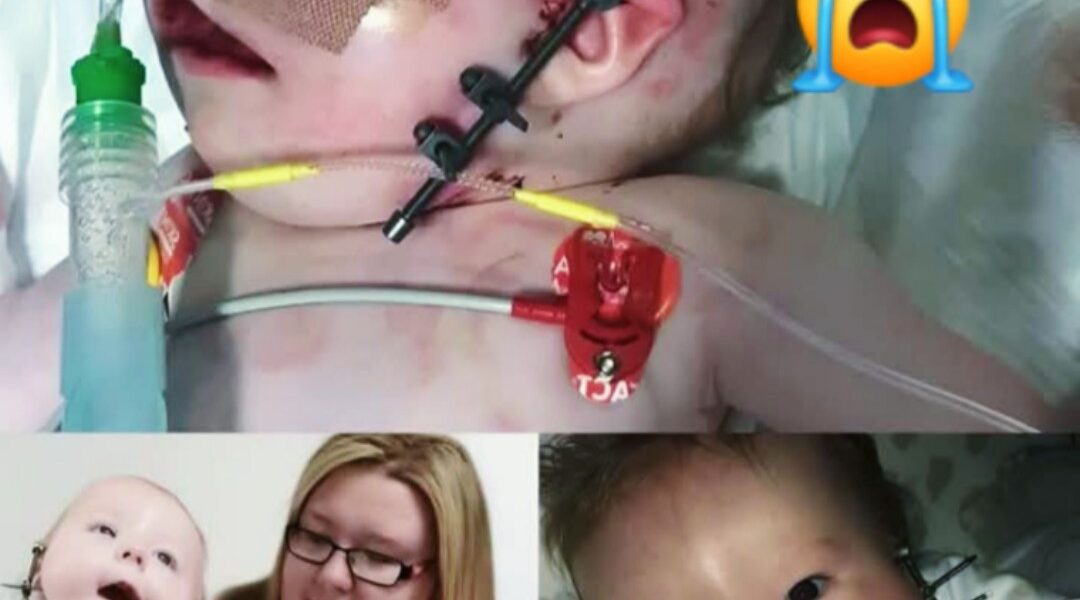

A tiny warrior with a smile brighter than any challenge.
Baby Elio entered the world wrapped in love, greeted by hopeful hearts and gentle dreams of the life ahead. From the outside, he looked perfect—small fingers, soft skin, a quiet strength that seemed to rest peacefully on his tiny chest. But soon after his birth, doctors discovered something unexpected. Elio had been born with a rare craniofacial condition, one in which parts of his skull had begun to fuse too early, limiting the space his growing brain would need.
In an instant, the joy of new beginnings became intertwined with fear.
His parents listened as specialists explained the condition in careful, compassionate tones. They spoke of scans, measurements, pressure, and the possibility of surgery far earlier than anyone ever imagines when welcoming a newborn. Words like “rare” and “complex” echoed in the room, heavy with uncertainty. The future they had pictured shifted, reshaping itself around hospital visits, expert opinions, and questions that had no immediate answers.
But Elio didn’t seem to notice the fear.
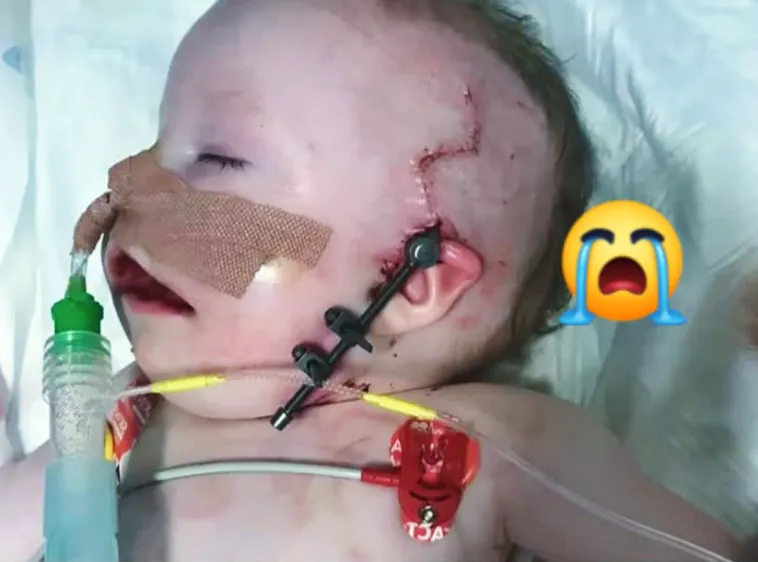
Even in those early days, he greeted the world with a calm presence and, soon, a smile that felt impossibly bright for someone facing so much. While adults around him worried about timelines and outcomes, Elio did what babies do best—he lived in the moment. He slept. He stretched. He listened to familiar voices. And when his parents leaned close, he responded with wide eyes and quiet reassurance, as if telling them, I’m still here. I’m okay.
His days became filled with appointments instead of playdates.
Doctors monitored the growth of his head carefully, watching for any signs that pressure might affect his development. Every scan carried weight. Every follow-up appointment came with a familiar knot of anxiety. Would surgery be needed soon? How risky would it be? What would recovery look like for someone so small?
For his parents, the waiting was the hardest part.
Waiting for clarity.
Waiting for decisions.
Waiting while loving a child whose path was already marked by challenges no baby should have to face.
And yet, alongside that fear, something powerful grew—determination.
They learned quickly that Elio was not fragile in the way the word often implies. He was strong. Not loud or dramatic, but steady. He adapted to long days, unfamiliar hands, and constant monitoring with quiet resilience. His smile became their anchor. In hospital corridors and exam rooms filled with tension, that smile reminded everyone that Elio was more than a diagnosis.
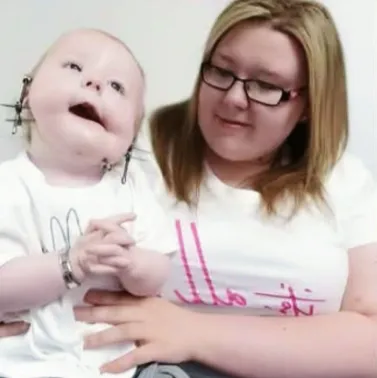
He was a little boy with a spirit that refused to be overshadowed.
As months passed, conversations about surgery became more real. Doctors explained that correcting the early fusion would give Elio’s brain the space it needed to grow safely. The procedure would be complex, involving a skilled surgical team and a long recovery—but it would also offer him the best chance at a healthy future.
The idea of surgery was terrifying.
Handing over a baby—your baby—to surgeons requires a level of trust that feels almost impossible. His parents imagined the operating room, the waiting hours, the fear of complications. But they also imagined something else: Elio running, learning, laughing freely, unburdened by the pressure his skull placed on his growing mind.
And so they chose hope.
Through it all, Elio continued to shine.
He reached milestones at his own pace, filling rooms with curiosity and warmth. He learned faces, responded to voices, and laughed in a way that felt like a gift—one offered freely to anyone who met him. Nurses remembered him. Doctors smiled when they saw him. He had a way of softening even the hardest conversations.
Recovery, when it came, was not easy.
There were long days and careful nights, moments of exhaustion layered on top of relief. His parents learned to celebrate progress in small ways: swelling going down, steady vitals, peaceful sleep. Each day forward felt like a quiet victory, one built not on speed, but on perseverance.
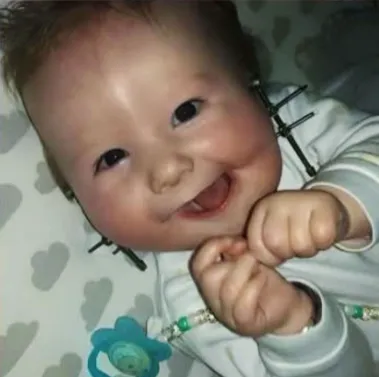
Elio took it all in stride.
He healed. He adapted. He continued to greet the world with that same bright smile, as if reminding everyone around him that he was not defined by what he had endured, but by how he moved forward.
Today, Elio is still on his journey.
There will be follow-ups, monitoring, and moments when worry returns. But there is also confidence now—confidence born from seeing just how capable he is. His future is no longer defined by fear alone, but by possibility.
Elio has taught his family something profound.
He has shown them that courage doesn’t always roar. Sometimes it coos softly. Sometimes it smiles from a hospital crib. Sometimes it shows up as resilience in a body far too small to carry such a big story.
He has shown them that challenges can exist alongside joy—and that one does not cancel out the other.
Elio’s story is not just about a rare condition.
It is about love learning how to be brave.
About parents discovering strength they didn’t know they had.
About a baby who met the world with openness, even when the world met him with challenges.
A tiny warrior with a smile brighter than any obstacle.
And as Elio continues to grow, his journey stands as a reminder that even the smallest heroes can carry extraordinary light—one smile, one step, one hopeful day at a time.
Gunner’s Miraculous Heart: Two Surgeries, One Unbreakable Spirit 85
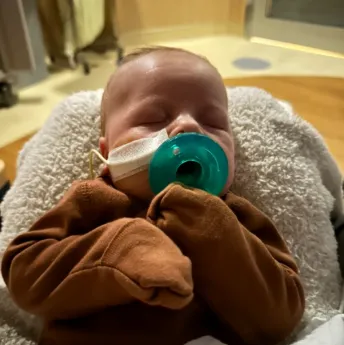
When Gunner was born on March 2, 2023, the world felt both impossibly bright and suddenly terrifying.
He was brand new, small and perfect in all the ways only a newborn can be. But within moments of his arrival, doctors realized something was wrong. The joy that should have filled the room was replaced by urgency, careful voices, and rapid movement. Tests were ordered almost immediately, and before his parents could fully process that he was here, they were being told words no parent is ever ready to hear.
Gunner had been diagnosed with Truncus Arteriosus Type II and a large Ventricular Septal Defect.
It meant his heart had formed with one main artery instead of two, forcing oxygen-rich and oxygen-poor blood to mix. His tiny heart was working far harder than it should have been, and without surgery, he would not survive. There was no time to wait, no time to hope the problem might resolve itself.
Gunner needed open-heart surgery.
At just two weeks old, he was wheeled away into an operating room far too big for his tiny body. His parents kissed his forehead, memorizing the feel of his skin, the shape of his face, and the rise and fall of his chest. They handed him over knowing there were no guarantees—only faith, hope, and the skill of the surgeons fighting for their son’s life.
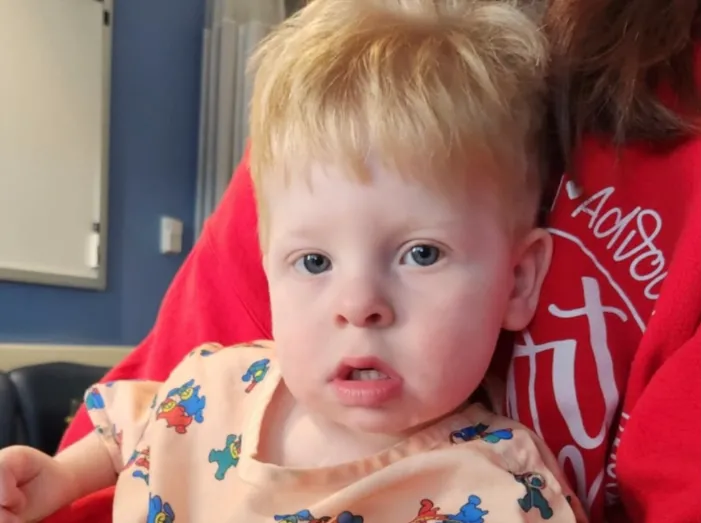
The waiting was unbearable.
Minutes felt like hours. Every sound in the hallway made their hearts race. They imagined all the futures they wanted for Gunner—first steps, scraped knees, laughter, bedtime stories—and wondered if he would ever get the chance to live them. All they could do was hold on to each other and pray.
When the surgeons finally came out, the news was cautious but hopeful.
Gunner had made it through surgery.
His heart had been repaired as much as possible, and blood was finally flowing the way it should. Relief washed over his parents, though fear never fully left. Recovery would be long and uncertain, doctors explained. There would be risks, setbacks, and careful monitoring for the rest of his life.
The days that followed were filled with wires, monitors, and watchful eyes.
Gunner lay in intensive care, his chest rising and falling as machines supported him. Slowly, signs of recovery appeared. His color improved. His heart rhythm stabilized. He began to show the quiet strength that would come to define him. Every small milestone—a stable night, a successful feeding, a gentle squeeze of a finger—felt like a victory.
As weeks turned into months, Gunner surprised everyone.
He grew stronger. He smiled. He laughed. He showed curiosity about the world around him, as if determined to experience everything he could. His parents learned to live with a new kind of normal—one shaped by cardiology appointments, medications, and constant vigilance, but also by overwhelming gratitude.
For a while, it felt like they had made it through the worst.
But congenital heart disease is rarely a single chapter.
As Gunner grew, doctors began to see signs that his heart was struggling again. The repairs that had saved his life as a newborn were no longer enough. His heart was working harder, and the strain was becoming too much. Once again, the word surgery entered their lives.
In December 2024, Gunner faced his second open-heart surgery.
This time, he was older. He smiled at the nurses. He reached for his parents. He didn’t understand what was happening, but he knew who made him feel safe. That made the fear even sharper. Handing him over again meant trusting fate a second time, knowing exactly how fragile everything could be.
The waiting was just as painful.
Memories of the first surgery came rushing back, along with the fear of what might go wrong. But Gunner fought—just as he always had. His heart endured another complex operation, and once again, he survived.
Recovery was not easy.
There were setbacks, long nights, and moments when exhaustion threatened to overwhelm everyone involved. But Gunner’s resilience shone through. He healed. He adapted. He continued to surprise his medical team and his family with his strength.
Today, Gunner is thriving.
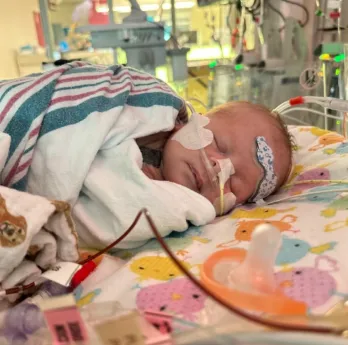
He is full of life, curiosity, and joy. His laughter fills rooms that were once filled with fear. He moves through the world unaware of how extraordinary his journey has been, unaware of how many times his heart has been fought for and protected.
His parents see it clearly.
They see the scars that tell a story of survival. They see the courage that lives quietly inside him. They see a child who has already faced more in his short life than many do in a lifetime—and who continues forward with grace and determination.
Gunner’s journey has changed them forever.
It has taught them that strength doesn’t always look dramatic. Sometimes it looks like a tiny heart beating steadily after surgery. Sometimes it looks like a smile after pain. Sometimes it looks like getting up each day and choosing hope, even when fear feels easier.
There are still challenges ahead.
Gunner will always need care. His heart will always need watching. The future will never be entirely predictable. But what defines his story is not uncertainty—it is resilience.
Gunner is here.
He is growing.
He is thriving.
He is loved beyond measure.
And his journey continues to inspire everyone who hears it, reminding them that even the most fragile beginnings can give rise to extraordinary strength—and that sometimes, miracles come not as sudden moments, but as a child who keeps going, heartbeat by heartbeat, day by day.