
The plan was simple.
He would finish his shift, walk out of the Amazon plant, and hop into his sister’s car like he’d done before.
Instead, that night ended with her staring at an empty passenger seat and a phone that would not ring back.
She checked the time once, then twice, then ten times.
People streamed out of the building in waves, laughing, scrolling, heading home, but he never appeared in the crowd.
His absence, at first a small inconvenience, slowly stretched into something heavier, something with teeth.
She called him.
It rang longer than it usually did, and then went to voicemail, his familiar voice suddenly feeling too far away.
She tried again, and again, each unanswered call pressing cold fingers around her ribs.

By the time she dialed the police, her hands were shaking.
She told them his name, his age, the fact that he was supposed to be here, with her, in this car, headed home.
Instead, he was nowhere, and her words tumbled out like she was trying to outrun the worst possibilities.
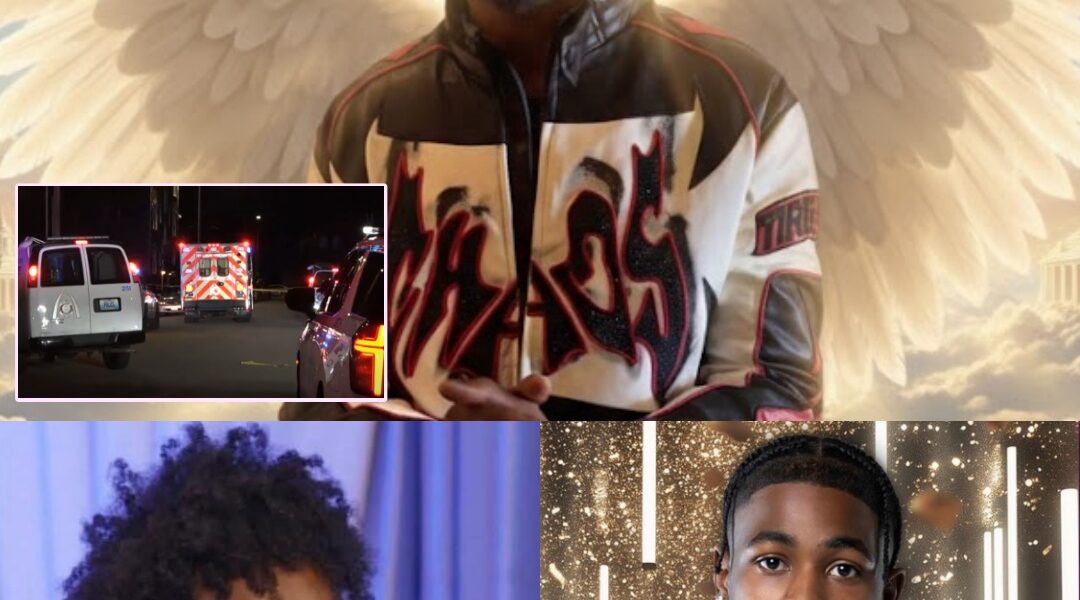
His name was Jardyn Walker.
Twenty-three years old, with a grin that knew exactly how to turn a room into an audience.
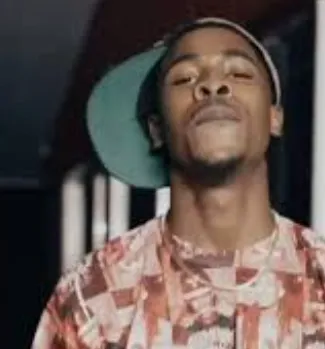
On the streets and on the screen, he was J Rok, PeeWee, a St. Louis voice learning how to turn his life into a soundtrack.

To his family, he was just Jardyn.
The little brother who used to rap into a hairbrush in the living room, who annoyed his sister and then made her laugh before she could stay mad.
The son who could be stubborn and loud and loving in the same breath.
The officers listened as his sister explained everything.
He had last been seen in University City, his routine suddenly cut short for reasons no one could name.
They marked him as a missing person, a phrase that felt cold and official, nothing like the living, breathing man who had been texting her only hours before.

They began to track his phone.
Somewhere out there, its last signal pulsed quietly into the night, a digital trail left by someone who could no longer speak for himself.
May you like

On screens in a police station, a point on a map glowed with a cruel kind of certainty.
Around 1 a.m., that signal led them to the 4200 block of Olive Street.
The city was quieter then, the noise of the day finally sinking into a tired hush.
Flashing lights carved into the darkness, washing brick and concrete in red and blue.

When officers stepped out of their vehicles, they were already braced for something bad.
You don’t get a missing person’s ping at that hour and expect a happy ending.
Still, there’s always a part of you that hopes you’re wrong.
They moved through the shadows with slow, steady purpose.
Every parked car, every doorway, every corner of the sidewalk mattered.
These were the moments when seconds felt heavy, when silence sounded like a warning.

Then they saw him.
A young man on the ground, motionless, his body curled in a way no sleeping person ever would be.
The wound to his torso spoke before anyone else could.
They called for medics.
Hands pressed where they could, voices sharpened by urgency, training taking over where emotion threatened to break through.
But the night had already made its decision.
He was pronounced dead at the scene.
Just like that, the missing person report became something else entirely.
A family that had gone to bed worried would wake up living inside a nightmare.

Back at home, phones would start ringing.
First one, then another, the kind of calls that begin with “Are you sitting down?” and never end with good news.
Somewhere, a mother’s world would tilt, and a father’s chest would crack open around a single sentence: “It’s Jardyn.”
Grief does not arrive quietly.
It crashes through the front door, through the walls, through the spaces you thought were safe.
In the Walker home, his name suddenly became something people whispered because saying it too loudly made it feel too real.
To the wider world, the notifications came later.
Screens lit up with headlines and posts and breaking updates, turning his last moments into a story people could read from their couches.
But in St. Louis, many people didn’t need the news to tell them who he was.

They already knew J Rok.
They had watched him on stage, mic in hand, shoulders loose, eyes bright with the thrill of being seen.
They had watched his clips online, his verses bouncing over beats that carried pieces of this city in every bar.
He wasn’t just another name on a flyer.
He was a presence at open mics and studio sessions, the guy who would hype up his friends before his own set.
He believed there was room for all of them to win.
And then there was PeeWee, the reality TV contender.
On Zeus Network, on “Two Ways with Erica Mena,” he was the one who turned flirting into banter and confession into performance.
He’d auditioned for “Bad Boys” too, stepping in front of cameras like he was born to do it.
People saw him there and thought, He’s going somewhere.
They saw the confidence, the charisma, the way he wasn’t afraid to be loud or messy or vulnerable in front of the world.
Whether you loved him or rolled your eyes at him, you remembered him.
That’s the thing about a rising star.
You don’t just watch them; you start quietly rooting for them to make it out, to make it bigger than the block, bigger than the struggle.
Jardyn was one of those people.

He had grown up learning how to turn pain into punchlines and hope into hooks.
Friends remembered late nights in makeshift studios, laptops humming, cheap mics catching lyrics that still managed to sound like something real.
They talked about how he could joke around one minute and get deadly serious about his goals the next.
Music was never just a hobby for him.
It was the way he stitched together everything he’d seen and survived.
Every track was a small act of defiance against the idea that he would stay where he started.
Reality TV had just widened the lens.
Suddenly, people from other cities, other states, were saying his name, replaying his scenes, arguing about him in comment sections.
For a kid who came up in St. Louis, that kind of reach felt like proof that the impossible was actually happening.

But underneath the showmanship, he was still somebody’s brother.
The same brother who promised he’d be at that Amazon plant when her shift ended.
The same brother whose empty seat that night would replay in her mind over and over again.
In the days after his death, the city did what cities do when they lose one of their own.
Murals began to appear, first as sketches, then as color, his face looking down from brick walls with that familiar half-smile.
Candles gathered on sidewalks and corners, their tiny flames a quiet protest against the darkness that had taken him.
Social media filled up with his name.
Clips from shows, snippets of music, selfies from dressing rooms and car rides and regular days.
Every post carried some version of the same message: “This doesn’t feel real.”

Friends shared stories that didn’t make it onto TV.
Like the way he would pull up late but always with some wild excuse that made everyone laugh too hard to stay mad.
Or the way he never left a studio session without telling someone else in the room that they were next, that they had it too.
Family shared memories that cut even deeper.
Holidays, birthdays, those random afternoons where nothing remarkable happened except the fact that they were together.
Now, every unremarkable day suddenly looked like treasure in hindsight.
Questions started circling, as they always do.
What happened between the last time his sister expected to see him and the moment officers stood over his body on Olive Street?
Who was with him, who saw him last, who knows more than they’re saying?
The investigation moved forward, measured and methodical.
Detectives followed leads, reviewed footage, talked to anyone whose name brushed up against his in those final hours.
Every answer seemed to open up three new questions.

Meanwhile, the family was left living in two timelines at once.
In one, he was frozen on screens and flyers, immortalized as the version of himself the world knew.
In the other, he was the boy they had watched grow, the man they had just watched begin to really step into his own.
Grief doesn’t move in straight lines.
Some days, it looks like tears and anger and quiet bargaining with a universe that will not budge.
Other days, it looks like scrolling through old messages just to hear his voice note one more time.
His mother learned to brace herself before opening her phone.
With every notification came the risk of seeing his face unexpectedly, laughing, talking, alive in a space where time doesn’t move forward.
Those images were both comfort and torture.
His father walked through the house in slow circles.
Every object seemed to have a story attached to it now—a hat left on a chair, a pair of shoes by the door, a half-finished notebook of lyrics.
Nothing had changed, and everything had.
His sister carried a different kind of weight.
The memory of that night at the Amazon plant wouldn’t leave her alone.
The parking lot, the waiting, the growing unease—each detail replayed like a scene she couldn’t reshoot.
She thought about all the times he had actually made it to the car.
All the nights they had driven home together, music too loud, windows cracked just enough to let the air in.
Those rides had felt ordinary then; now, they felt sacred.

In the broader world, people debated in comment sections.
Was it safe to chase fame this aggressively, to live so publicly, to be known by thousands of strangers?
Was the city doing enough to protect its own, especially those bold enough to stand out?
But in the Walker household, the debate didn’t matter as much as the absence.
Not the headlines, not the speculation, not the narratives being woven by people who had never heard his laugh in person.
What mattered was that his chair at the table was empty.
Still, even in the thick of their grief, one truth rose to the surface.
Jardyn’s story couldn’t end on a sidewalk in the middle of the night.
Not when he had spent so much of his life trying to turn his voice into something that would echo.

So they began to talk.
To share who he really was, beyond the edits, beyond the episodes, beyond the one-line descriptions in articles.
They wanted people to understand the whole person, not just the way his life ended.
They talked about his stubbornness, his heart, his flaws, his dreams that were bigger than his budget but never bigger than his faith in himself.
They talked about the times he nearly gave up and the times he refused to back down.
They talked about the kid who wanted more, not just for himself, but for everyone who believed in him.
Slowly, their pain became something else too.
A demand for answers, for accountability, for a world where young men like him aren’t written off as statistics.
A promise that his name would not be swallowed by the endless scroll of tragedy.

Because in the end, he was more than the way he died.
He was a brother who never stopped cracking jokes, an artist who believed his city could be a launchpad, not a cage.
He was a reality TV character to some, but to those who really knew him, he was simply Jardyn—a complicated, determined, imperfect, beautiful life.
And somewhere in St. Louis, a beat still plays that he never got to finish.
A verse still waits for his voice to land on it.
A city still feels the space he left behind, even as new nights fall and new stories begin.