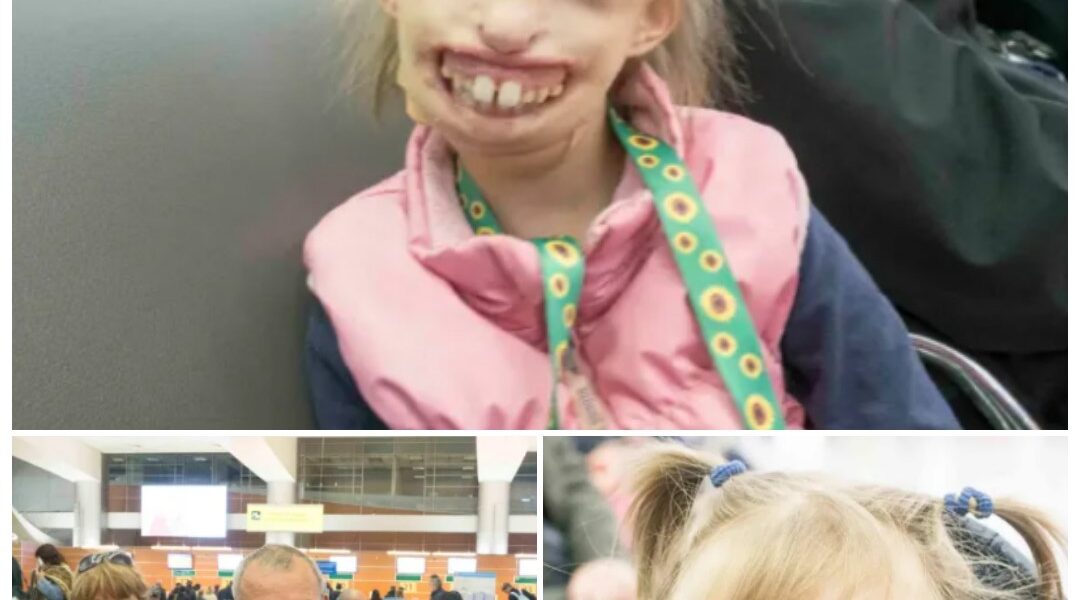

Darina Shpengler is six years old.
She has just smiled for the first time in her life.
For most children, a smile is ordinary. A reflex. A daily habit. But for Darina, it is monumental. It is hope. It is victory. It is life itself.
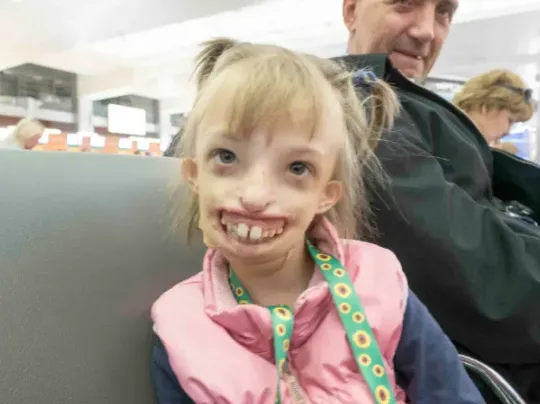
Darina was born with only half a face. No lips. No chin. A rare condition that made eating, speaking, and even breathing difficult. Interactions with other children were nearly impossible. Some family members struggled to accept her. Others recoiled.
At six, she weighed as much as a typical one-year-old. Every day was a fight. Every bite a challenge. Every glance in the mirror a reminder of the life she had been denied.
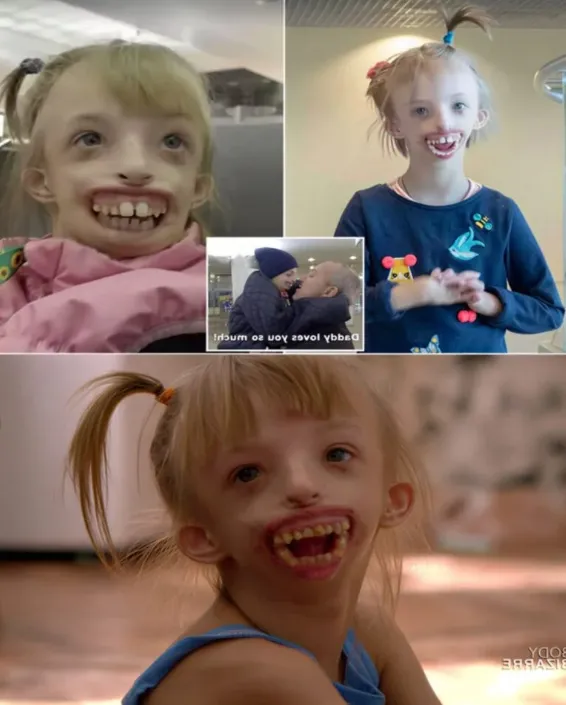
But Darina never stopped wanting to live fully.
Her family — her mother, Elena, and father, Yury — never stopped believing in her.
They carried her through hospital visits, therapies, and a world that didn’t understand. They whispered love, encouragement, and prayers into the air, hoping it would reach where medicine sometimes could not.
Then came Great Ormond Street Hospital in London.
Three months of treatment. Intensive preparation. Endless consultations. Every plan meticulously designed to give Darina the chance she deserved: a chance at a full face, a chance to smile, a chance at normalcy.
The surgery would be grueling. Eleven hours. Precise craniofacial reconstruction. A small jaw repositioned. Additional skin grafted onto her neck. A procedure costing £67,400 — funded by strangers, donors, and compassionate hearts around the world.
In the operating theatre, Professor David Dunaway and Dr. Nadeem Saeed worked tirelessly. Each movement was delicate. Each cut precise. Every moment carried the weight of a child’s entire life.
After nearly eleven hours, the surgery was complete.
Darina could finally smile.
The impact was instantaneous. Her mother wept. Tears fell freely, hot and unrestrained. “She has learnt to laugh,” Elena whispered, disbelief and joy mingling in her voice.
Her father embraced her for the first time in months. “You are so beautiful,” Yury said, his voice trembling with love.
In that moment, Darina’s life changed.
No longer just a child defined by a rare and isolating condition, she became a child with possibilities. With hope. With light.
The journey had been more than medical. It had been emotional, spiritual, and deeply human.
Darina’s first smile was more than a curve of lips. It was resilience. It was courage. It was defiance against a world that had underestimated her from birth.
She spent hours relearning basic functions. Speech therapy. Eating therapy. Muscle control. Each success was a small revolution. Every giggle, every sound she could make, every movement of her lips became a victory celebrated by her family, her doctors, and the staff who had watched her struggle.
Language was not a barrier. The hospital staff spoke in gestures, gentle encouragement, and patient attention. They created a space where Darina could explore joy without fear.
Despite the challenges, she flourished.
Through the months, she discovered trust. She discovered love. She discovered herself.
Even simple gestures — reaching for a toy, tilting her head, exploring textures — became moments of triumph. Each tiny achievement was magnified by the weight of the struggle she had endured to reach it.
Darina’s condition, once thought to resemble severe Nager syndrome, was instead a unique combination of spontaneous genetic mutations. She is one of a kind. Her story has no exact precedent.
And yet, her story resonates universally.
Darina’s courage speaks to parents watching over children who struggle. It speaks to families who have been told “impossible.” It speaks to anyone who has ever faced a challenge that feels insurmountable.
It is proof that hope, human kindness, and determination can overcome extraordinary odds.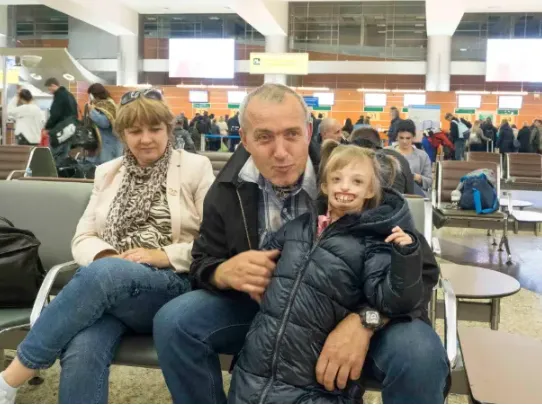
Back in Siberia’s Krasnoyarsk region, Darina continues recovery. Her family is preparing for the next surgery — reconstruction of her upper jaw and lip. Each procedure brings her closer to normalcy. Each step forward strengthens her confidence, allowing her to face the world with less fear and more joy.
Elena hopes that as Darina’s appearance improves, she will encounter acceptance. That children and adults alike will see her for who she is, not for what she lacks. That she will be free to grow up without judgment or shame.
Darina has already started showing the world who she truly is.
A child who laughs. Who plays. Who embraces life. Who teaches lessons far beyond her years.
Her family shares every small victory with gratitude, not as a plea for attention, but as testimony to what love and generosity can accomplish.
The donations that funded her surgery, the medical team’s tireless work, and the worldwide support all converge in Darina’s first smile. Every curve of her lips carries the weight of thousands of hearts aligned in hope.
It is impossible not to feel the gravity of this moment.
A six-year-old girl, once isolated and fragile, has taken a monumental step toward the life she deserved. Her journey illuminates what it means to fight against overwhelming odds.
Darina’s story is also a call to action.
To see the world through compassion. To support children in need. To recognize that even the smallest gestures — a donation, a kind word, a prayer — can ripple outward and transform a life forever.
It is a reminder that miracles are often the sum of many people choosing to act.
Darina is proof that courage is not always loud. Sometimes, it is quiet. Persistent. Unseen by the world at large, yet powerful enough to reshape a child’s destiny.
Her smile is no longer just an expression. It is a declaration: I exist. I am resilient. I am capable. I am loved.
From a distant hospital bed in London to a small town in Siberia, Darina’s journey resonates. It transcends borders, language, and culture. It is a story that has captured hearts worldwide.
For those who followed her journey, her first smile was a moment of collective triumph. A reminder that even in the darkest times, hope persists. That life can surprise us. That the impossible is sometimes possible.
Darina’s story is far from over.
She will undergo further procedures, continue therapies, and face challenges. But the child who once could not smile now does — fully, freely, joyously.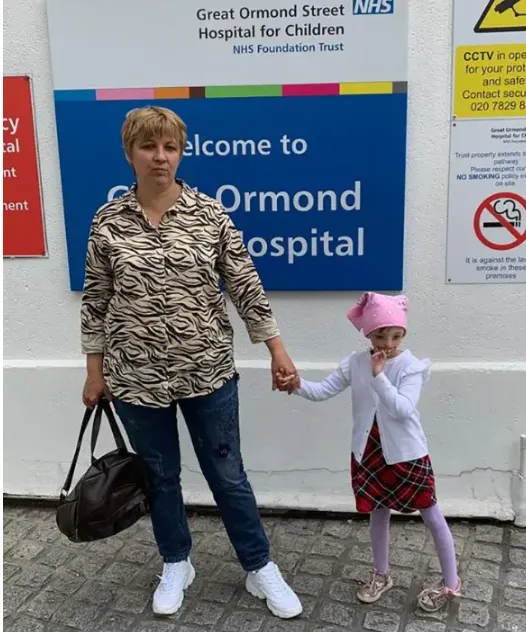
Her parents stand beside her, guardians of a miraculous journey. Her doctors continue their careful work, custodians of hope. And the world watches, inspired by a girl who refuses to be defined by limitation.
Darina’s first smile is more than medicine.
It is courage.
It is resilience.
It is the transformative power of love.
It is proof that a single human life, nurtured by compassion, can shine brightly even when the odds seem insurmountable.
For Darina, every day brings new milestones. Every moment is a chance to laugh, to explore, to grow.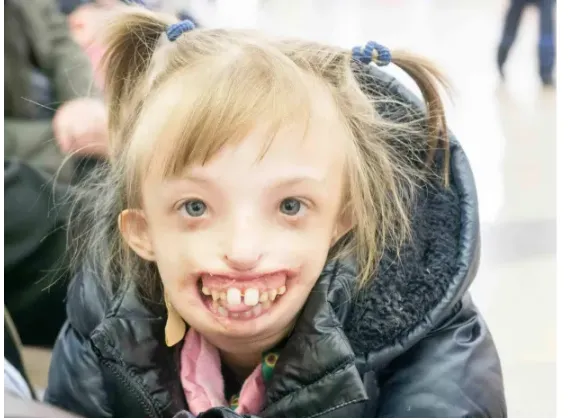
And for the rest of us, her journey is a reminder: hope is real. Miracles are possible. And the human heart, when united in kindness, can create extraordinary change.
Darina’s first smile has spoken louder than words ever could.
It says: I am here. I am loved. I am enough.
And in that message, the world finds a reason to believe, again.
Trapped and Severed: The Heartbreaking Story of Baitong, the Baby Sumatran Elephant Lost to Poaching
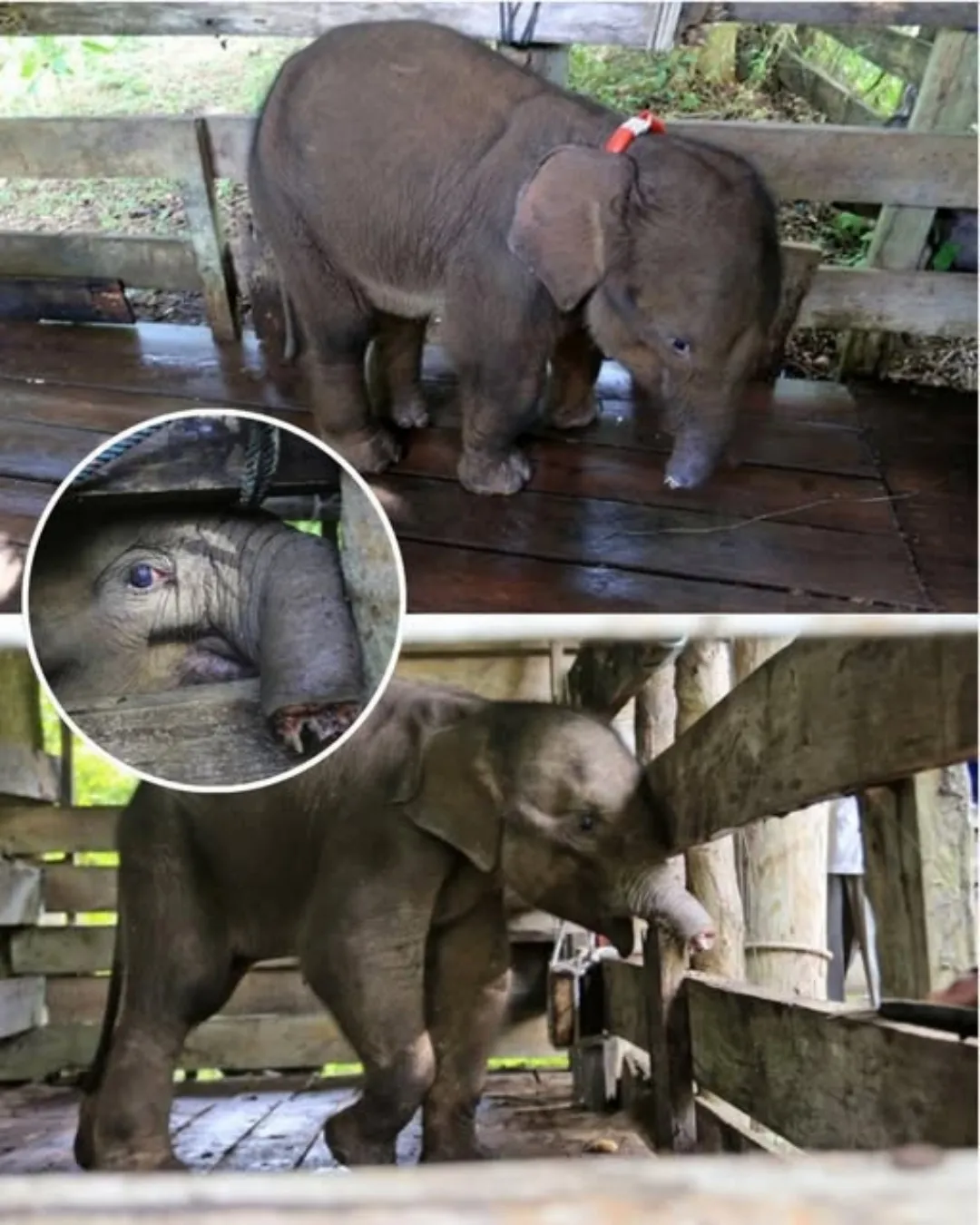
It was supposed to be just another day in the wilds of Sumatra.
But for a one-year-old elephant named Baitong, it became a nightmare he could not survive.
His tiny body was caught in a hunter’s snare.
Bloodied. Exhausted. Terrified.
And then tragedy struck—the snare severed his trunk, a vital lifeline for any elephant, even more so for one so young.
Conservation teams rushed to his aid.
They worked tirelessly, every second a battle against time and injury.
But it was too late.
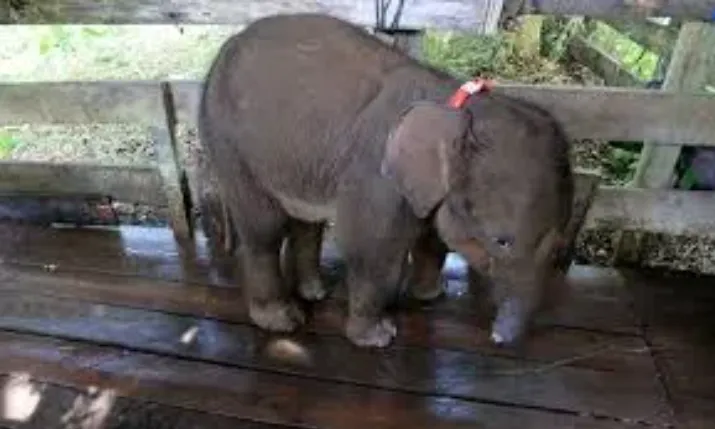
Baitong, the Sumatran elephant calf, passed away in the arms of the person who tried to save him.
The image of that moment—tiny, broken, and fragile—haunted everyone who heard the story.
Baitong was more than just a name.
He was a symbol of innocence, vulnerability, and the ongoing war against poaching that continues to ravage endangered species worldwide.
Sumatran elephants are already critically endangered.
Only a few hundred remain in the wild.
Every loss matters. Every death echoes through fragile ecosystems.
Their forests shrink daily due to deforestation, agriculture, and illegal logging.
And poachers are relentless.
Ivory. Skin. Body parts. Profit fuels cruelty.
Baitong became one of too many victims of this human greed.
His death is a stark reminder that illegal hunting is not just a crime against animals—it’s an assault on biodiversity, on ecosystems, on hope.
When Baitong was found, the scene was harrowing.
Blood stained the forest floor.
His small trunk—an essential tool for feeding, drinking, and exploring—was gone.
His body bore the trauma of being ensnared.
His eyes reflected confusion, pain, and fear.
Despite the skill and dedication of the rescuers, nothing could reverse what had been done.
The calf’s final moments were agonizing.
They were a testament to the brutality of poaching, the fragility of life, and the urgent need for action.
The loss of Baitong is not isolated.
Every year, elephants, rhinos, tigers, and countless other endangered species fall victim to illegal hunting.
Each life lost weakens ecosystems.
Each death diminishes the planet’s natural heritage.
Every poached animal leaves behind family, disrupts social groups, and changes the delicate balance of the wild.
The Sumatran elephant, a subspecies of the Asian elephant, plays a critical role in forest ecology.
They disperse seeds, maintain forest growth, and support biodiversity.
Their survival ensures the health of entire habitats.
Yet humans continue to encroach.
Poaching remains an ever-present threat.
And Baitong’s death puts a human face on these abstract statistics—a reminder that the consequences of greed are immediate, personal, and heartbreaking.
Rescue and conservation teams work around the clock.
They patrol forests, track elephants, educate locals, and rehabilitate survivors.
But the fight is uphill.
Poaching syndicates operate with impunity.
The demand for ivory and other body parts fuels relentless hunting.
Stronger laws, stricter enforcement, and global awareness are critical.
Baitong’s passing is a call to action.
It is a plea for humanity to take responsibility.
To protect species that cannot protect themselves.
To ensure the future of elephants in Sumatra and beyond.
Even as grief grips conservationists, his story inspires.
It motivates communities to fight harder.
It reminds governments that apathy kills.
It proves that every single life matters.
Baitong may have been small, but his impact is enormous.
His death has drawn attention to the broader crisis facing endangered wildlife.
It challenges the world to recognize the stakes.
The survival of species hangs in the balance.
It also reminds us of the delicate bond between humans and animals.
Our actions—or inactions—have consequences.
Every habitat destroyed, every snare left unchecked, every poacher who escapes punishment chips away at the planet’s resilience.
Baitong’s story is not just tragedy—it is education.
It teaches the world the cost of greed and the urgency of protection.
It reminds us that wildlife is not replaceable, that every creature has intrinsic value, and that extinction is forever.
The rescue efforts, though unable to save him, continue to honor his memory.
Organizations use his story to rally support.
To advocate for stricter anti-poaching measures.
To educate communities about the importance of coexistence with wildlife.
Baitong’s short life has already sparked global conversations.
Social media posts, news stories, and viral shares ensure that he is remembered.
He has become a symbol of what we stand to lose if action is not taken.
While Baitong cannot return, his death serves a higher purpose.
It galvanizes conservationists, lawmakers, and ordinary citizens alike.
It forces reflection on the fragility of life and the responsibility humans carry toward other species.
Every elephant that survives thanks to these lessons is a living tribute to him.
Baitong’s legacy is both a warning and a beacon.
It warns that inaction costs lives.
It shines hope that advocacy, awareness, and protection can save others.
It underscores that each individual—human or elephant—matters.
Conservation is not abstract. It is immediate, emotional, and tangible.
It is forests protected, snares removed, and awareness raised.
It is the difference between life and death for the next Baitong.
His story is a rallying cry.
For stronger laws.
For global cooperation.
For a commitment to end illegal hunting.
It is a reminder that humans can choose compassion over greed.
That intervention can prevent tragedy.
That the world can still save species on the brink.
For the Sumatran elephant, time is short.
Baitong’s passing underscores the urgent need for vigilance.
Every lost elephant diminishes not only their species but also the ecosystem they sustain.
But hope remains.
Rescue teams continue their work.
Communities are educated. Awareness spreads.
And through it all, the memory of Baitong fuels determination.
A tiny life, lost too soon, now becomes a voice for the voiceless.
May his story ignite change.
May it inspire stricter protections, faster interventions, and a world more aware of the consequences of poaching.
Baitong’s death was tragic, but it was not meaningless.
It is a story that demands action, reflection, and responsibility.
And for every person who learns of him, it is a reminder: the fight for wildlife is far from over.
Rest in peace, Baitong.
Your life, though brief, has already left an indelible mark.
May your story protect those who remain, and may your memory drive the world to act before it is too late.