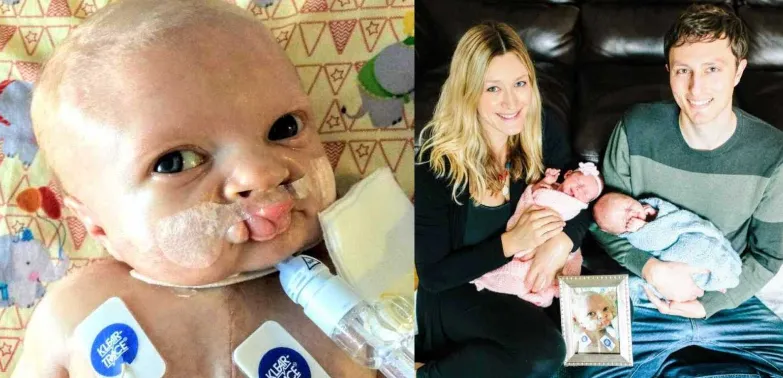
“He’s a sick child,” the pediatric cardiologist said flatly, almost casually, as if he were talking about an elderly man who had spent decades destroying his own body. As if death were simply the natural, expected ending.
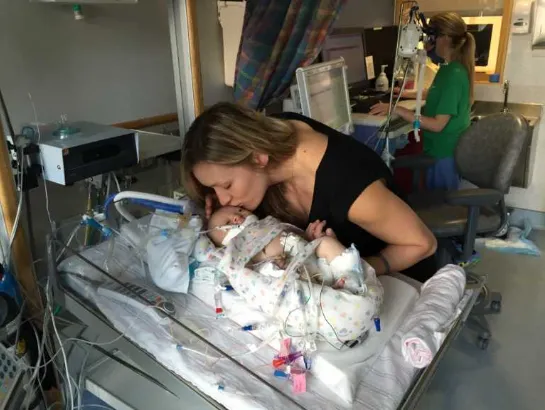
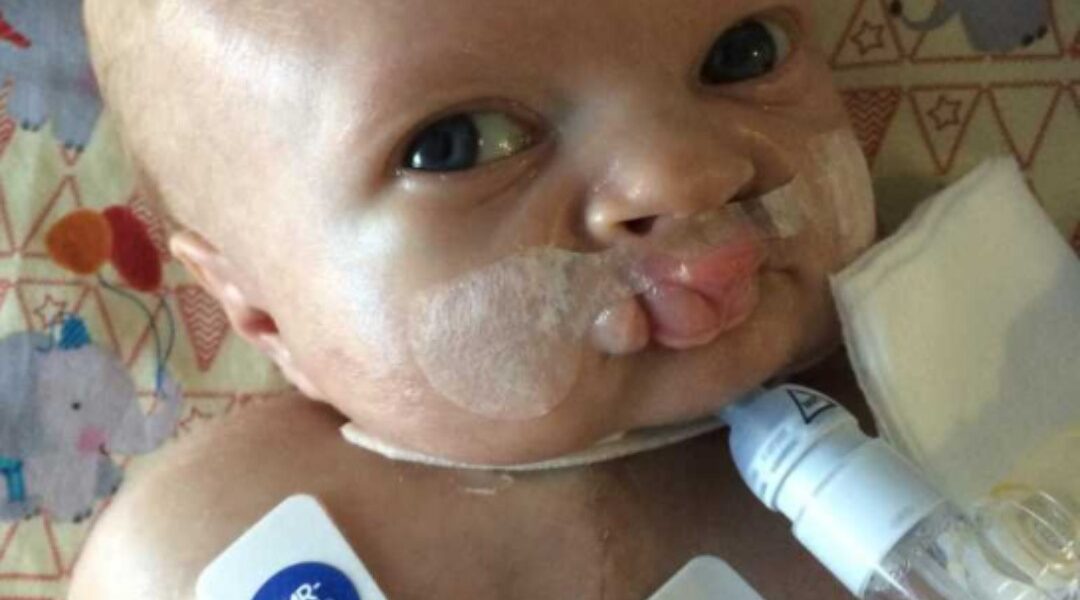
But the patient he was talking about was my ten-week-old son.
My baby had already endured five surgeries and countless procedures. He was lying in a hospital bed, barely clinging to life, and those words landed on me like a physical blow. In that moment, all I could hear was the echo of another doctor’s voice from a year earlier, after I lost my identical twin babies to miscarriage.
“Miscarriage is common,” that doctor had said. “It happens in about 25 percent of pregnancies.”
As if statistics were supposed to soften the grief of losing two children at once. As if knowing it was “normal” meant it shouldn’t hurt so much.
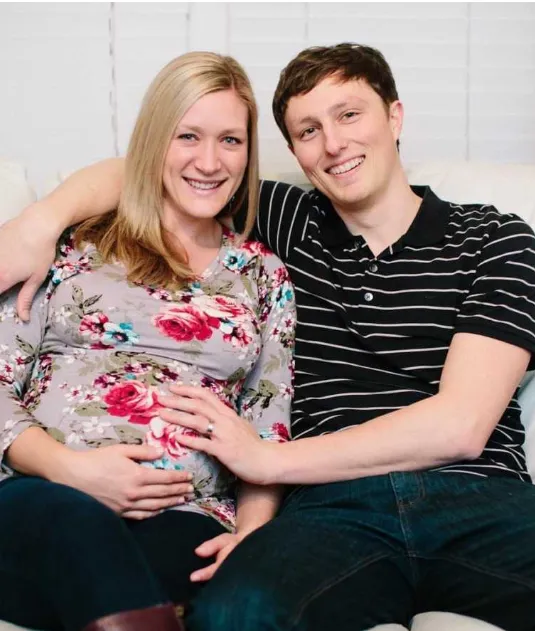
When my husband and I decided to have children after five years of marriage, we had no idea what was waiting for us. Up until then, our lives had been steady and uncomplicated, the kind of ordinary happiness you assume will last forever when you’re young. Losing our twins shattered that illusion completely. After that loss, I was certain we had already paid life’s cruelest price.
I told myself nothing could ever hurt worse than that.
I was wrong.
When I became pregnant again, hope returned cautiously. This baby was our rainbow, the promise that joy could follow devastation. But at our 20-week anatomy scan, everything changed again. The doctors found severe congenital heart defects. Our baby was missing a heart chamber. His valves were malformed. His aorta was split. The local children’s hospital—one of the best—couldn’t handle a case this complex.
We were told to leave our home in Norfolk, Virginia, and relocate to Philadelphia so our baby could be born and immediately undergo surgery. We packed our lives into boxes, set up a nursery we weren’t sure we’d ever truly use, and drove north with fear riding silently in the back seat.
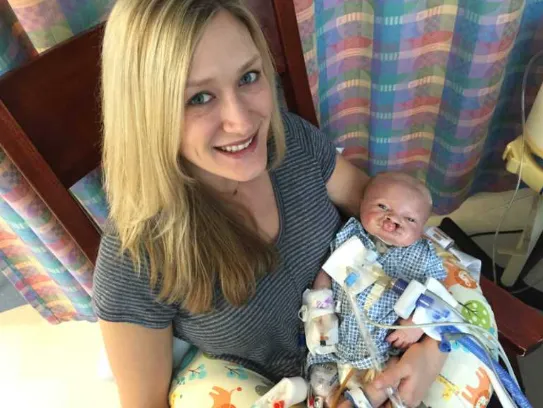
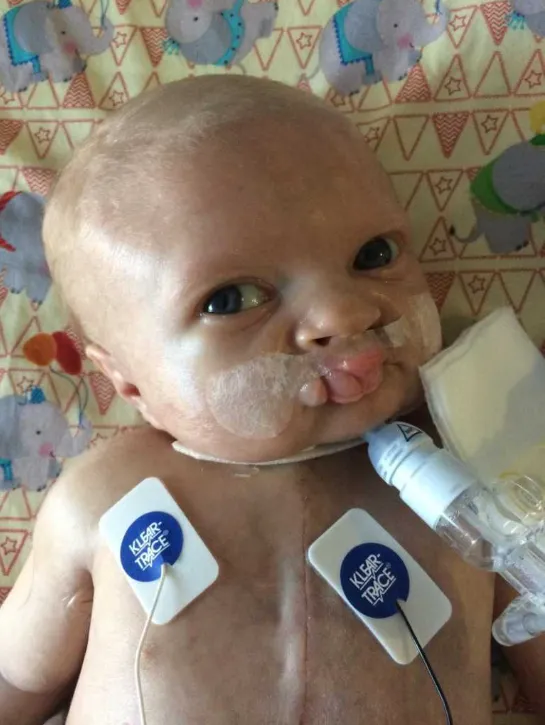
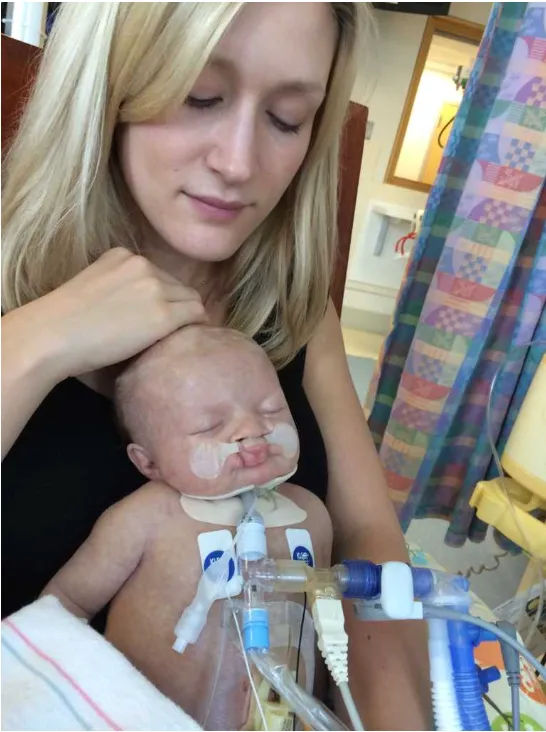
Our son, Benjamin, was born into a world of machines and alarms. Almost immediately, he faced not one but two open-heart surgeries. Then came a tracheostomy to help him breathe. A feeding tube to keep him nourished. Emergency surgery when that tube ruptured and abdominal fluid began leaking, nearly killing him before his heart could stop on its own.
And then there was more.
Benjamin wasn’t only fighting heart disease. He was diagnosed with CHARGE syndrome, a rare genetic disorder that can cause blindness, deafness, and a host of other complications. He had a bilateral cleft lip and palate. His tiny body carried more challenges than most adults face in a lifetime.
Still, the doctors talked about hope. They discussed plans. They spoke about bringing him home.
Until they didn’t.
One day, those conversations simply stopped.
We packed up his things. We signed discharge papers no parent should ever have to sign. And then we drove back to Norfolk with swollen eyes and empty arms, returning home to bury our baby instead of raising him.
Grief is a strange, merciless thing. As a Christian, I felt grief draw me closer to Christ, to the suffering Savior whose Father also knew the pain of losing a perfect Son. That belief gave me a fragile sense of connection and meaning.
But as a mother, grief was rage.
I thought about my son lying in the ground so close to our home. I wondered if he felt cold when it snowed. If he was lonely. The questions tore through me until I had to stop myself and remember—he wasn’t there. He wasn’t broken anymore. He was whole. Redeemed. Restored.
I believed I would see him again in heaven.
But belief doesn’t erase longing.
I would have given my life ten times over just to give him one good day in the NICU. One moment without pain. And on the days when faith felt thin and fragile, I clung to grace—the idea that strength doesn’t come from understanding, but from being carried when understanding fails.
Life didn’t pause after Benjamin’s death. Time never does. Eventually, I became pregnant again.
With twins.
This time, fraternal twins.
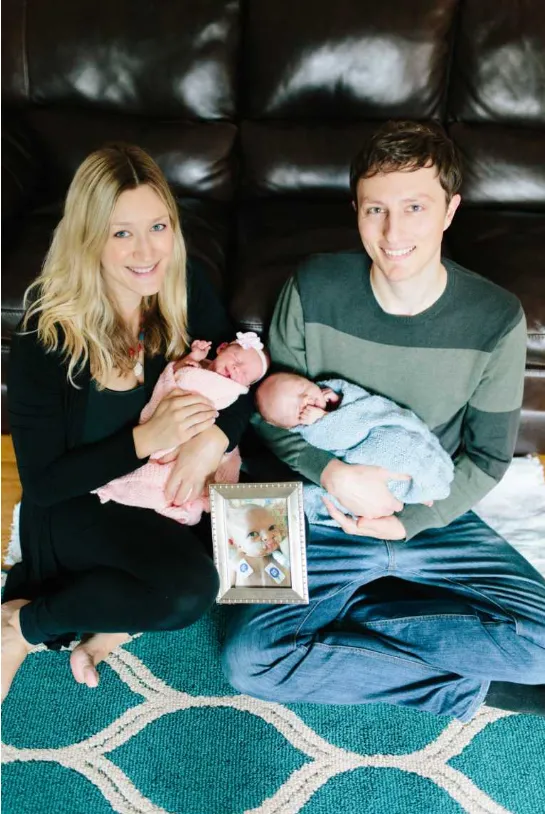
They were born after a difficult pregnancy, one filled with fear, constant monitoring, and the ever-present dread that something could go wrong again. They survived. They are nearly two and a half now, full of noise, laughter, and stubborn independence. Their older brother, the one who never came home, would be turning four this spring.
Motherhood after loss is not gentle. It is exhausting, anxious, and often lonely. I battled postpartum anxiety while caring for two crying infants and grieving a child I could never hold again. Some days, getting through the next hour felt like a victory.
But I have learned something I never wanted to learn.
Life after loss is still rich.
It is deeper. Sharper. More fragile. Every joy feels amplified because you know how quickly it can disappear. Every ordinary moment carries weight because nothing feels guaranteed anymore.
My twins now know the Lord’s Prayer by heart because we pray for daily bread together. We pray because we understand, in a way we never did before, that we are not self-sufficient. We need grace. We need strength that doesn’t come from us.
Loss doesn’t disappear. It becomes part of you.
Whether it is miscarriage, the death of a child, or the relentless fear that follows, grief reshapes everything. But it also reveals a strange truth: even in devastation, there can be meaning. Even in suffering, there can be restoration.
Benjamin’s life was brief, but it was not meaningless.
His story lives on in us—in the way we love fiercely, the way we hold our children closer, the way we refuse to take a single breath for granted. I believe, with everything I have, that he is waiting for us somewhere whole and joyful, free from pain.
Until that day, we keep going.
Not because it’s easy. Not because we’re strong. But because love doesn’t end at the grave.
And because some of the most important things in life are worth loving—even when they break your heart.
The Starving Polar Bear That Broke the World’s Heart: A Story of Hunger, Melting Ice, and a Planet in Crisis
It was supposed to be a routine expedition.
When wildlife photographer Paul Nicklen and the Sea Legacy team set foot on Baffin Island, they expected the icy quiet that the Arctic always offered.
The kind of silence that feels ancient, steady, and untouched by human hands.
But what they found that day was something no one on the team will ever forget. Something that would echo across the world in a matter of hours.
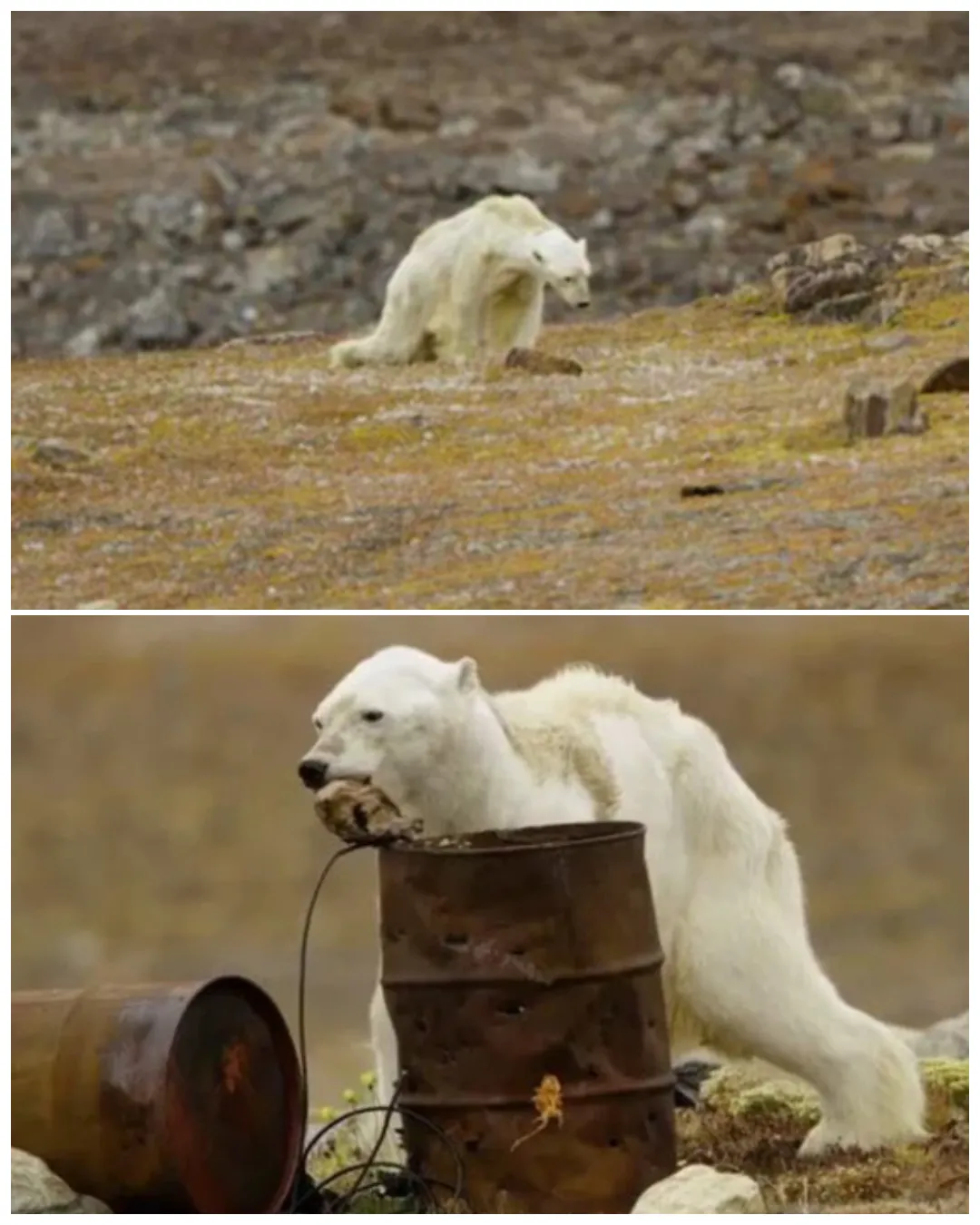
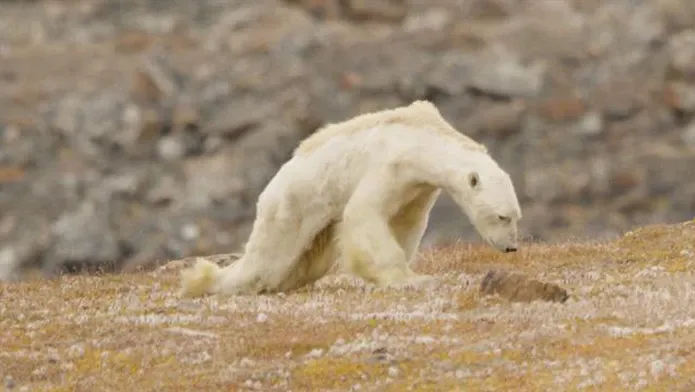
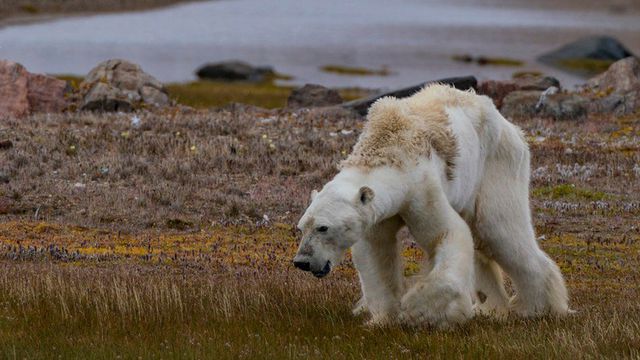
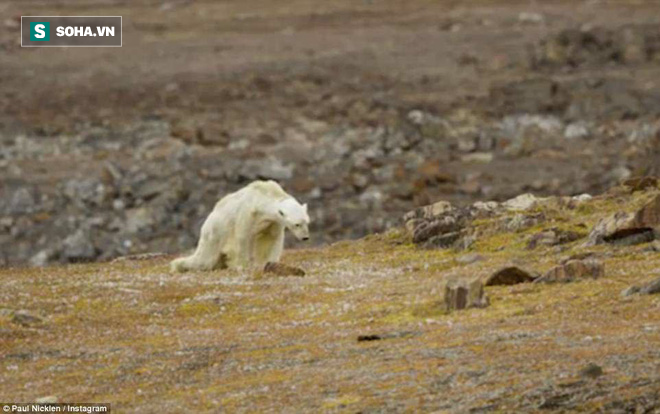
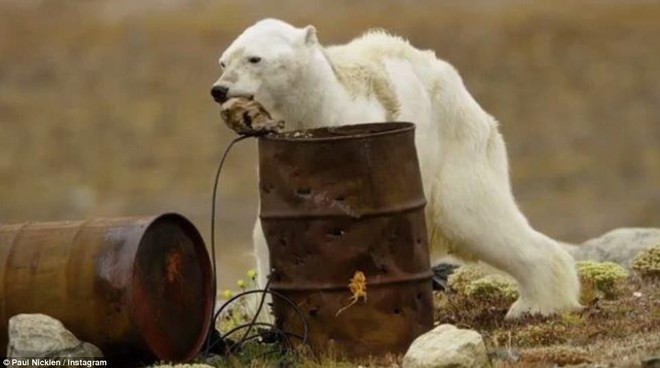
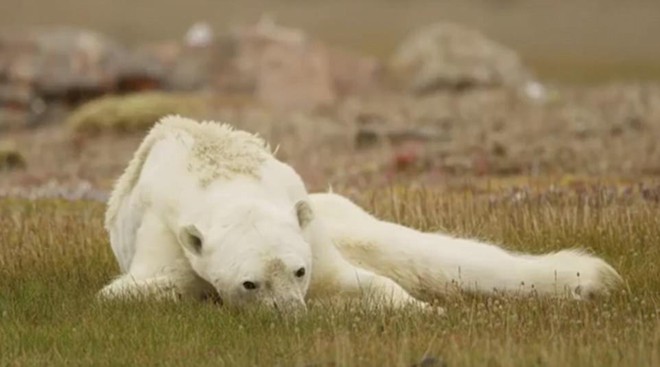
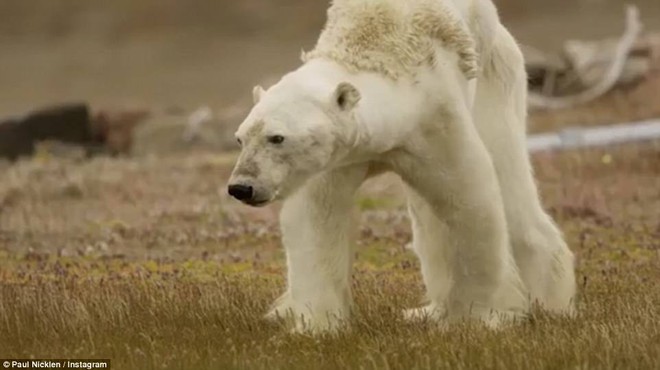
Lying on the empty tundra, dragging its body across dry, barren land, was a polar bear — once a giant of the north, now reduced to a trembling figure of skin and bone.
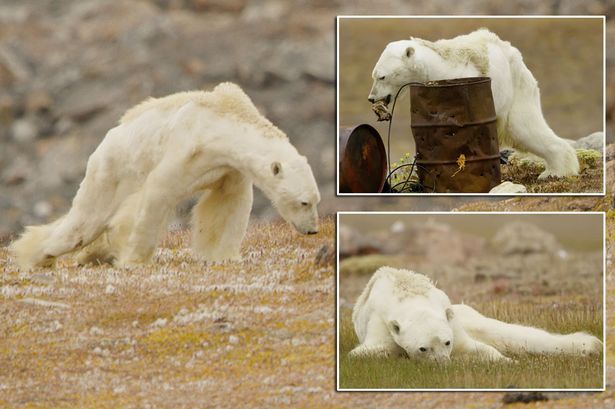
Its fur hung loosely over its frame. Its head dipped low as if even lifting it had become too heavy. Its legs shook uncontrollably with each step.
And its eyes — hollow, exhausted, pleading — told the story of a creature who had fought until it could fight no more.
Nicklen froze. He had photographed polar bears for decades. He had seen hungry bears, injured bears, thin bears.
But he had never seen anything like this.
This bear was dying. Not from wounds. Not from age. Not from sickness.
But from hunger — slow, brutal, unrelenting hunger.
The team watched in silence as the bear rummaged through a discarded fishing bin left behind by local fishermen. It tore at scraps of plastic and metal with its paws, desperate to find anything — anything at all — that might keep it alive.
There was nothing.
The bear collapsed onto the ground. For a moment, it simply lay there, its breath shallow, its ribs rising sharply beneath its skin. Then, with a final burst of instinct, it pushed itself forward once more.
Every movement looked like agony. Every step looked like the last.
Nicklen raised his camera.
He didn’t want to. He didn’t want to turn the bear’s suffering into an image. But he knew he had to — because this was not one animal’s tragedy.
This was a warning.
A warning written in bone and fur. A warning carried by a creature that once ruled the ice now left stranded by the melting world beneath its paws.
The video he recorded spread around the world in hours.
Millions watched a polar bear stumble, collapse, rise again, and crawl through the remains of a land that could no longer feed it. Millions cried. Millions asked why.
The answer was simple — and terrifying.
Climate change.
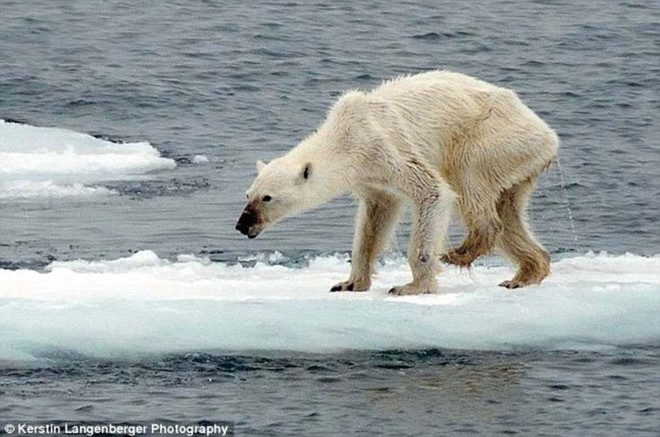
Polar bears depend entirely on sea ice to hunt seals. They wait at breathing holes. They stalk across frozen platforms. They rely on the rhythm of winter to survive.
But on Baffin Island, the seals were gone.
The winter came late. The ice melted early. And the bears lost everything.
Without ice, they cannot hunt. Without hunting, they cannot build fat. Without fat, they starve — painfully, slowly, endlessly.
Nicklen explained that in the summer months, bears normally conserve energy while waiting for the sea to freeze again. But the sea ice around Baffin Island had failed to return on time. The water remained open and dark. The seals had migrated elsewhere. And the bear remained trapped in a place that no longer offered life.
The team cried as they watched. Not because they were weak. But because they were witnessing a silent, suffocating truth that the world had ignored for too long.
Canada’s laws prevented them from feeding the bear — a necessary rule, but a heartbreaking one that meant they could do nothing but document its final hours.
Nicklen shared the footage with the world, hoping it would shake people out of complacency.
“This is what climate change looks like,” he wrote.
Not charts. Not graphs. Not statistics.
But a starving polar bear collapsing in front of a camera because the world around it has changed faster than it can adapt.
The bear’s suffering haunted him. He said the image stayed with him for months. He couldn’t shake the thought that an animal built for survival in some of the harshest conditions on Earth had been undone by a warming planet.
He wanted people to understand that climate change is not abstract. It is not distant. It is not something that will affect “future generations.”
It is happening now. It is happening visibly. It is happening painfully.
And the polar bear was proof.
Scientists at the U.S. National Snow and Ice Data Center confirmed what many already feared: rising temperatures and disappearing ice are destroying polar bear habitats at alarming speed.
The Arctic is warming almost four times faster than the rest of the planet. Sea ice is hitting record lows. And the animals most dependent on it have no backup plan.
Polar bears cannot simply move inland. They cannot switch diets. They cannot adapt to warmer climates.
They are built for ice. They are built for cold. They are built for a world that is disappearing beneath them.
Every year, more bears wash ashore starving. Every year, more videos emerge of bears rummaging through garbage, wandering into villages, collapsing on beaches.
These are not isolated events. They are warnings.
Warnings that something catastrophic is underway. Warnings that ecosystems do not collapse overnight — they collapse silently, piece by piece, until the silence becomes impossible to ignore.
The bear on Baffin Island was once healthy. Researchers believed it had survived several winters. It had hunted. It had thrived. It had done everything its instincts taught it to do.
But instinct cannot fight physics. And physics says that when temperatures rise, ice melts. When ice melts, bears starve.
The bear dragged itself for hours. The team followed quietly, torn between the need to record and the ache of helplessness. There was no anger in the bear’s eyes. No aggression. Only exhaustion.
Its body trembled. Its fur thinned. Its life slipped away one breath at a time.
By the end, the bear could barely stand. It collapsed behind a building — a haunting symbol of human presence and human impact.
Nicklen later said that watching the bear die felt like watching the Arctic itself die.
And in many ways, he was right.
The footage did what he hoped it would do. It sparked global conversation. It drew millions of views. It forced people to confront the truth rather than ignore it.
But a video alone cannot save a species. A moment of sympathy cannot stop the ice from melting. A viral clip cannot rebuild an ecosystem.
That responsibility belongs to all of us.
To reduce emissions. To protect Arctic environments. To listen when scientists sound the alarm. To understand that polar bears are only the beginning.
Because if the world continues warming at its current pace, the tragic image of a starving polar bear may become normal — not shocking.
And when tragedy becomes normal, extinction follows.
The bear on Baffin Island did not die in vain. Its suffering became a symbol. A mirror held up to humanity. A reflection of the world we are creating.
Nicklen said that we must share “the beautiful moments and the heartbreaking ones” if we want to break through the wall of indifference.
He is right.
The beauty of the Arctic — its snow, its silence, its icy breath — is fading. And the heartbreak — the hunger, the struggle, the collapse — is rising.
The starving bear was not a tragedy in isolation. It was a message.
A message that says:
“Look at what we are doing.” “Look at what we are losing.” “Look before it is too late.”
Because when a polar bear starves, it is not the death of one animal. It is the death of an entire world of ice.
And if the world of ice dies, everything that depends on it — including us — will eventually face the same fate.
Defying the Odds: A Child Who Refused to Be Limited by Fear
From the very beginning, his life was surrounded by uncertainty. Every moment felt fragile, every br…
I Will Always Be His Mother: A Love That Did Not End With Goodbye
As I sit here now, the silence around me feels impossibly loud.It presses against my chest, filling…
Grayson Porter: A Tiny Fighter Who Shows the Power of Survival and Love
Grayson Porter is only 20 months old, yet his life has already been a series of battles most adults…
Zaid’s Courageous Journey: A Burn Survivor Who Continues to Inspire the World
Zaid was only a young boy when a devastating accident changed his life forever. Severe burns left hi…
Michael’s Extraordinary Life: Defying the Odds and Celebrating Every Day
Michael was born with Bent Bone Dysplasia, a condition so rare that only four others in the world sh…