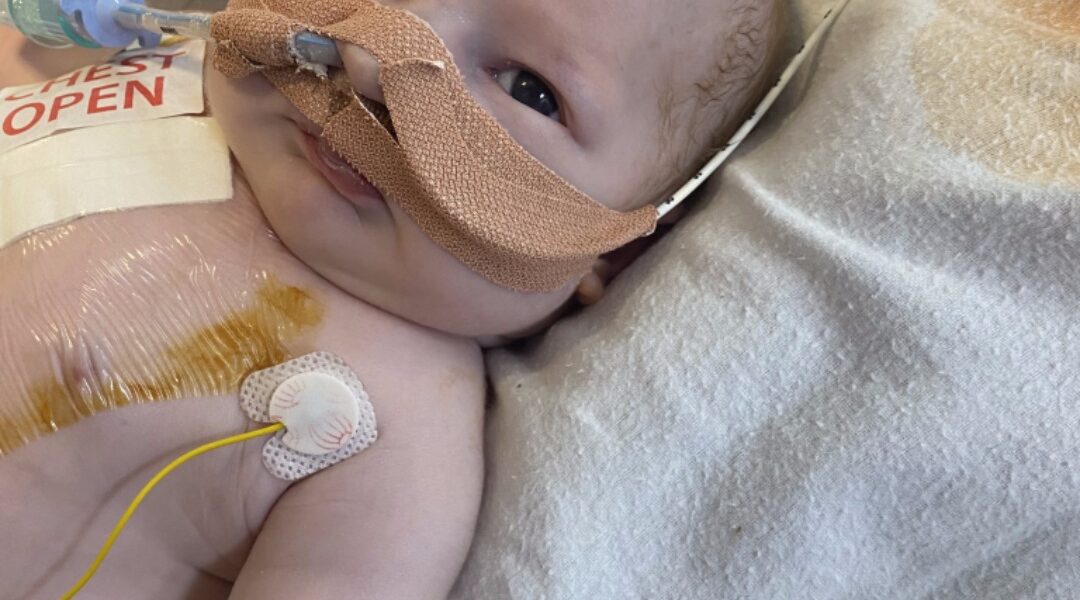

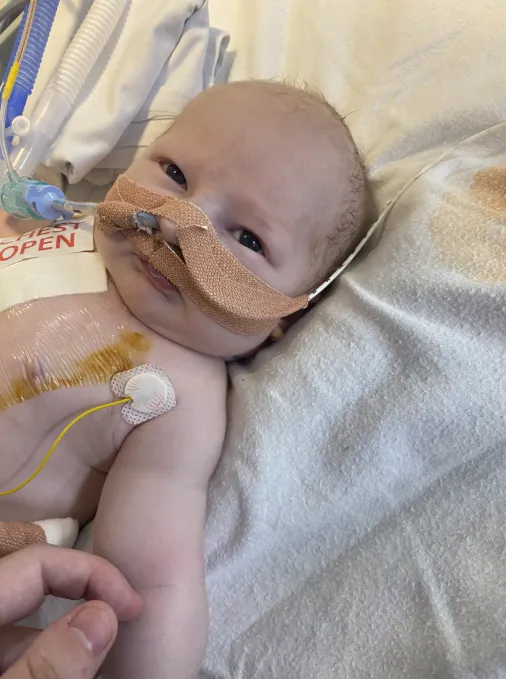
Ella arrived into the world on 6th July 2021, a tiny bundle weighing 8 pounds 3 ounces.
Even before her birth, her journey had been mapped by scans and expert eyes. At 20 weeks, her heart defects were detected: tricuspid atresia, transposition of the great arteries (TGA), coarctation of the aorta, and a ventricular septal defect (VSD). Every term felt heavy, every syllable a reminder of the fight she would face from her very first breath.
Her parents, Leah and Joe, were filled with hope and fear in equal measure. They prepared themselves for a path no parent should ever have to walk, guided by the knowledge that modern medicine had a chance to save her tiny, fragile life.
At six days old, Ella underwent open-heart surgery. The operation was delicate, perilous, and crucial. Every moment in that operating theatre was a battle for survival. Her body was small, her heart fragile, yet she endured the procedure with remarkable strength.
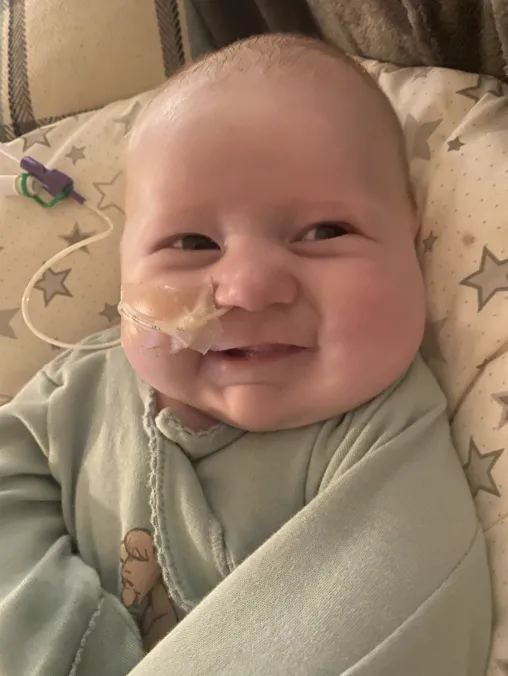
The first weeks after surgery were filled with milestones that seemed monumental. Every breath she took, every heartbeat, every ounce gained was celebrated like a victory. Ella’s cheeky personality and mischievous smile emerged despite her fragile frame.
Leah and Joe watched her grow, breathe, and thrive. They treasured every cuddle, every coo, and every fleeting moment of normalcy. She was perfect, a little warrior wrapped in tiny limbs and a fierce spirit.
Then, in the blink of an eye, tragedy struck. On 23rd October 2021, just three and a half months old, Ella passed away.
The loss was sudden, crushing, and incomprehensible. She had been doing so well. One moment she was thriving, and the next, she was gone. The emptiness it left was a chasm that words cannot fully capture.
Grief is a wave—sometimes calm, sometimes overwhelming. For Leah and Joe, it hit unpredictably. One moment they could function, smile, or breathe, and the next, the memory of her tiny body, her blue-tinted lips, her delicate frame, would crash over them like a storm.
They cling to the three and a half months they were granted. Every memory, every laugh, every smile is preserved like a treasure. They remember her cheeky personality, her resilience, and the way she fought with every heartbeat.
Though their time with Ella was painfully short, her impact is lasting. She changed their lives, left them with an indelible mark, and showed them the courage even the tiniest of souls can hold.
Her story is also a stark reminder of the fragility of life, even in the presence of extraordinary medical intervention. Despite the best care, the brightest stars sometimes burn too briefly.
Leah and Joe reflect on how fast everything changed—from hope to relief to unimaginable loss. The hospital visits, surgeries, and recovery, all seemed like preparation for a life they hoped she would have. But life had other plans.
Every parent reading this can feel the intensity of their emotions. The panic in those first hours after birth, the desperate hope during surgery, the cautious optimism as she thrived post-operation, and the devastating heartbreak that followed—all of it is raw, unfiltered, and universal.
Ella’s journey highlights the incredible strength of infants born with complex heart defects. Even when survival is not guaranteed, their tiny bodies can endure monumental challenges. Their spirit, even in the face of tragedy, teaches lessons in courage and resilience that transcend words.
Leah and Joe have learned that grief does not follow a linear path. It surges and recedes, unpredictable and relentless. One moment they can laugh at a memory, and the next, they are brought to their knees by the absence of her presence.
They are grateful for the time they had. For the opportunity to see her smile, to hold her hand, to witness her fighting spirit. These memories are their solace, their anchor in the storm of loss.
Even in mourning, they celebrate her life. Every photograph, every small memento, is a testament to the vibrant, courageous soul she was. Ella’s short life was packed with more courage than most experience in a lifetime.
Her legacy extends beyond her family. She serves as a reminder to the world about the importance of prenatal detection, medical vigilance, and the relentless dedication of neonatal and cardiac specialists.
She also embodies the bittersweet reality of medical advances: even with the best care, the tiniest hearts can be fragile beyond imagining. Her story is both a celebration of survival and a mourning of potential lost.
For families navigating similar paths, Ella’s life is a mixture of inspiration and caution. It shows the possibilities that modern medicine offers, but also the sobering reality of congenital heart defects.
Leah and Joe find comfort in community and support networks. Knowing others have walked similar paths, that their grief is shared, that their memories are honored, brings solace. The heart community, they have found, is resilient, supportive, and vital.
Every day without Ella is a reminder of her absence. But every memory, every flash of her smile, is proof of the life she lived and the joy she brought, however fleeting.
Her journey is a powerful testament to the strength of tiny humans, the resilience of parents, and the incredible challenges faced by families navigating congenital heart conditions.
Even in loss, there is teaching. Ella’s story emphasizes advocacy, awareness, and the importance of early detection and intervention. Each story shared can save lives, prevent trauma, and offer hope.
Leah and Joe honor her by remembering, by sharing her story, and by supporting others. They carry her spirit forward, ensuring that even though her life was short, her influence endures.
Grief has reshaped them, yet it has not diminished their love or memory of their daughter. Ella’s life, though brief, radiated courage, teaching those who knew her about the extraordinary strength within the smallest of bodies.
Every heartbeat she took, every battle she fought, is a reminder that even the most fragile lives can leave a profound impact. Her story is not just of loss, but also of the indomitable spirit of a child who faced the impossible and shone brightly.
Leah and Joe continue to share her story, hoping to give solace and awareness to other families, showing that even in tragedy, there is connection, understanding, and the power of remembrance.
Ella’s presence lingers in memories, photographs, and hearts. She is an angel watching over her family, a guiding light, and a reminder that love transcends even the shortest of lifetimes.
Her journey underscores the importance of family, support, and the incredible skill of cardiac and PICU teams. Every nurse, doctor, and consultant played a role in giving her the chance she had, and their dedication is forever remembered.
Though Ella’s life was brief, it was impactful. Her courage inspires, her memory comforts, and her story teaches lessons about fragility, strength, and the preciousness of every heartbeat.
Leah and Joe embrace the happy moments they had—the cuddles, the smiles, the first coos—and carry them forward as a testament to the joy she brought. Each memory is a piece of her legacy.
Even as grief hits in waves, they find moments of light. Sharing her story, connecting with other parents, and honoring her life allows them to transform sorrow into meaning.
Ella’s life, though tragically short, shines as a beacon for families navigating congenital heart conditions. It reminds the world that every baby, no matter how fragile, has immense strength, and every parent’s love is a force of resilience.
In the night sky, Leah and Joe look for the brightest star, their Ella, and find comfort knowing her spirit watches over them.
Her story remains a mixture of sorrow and inspiration, teaching all who hear it that love, courage, and memory endure beyond even the most painful of losses.
Ella’s short life was a battle fought with every heartbeat, every breath, and every ounce of her tiny body. She is a hero, a daughter, and a reminder that even the briefest lives can leave the deepest marks.
Her parents carry her in their hearts forever, honoring her memory, teaching others about congenital heart conditions, and cherishing every moment they had with their brave little angel.
Wrapped in Love: How Pajamas and Slippers Gave Orphaned Elephants a Second Chance
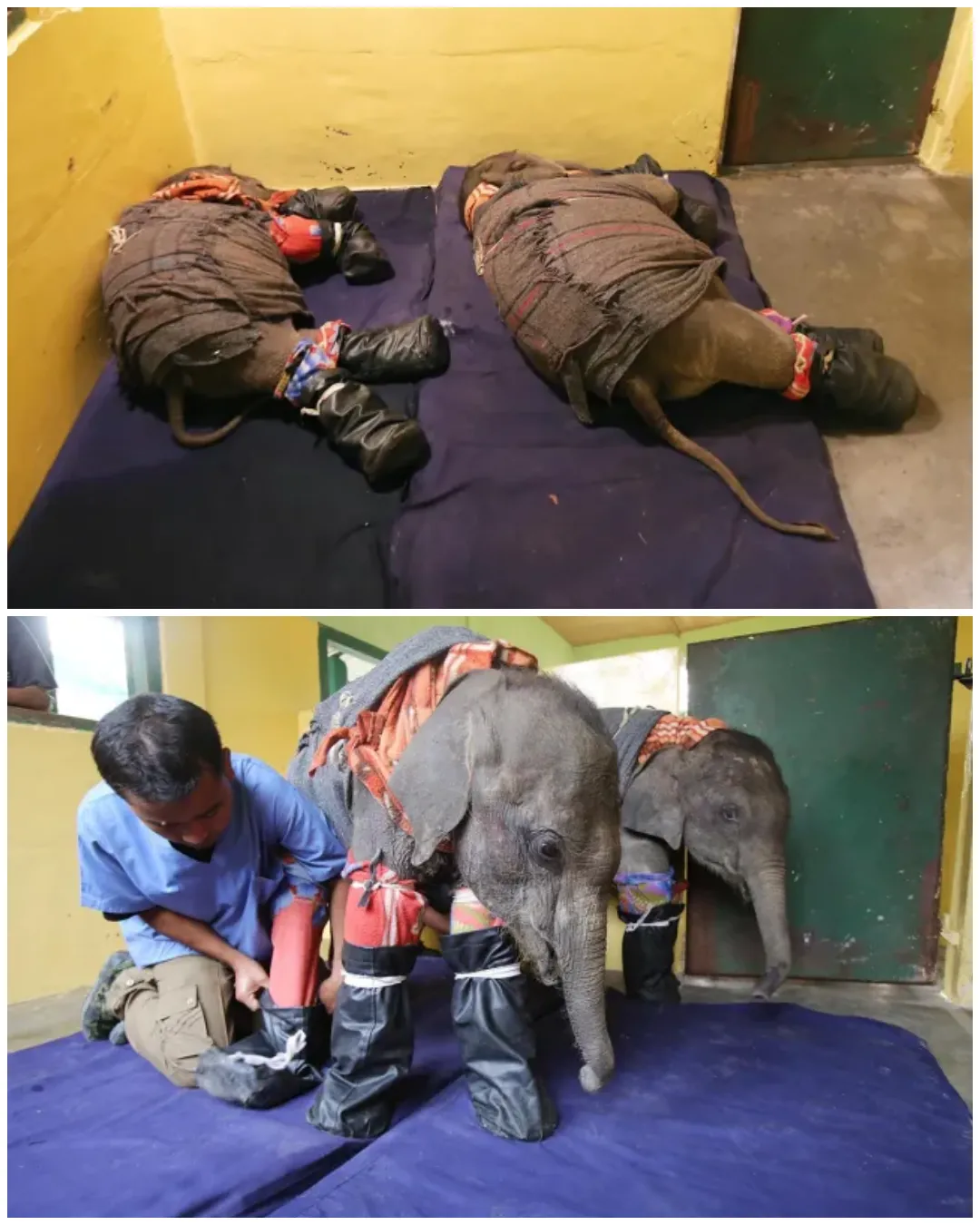
In the dense, misty mornings of Karazanga National Park, life can be unforgiving. For the wild elephants who roam its forests and grasslands, danger lurks around every corner — from treacherous terrain to the human footprint encroaching on their habitat. For Rupa, a tiny three-month-old elephant, danger struck almost immediately after birth. Born into a world already fraught with peril, she tumbled down a steep, rocky ravine, leaving her with injuries so severe that survival itself seemed a distant hope. Abandoned by her mother in the aftermath of the fall, she faced the unforgiving cold nights alone, her body trembling not only from pain but from the chill that seeped into her fragile bones.

Rupa’s story was soon mirrored by another small elephant, Aashi, just eleven months old, who had been separated from her herd under mysterious circumstances and left alone in a trench, vulnerable and confused. Both of these young lives were teetering on the edge, their survival uncertain. When the International Fund for Animal Welfare (IFAW) rescue centre intervened, the mission was clear: save these orphaned elephants and provide the care, warmth, and love they had been denied at birth.
The rescue team, led by Dr. Panjit Basumatary, a veterinarian with years of experience in elephant care, faced a monumental challenge. Baby elephants, even under normal circumstances, are extremely sensitive creatures. Their survival depends not only on adequate nutrition but on warmth, comfort, and the emotional security that comes from the presence of a mother. Separated from their families, both Rupa and Aashi struggled to sleep, the cold nights magnifying their trauma. They tossed and turned, shivering under the harsh fluorescent lights of the concrete nursery, their large ears flapping in anxious discomfort. It was a sight that stirred the hearts of everyone at the center.

Observing this, Dr. Basumatary had an idea that was as simple as it was brilliant. If human babies thrive in warm pajamas and soft socks, why couldn’t baby elephants benefit from the same comforting measures? He instructed the keepers to wrap the two young orphans in cozy blankets and scarves, improvising elephant-sized pajamas to shield them from the cold. Tiny slipper boots, adapted to the size of their rounded feet, were added to keep the chill at bay. That night, for the first time since being rescued, Rupa and Aashi settled into a deep, restful sleep, side by side, their bodies no longer tense with fear.
The transformation was immediate and profound. Caretakers reported that the elephants woke in the mornings appearing calmer, more content, and more willing to engage with their surroundings. Their eyes, previously wide with anxiety, now reflected curiosity and trust. In the simple act of providing warmth, the rescue team had restored a critical sense of security, showing that survival in the animal kingdom is as much about emotional support as it is about medical care.

Rupa’s injuries were serious. The fall had left her leg dislocated, her small body bruised and battered. She could barely walk without assistance, and the psychological trauma of losing her mother compounded her physical pain. Yet, under the watchful eyes of the dedicated staff, she began the slow, painstaking journey toward recovery. Each day, she learned to trust again, to step carefully into the world, and to lean on the support offered by those who had become her surrogate family. Aashi, too, showed remarkable resilience. Despite the fear and confusion of being abandoned, she embraced the warmth and comfort of her makeshift pajamas and the steady presence of her caretakers, her playful personality slowly emerging from the shadows of trauma.

The efforts at Karazanga National Park highlight a critical aspect of wildlife conservation that is often overlooked: the importance of emotional care in addition to physical rehabilitation. Many people imagine that saving an animal simply requires medical attention and food, but for creatures as intelligent and social as elephants, emotional well-being is equally vital. Orphaned calves, separated from their mothers and peers, face enormous stress that can hinder recovery and stunt growth. By providing comfort measures like pajamas and slippers, the IFAW team recognized the profound psychological needs of these young animals, creating an environment that nurtured both body and spirit.

Sleep, as it turns out, was a critical component in the rehabilitation process. In the wild, elephant calves sleep closely with their mothers or within a protective herd, relying on warmth and contact for security. Deprived of that natural safety net, Rupa and Aashi had endured sleepless nights, their bodies under constant stress. The introduction of pajamas and slipper boots allowed them to mimic the protective closeness of the herd, providing the warmth and security essential for restorative sleep. With each night, their bodies grew stronger, their minds calmer, and their resilience to future challenges increased.
Beyond the immediate practical benefits, there was a symbolic resonance in the approach. Dressing the elephants in pajamas and slippers represented more than warmth; it was an act of love, of empathy, and of the human capacity to care. For the staff, these gestures were reminders that even the most vulnerable among us deserve dignity, comfort, and attention. The simple, tender ritual of preparing the elephants for bed became a daily affirmation that these creatures mattered, that their lives had value beyond survival statistics.

The long-term goal of the rescue center is equally ambitious: to return Rupa and Aashi to the wild, ideally as part of a herd, either in Kaziranga or Manas National Park. Such reintroductions are complex undertakings, requiring careful monitoring to ensure the calves can adapt to natural conditions while maintaining the survival skills they need. The pajamas and slippers, while temporary, played a crucial role in this preparation. By allowing the calves to sleep soundly, gain strength, and build trust in human caretakers, they became better equipped to face the challenges of eventual reintegration into the wild.
Each step of this journey is carefully documented. Veterinarians and keepers maintain meticulous records of growth, health, behavior, and sleep patterns, ensuring that every decision is informed by data as well as compassion. Yet, no chart or report can capture the joy of seeing Rupa take her first unassisted steps, or Aashi trumpet in playful excitement as she interacts with her companion. These moments are visceral reminders of the triumph of life over adversity, of courage in the face of vulnerability.
Philip Mansbridge, the UK director of IFAW, reflects on these efforts with a mixture of pride and humility. “Rescue work like this makes a real difference,” he notes. “We often see casualties at a young age and in very vulnerable circumstances. Giving these endangered Asian elephants protection and care is not just about survival — it’s about giving them a chance to thrive, to experience joy, and to fulfill their natural potential.” His words encapsulate the philosophy that drives every action at the center: a commitment to preserving not just life, but the quality of life, for species on the brink.
The stories of Rupa and Aashi are also poignant reminders of the broader threats facing Asian elephants. Habitat destruction, poaching, and human-wildlife conflict have decimated populations across their native range. Every orphaned calf rescued is a stark illustration of the dangers these animals face, but also a testament to human ingenuity and compassion. In dressing them in pajamas and slippers, the rescue team combined practicality with empathy, demonstrating that the simplest acts can have profound impacts.
Watching the elephants at bedtime has become a cherished ritual for the staff. Wrapped snugly in blankets, with tiny slippers on their feet, Rupa and Aashi settle into the nursery, leaning into each other for warmth. They sway gently, their large ears flapping softly, eyes closing in contentment. The room is quiet except for the occasional rumble or sigh — sounds of life returning, of fear subsiding, and of trust being rebuilt. In those moments, the stress of the day melts away, replaced by hope.
Visitors who eventually witness the elephants’ progress are often struck not just by their size or majesty, but by their vulnerability and intelligence. The sight of a baby elephant in pajamas, snuggling against its companion, evokes laughter, tears, and awe. It reminds people that animals, like humans, need care, comfort, and connection — and that those simple needs can sometimes make the difference between life and death.
As the days turn into weeks, the calves grow stronger. Their legs, once trembling with weakness, become steady and confident. Their personalities shine: Rupa, ever curious and brave, explores her surroundings with growing assurance; Aashi, playful and observant, learns to navigate both space and social interaction. Every small triumph — a step forward, a playful squeak, a restful nap — is celebrated quietly by the team, each moment a milestone in a journey that began with fear and injury.
The story of Rupa and Aashi also carries a universal message about compassion and innovation. In a world where endangered species are increasingly at risk, creative approaches to animal care can have enormous consequences. The pajamas and slippers, seemingly whimsical, are emblematic of a philosophy that places empathy at the heart of conservation. They demonstrate that caring for animals is not merely about medical intervention, but about understanding their needs as sentient beings capable of fear, joy, and love.
Eventually, the time will come to prepare the elephants for release. Training will begin to teach them essential survival skills, from foraging to avoiding predators, from social communication to navigating the wild landscape. Yet even as they prepare for independence, the lessons learned in the nursery — the warmth, comfort, and trust instilled through pajamas, slippers, and gentle human care — will remain a foundation for the rest of their lives. These early experiences, nurtured with patience and love, will enable them to thrive in a world that has so often been harsh.
In the quiet hours of the night, when the nursery lights are dimmed and the world outside sleeps, Rupa and Aashi lie side by side, wrapped in blankets, slippers gently covering their small feet. The staff watch from a distance, hearts full, knowing that in these small, tender moments, the true work of conservation is happening. It is a work that transcends statistics, funding, and policy — a work rooted in empathy, imagination, and the unwavering belief that every life, no matter how small, is precious.
Their journey, from abandoned orphans to thriving calves, is a story that will echo for years to come. It is a story of resilience, of human creativity and compassion, and of the enduring bonds between creatures of different species. In a world often defined by cruelty and destruction, Rupa and Aashi are a reminder that kindness matters, that innovation matters, and that love — even in the form of pajamas and slippers — can change lives.
And when one considers the magnitude of that simple act, it is impossible not to be moved. Pajamas and slippers may seem trivial in the grand scheme of conservation, but for these two young elephants, they were the difference between sleepless nights full of fear and mornings filled with warmth, security, and hope. They were, in essence, a bridge from despair to possibility, from vulnerability to resilience.
As the seasons change and the calves grow, the memory of those first nights in cozy blankets and tiny slippers will remain. They will carry within them not just the lessons of survival, but the imprint of care, the knowledge that somewhere, humans stood with them, guided them, and believed in them. And that belief, simple yet profound, may be the most enduring legacy of all.
Rupa and Aashi’s story, from tragedy to triumph, is a testament to the power of compassion and creativity. It reminds us that even in the darkest circumstances, small acts of care can ripple outward, transforming lives in ways unimaginable. It is a reminder that in nurturing the most vulnerable, we honor the very best of ourselves. And it is a reminder that hope, sometimes, can come wrapped in blankets and slippers, and carried forward on the quiet breaths of two little elephants learning to trust again.