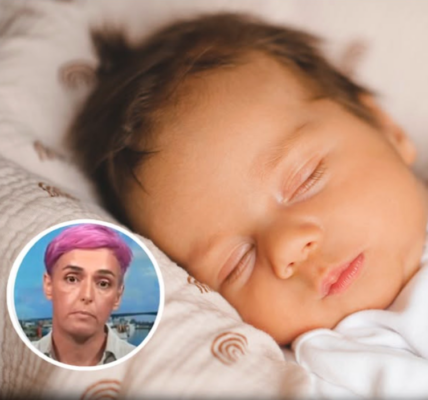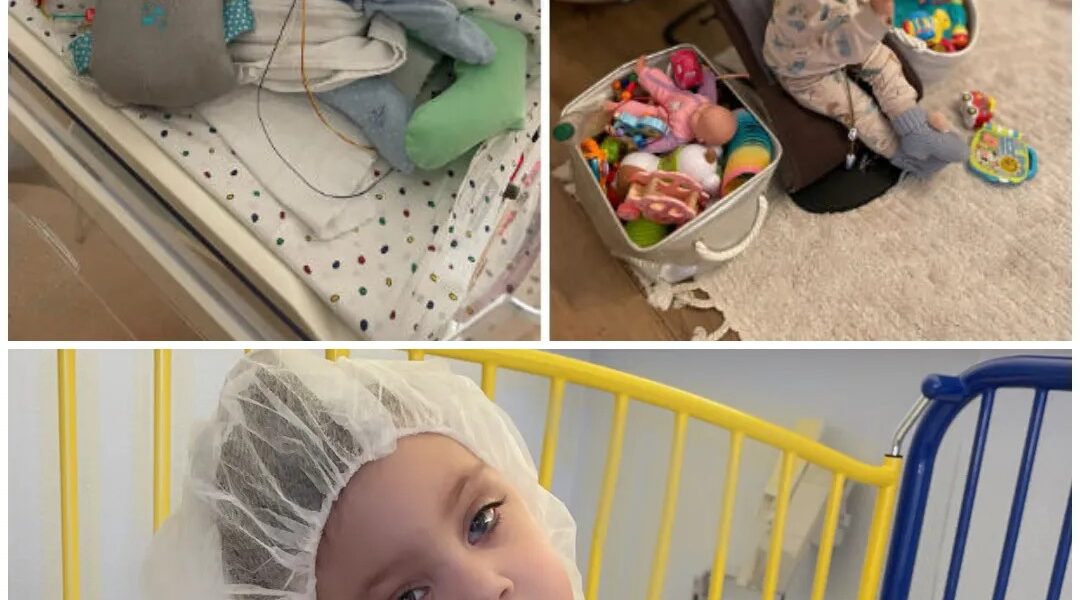

Our long-awaited daughter, Emilia Lavruk, was born on February 23, 2022. From the very beginning, her arrival into this world was anything but ordinary. Her birth was extremely difficult. She became stuck in the birth canal, emerging without breathing, blue, and with broken clavicles. I did not hear her first cry. I could not hold her. I could not even look at her. The medical team immediately rushed her to intensive care, connecting her to life-saving machines. I remember standing in the corridor, heart pounding, unable to grasp the gravity of what had just happened. The sterile smell of the hospital, the beeping of monitors, the hurried footsteps of nurses—it all felt unreal, like we had stepped into a nightmare we could not wake from.
The initial diagnoses were terrifying. Doctors explained that Emilia had suffered severe damage to her central nervous system, brain edema, congenital aortic stenosis, narrowing of the larynx, and microcephaly. The prognosis was uncertain. They were unsure whether she would survive at all. Because of the severe brain injury and swelling, her tiny body was cooled for three days—a procedure designed to protect her fragile brain. Emilia lay on a cold mattress, a tiny body wrapped in tubes and wires, fighting for every breath. All I could do was pray that she would open her eyes, that her lungs would finally take the life-giving air they so desperately needed. Those three days were the longest, most agonizing moments of my life. Every second felt like an eternity.
Even after the first critical period passed, the challenges were far from over. Soon, Emilia was diagnosed with a complex congenital heart defect. In an urgent transfer, we were taken to another hospital, where a renowned cardiac surgeon performed a long and extremely difficult operation. This surgery, lasting several hours, saved Emilia’s life. I remember pacing outside the operating theater, hands trembling, tears streaming down my face, silently pleading with God, with fate, with anyone who might be listening, to bring my child back to me.
But the nightmare continued. Post-surgery complications emerged immediately—sepsis, pneumonia, and the need for multiple blood transfusions. The doctors quietly suggested that we consider baptizing Emilia, a terrifying sign of how serious her condition was. I looked at this fragile, barely two-month-old body, entwined in wires and tubes, and I could not imagine life without her. My heart broke with every beep of the monitor, every alarm, every moment she seemed to struggle for life. Outside the hospital stood a statue of the Virgin Mary. Each day, as I came and went, I prayed fervently, silently begging for a miracle.
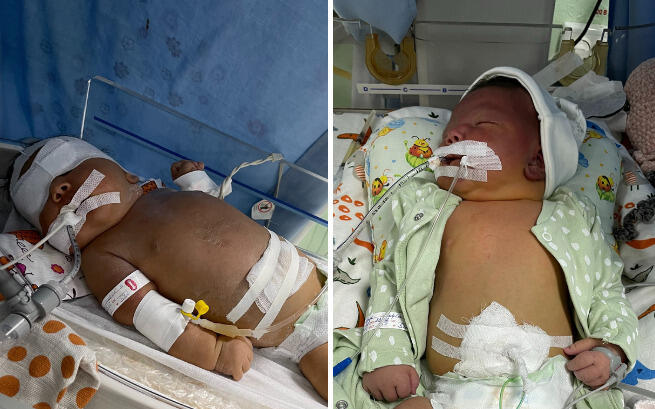
And then, slowly, the miracle came. Day by day, Emilia’s condition began to stabilize. Her breathing improved, her vital signs strengthened, and she began to respond to stimuli. The doctors no longer spoke of impending loss but of a possibility—a chance at life, at growth, at hope. It was the first time in weeks that I dared to hope again.
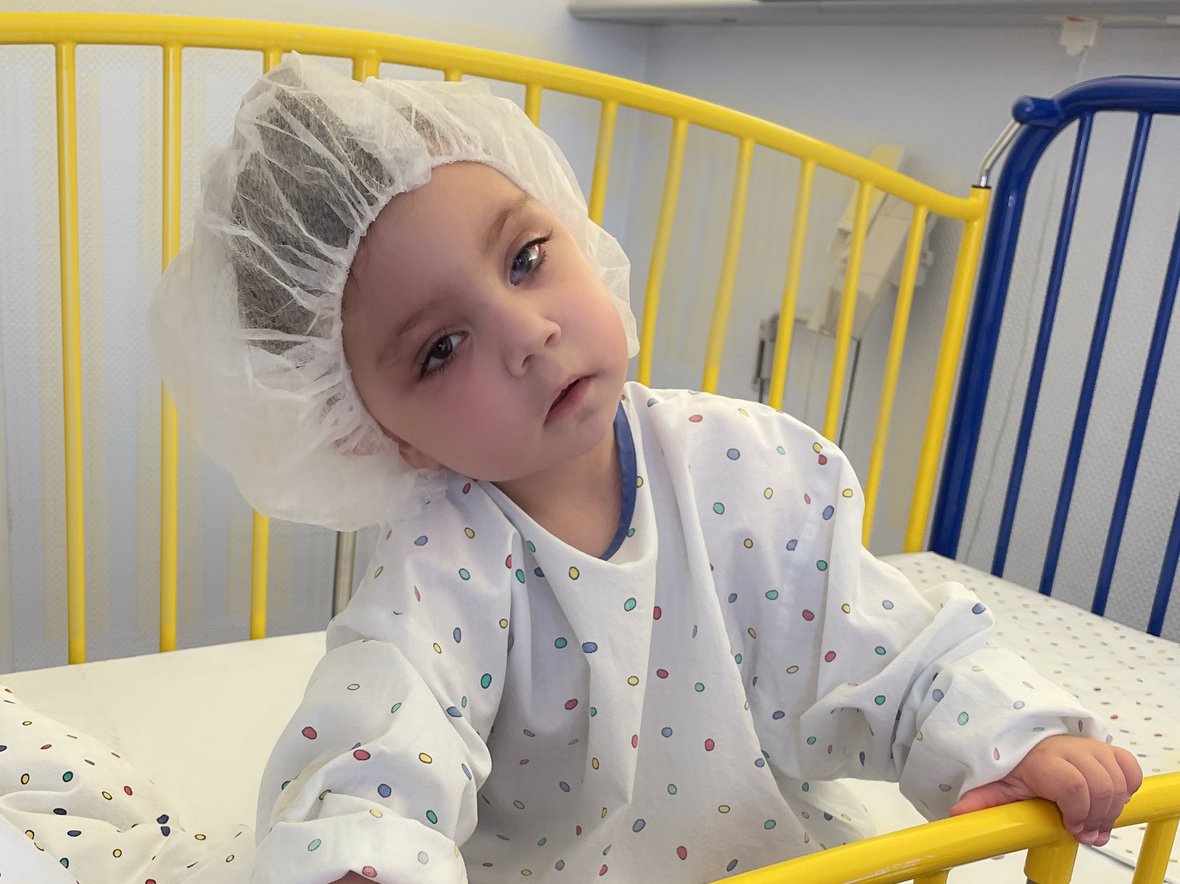
Emilia’s survival, however, was just the beginning. Today, at three years old, she faces a daily struggle against numerous health challenges. She has epilepsy, cannot eat or drink on her own, and her entire nutrition is administered through a gastrostomy tube. She has a congenital narrowing of her aorta, laryngeal stenosis, microcephaly, vision impairment, hearing loss in both ears, cataracts, glaucoma, and a history of ischemic brain disease. Each of these conditions requires constant attention, specialized medical care, and ongoing therapy.
Every day is a meticulous routine of rehabilitation. Emilia participates in multiple therapies, including physical therapy, occupational therapy, and sensory stimulation exercises. Her progress is incremental but significant; each small movement, each attempt to lift her head or grasp an object, feels like a victory. Her development is slow but deliberate, shaped by countless hours of patient work, perseverance, and the unwavering support of her family.
Despite the improvements, Emilia is still very fragile. She cannot walk, feed herself, or communicate clearly with words. She shows awareness of her surroundings and can indicate preferences through gestures, but every task requires guidance and assistance. Her world is confined, yet we strive to make it as rich and fulfilling as possible. She interacts with her family, responds to voices, and reacts to music and touch. Each smile she shares is a testament to her resilience, a beacon of hope in the face of overwhelming adversity.
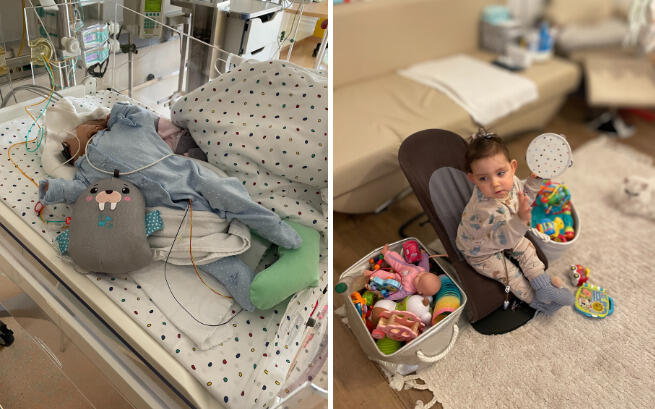
The financial burden of Emilia’s care is immense. Specialized rehabilitation equipment, medications, regular consultations with neurologists, cardiologists, ophthalmologists, and therapists—all of it comes with an enormous cost. The expense is ongoing, daily, and urgent. Without the community’s support, we cannot provide Emilia with the resources she needs to develop her strength, coordination, and independence.
We are asking for help—not because we have given up hope, but because we refuse to allow this miracle child to be limited by circumstances beyond her control. Every contribution, every shared message of support, every act of kindness allows us to continue Emilia’s journey toward recovery. It is a chance to give her life the quality it deserves, a chance to let her laugh, explore, and grow despite the challenges her body presents.
Emilia is more than a patient—she is a fighter, a young warrior whose spirit refuses to be broken. Her eyes shine with curiosity and determination. Her laughter, when it comes, lights up the room, reminding us all why we fight. She teaches us daily the value of resilience, the meaning of unconditional love, and the power of hope.
We cannot change her diagnosis. We cannot undo the damage done before she took her first breath. But we can shape the world around her. We can provide her with therapy, care, and the tools she needs to reach her fullest potential. We can ensure that every day counts, that every small step forward is celebrated, and that she feels the warmth and support of a community standing behind her.
Today, Emilia continues her daily fight for independence. She has survived the unimaginable, and now she strives to reclaim her mobility, her autonomy, and her place in the world. She is surrounded by family who love her fiercely, by therapists who push her gently to achieve more, and by friends and strangers whose generosity sustains her progress.
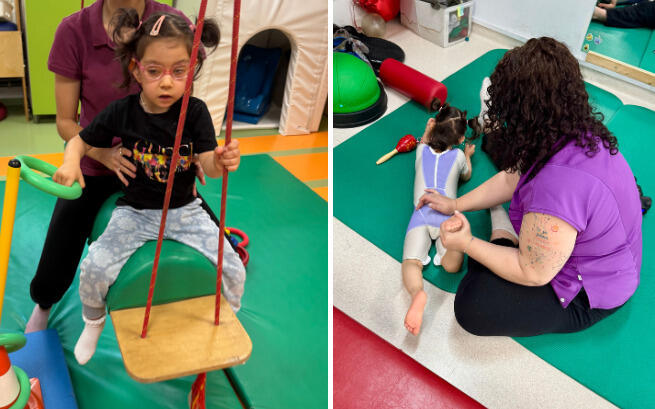
Please join us in giving Emilia the life she deserves. Every donation, every word of encouragement, every share of her story brings her one step closer to walking, playing, and thriving. We cannot change her past, but together, we can shape her future. Emilia deserves to see the world, to feel the wind on her face, to reach for her dreams.
Every gesture matters. Every moment counts. Stand with Emilia, and be part of the miracle that is her life.
Maria, Emilia’s mother
The Little Dog Who Slept Beside the Tracks, Hoping Someone Would See Him
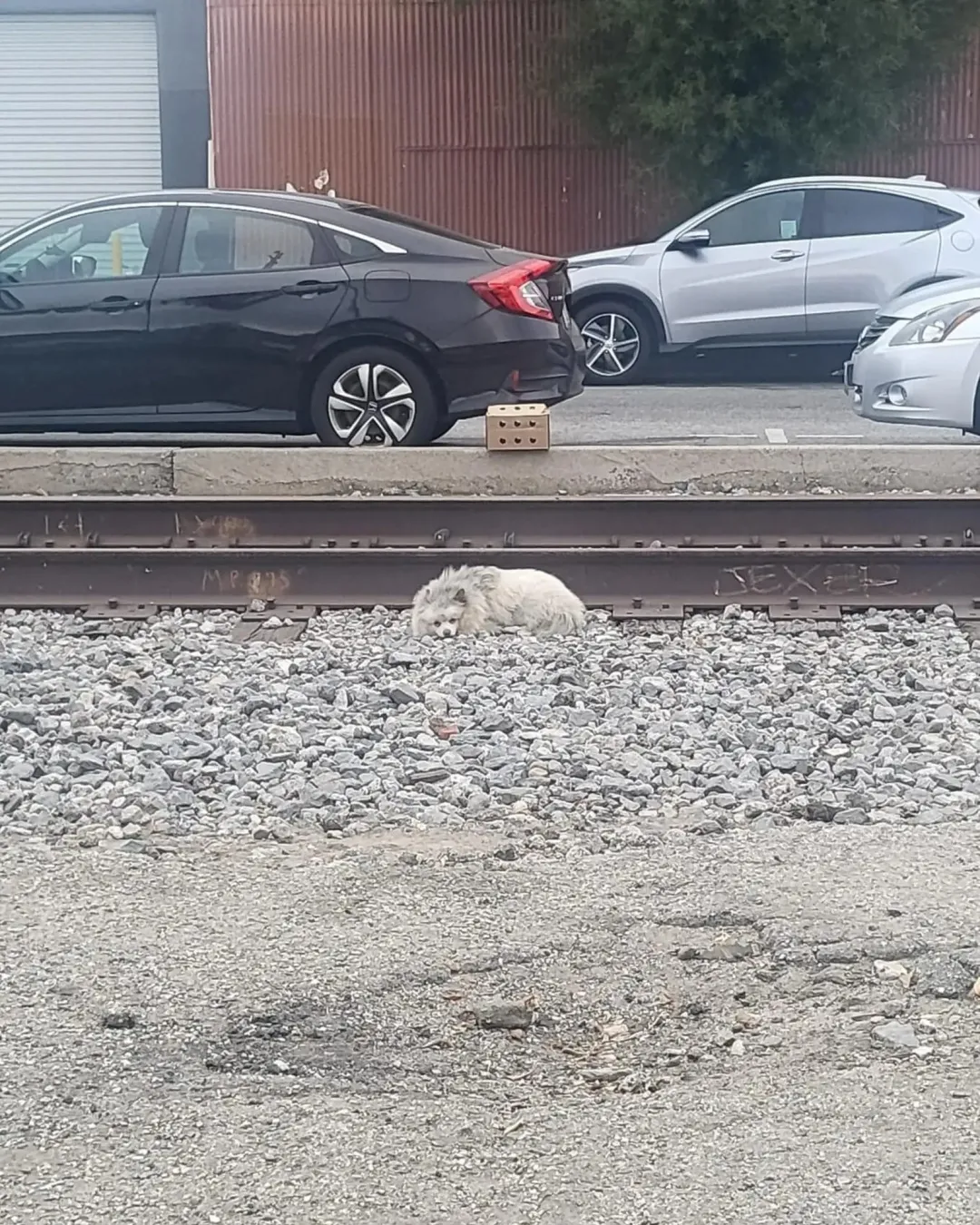
The sound of trains echoed through the industrial stretch of Los Angeles — steel grinding against steel, a rhythm that never stopped. Between the rails, curled up against a rusted shipping container, a small bundle of white fur lay motionless. To anyone passing by, it looked like trash, or maybe a rag blown in by the wind. But to
Rosario Ortiz, a local animal rescuer, it looked like heartbreak.
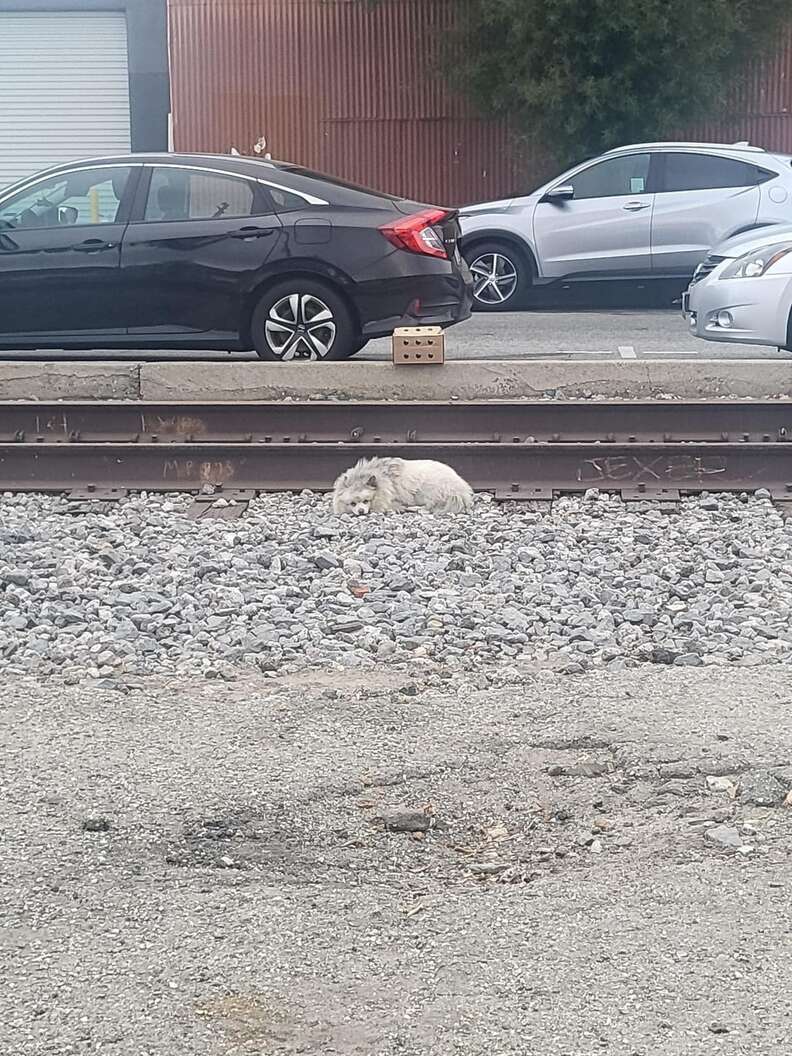
When Ortiz stepped closer, she saw him — a tiny Pomeranian, his fur tangled, his eyes half-closed from exhaustion. The heat radiated from the tracks, yet he didn’t move. It was as if he’d given up, waiting for something — or someone — to notice.
“He’d made that spot his home,” Ortiz later said. “The space under that container was the only shelter he had.”
She knew she couldn’t leave him there. With cars thundering past and trains roaring just feet away, every second counted. So she called
Suzette Hall, founder of Logan’s Legacy 29, a rescue organization known for saving dogs from impossible situations.
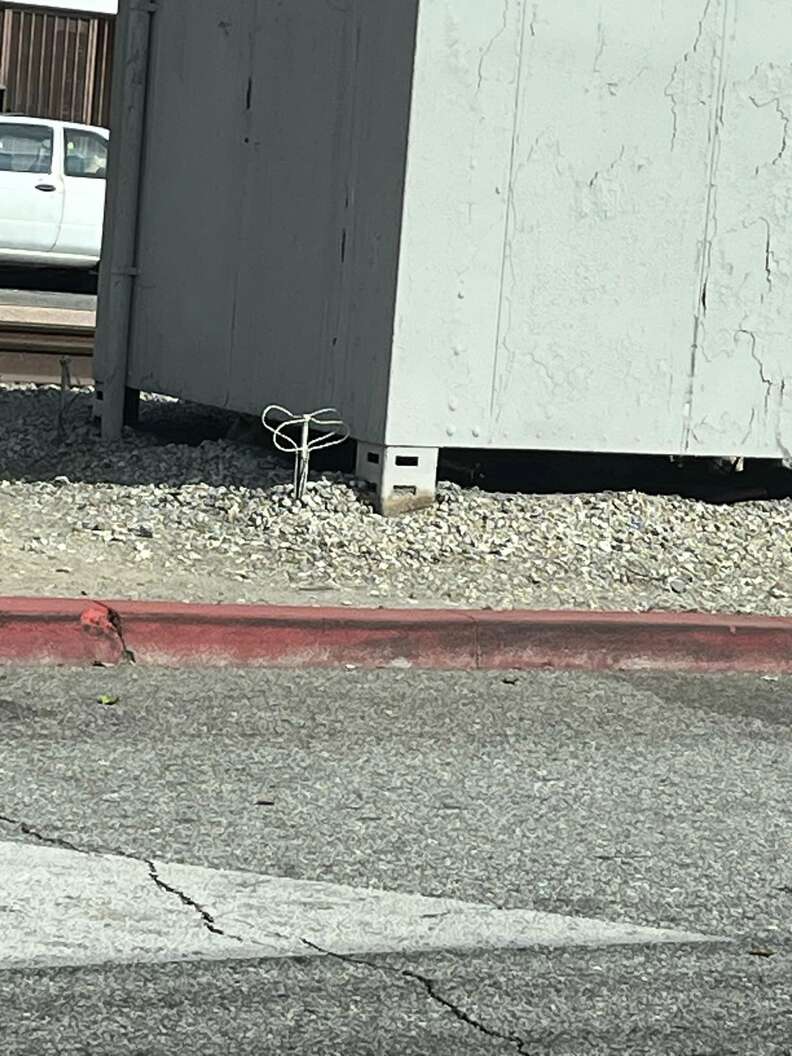
When Hall arrived an hour later, the little dog hadn’t moved an inch. “He was still sleeping in the same place Rosario found him,” Hall wrote later. “As if he was too tired to be afraid.”
Hall crouched low, speaking softly as she prepared a humane trap baited with warm, fragrant food. For a moment, hope stirred — the little dog lifted his head, sniffing the air, inching toward the smell. But just as he was about to step inside, a passerby came up behind him too fast. The dog startled, bolting down the tracks.
“Our hearts stopped,” Hall said. “It was so dangerous — a tiny, fluffy dog sprinting along active train rails. One wrong move, and it would’ve been over.”
Without hesitation, Hall and Ortiz jumped into their cars, following the dog down the long stretch of rail. They spotted him dart into a fenced yard, panting and trembling. The two rescuers acted quickly, blocking the exits with a baby gate and slowly closing in.
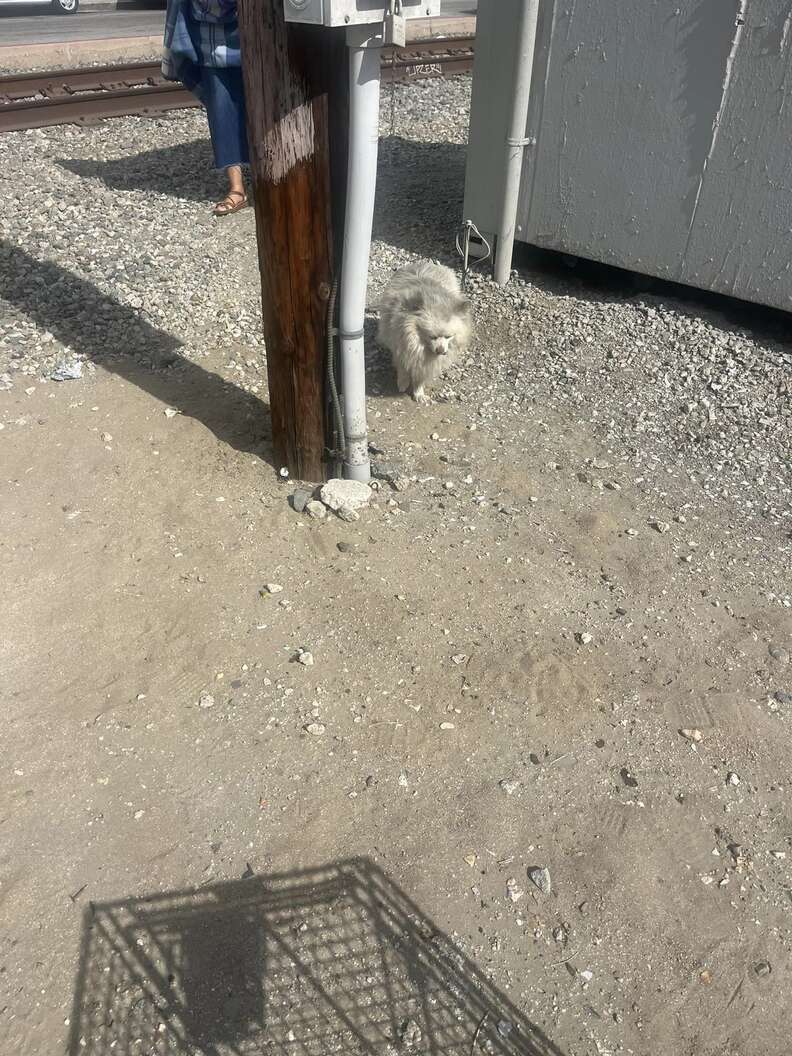
Finally, Ortiz reached him. “She just knelt down and whispered,” Hall recalled. “And he froze — then let her lift him up.”
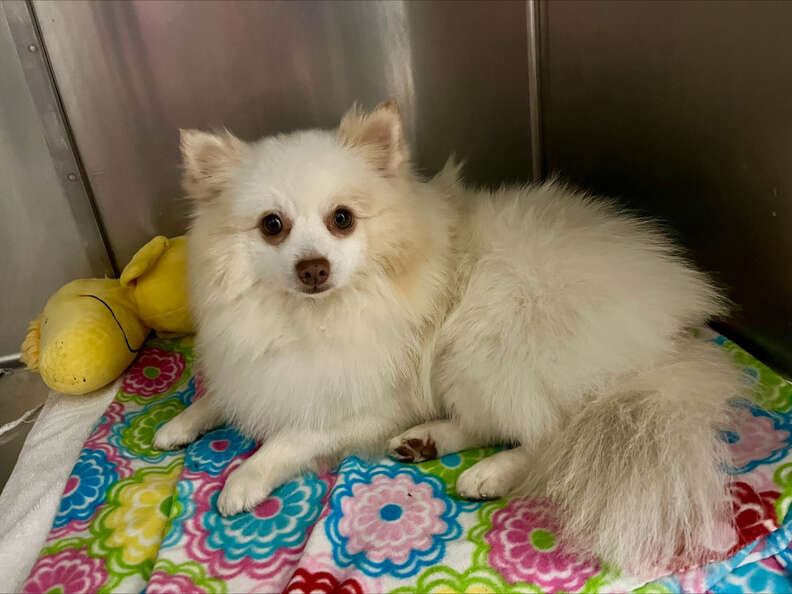
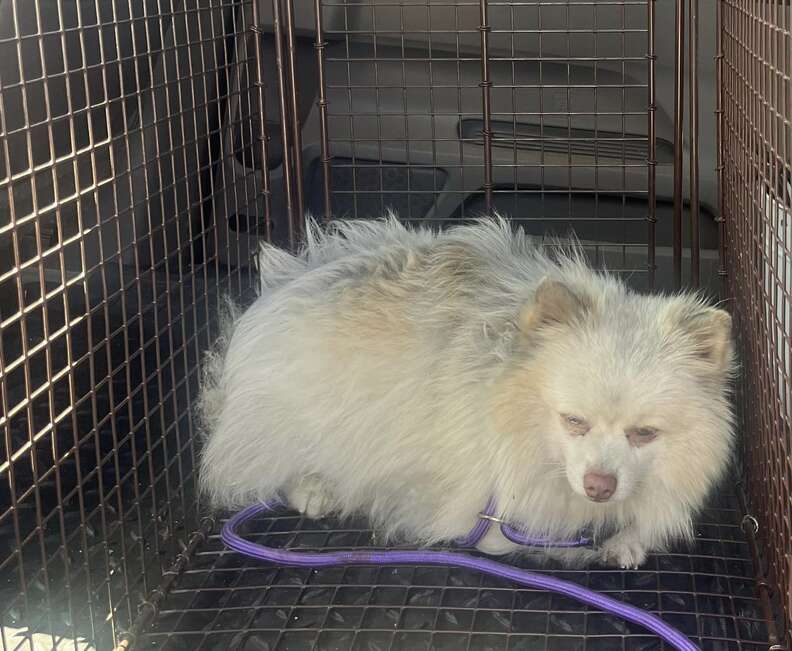
The moment he was safe in her arms, the little dog melted. His body went limp with relief, as if the fear had drained out all at once. Hall named him Marshmallow — soft, sweet, and fragile.
In the car, Marshmallow pressed his tiny face into the blanket, eyes fluttering shut. “When he realized he was safe,” Hall said, “he just sighed — like he’d been holding his breath for years.”
At the Camino Veterinary Hospital, Marshmallow was examined, bathed, and fed. Beneath the dirt and tangles, a beautiful little dog emerged — one who, despite everything, still wagged his tail when someone spoke kindly to him. His body was healthy, but his spirit was tired. It was time for him to rest.
That night, Marshmallow slept in a warm bed for the first time in who knows how long. No rumble of trains, no cold concrete, no fear of being forgotten. Just peace.
In the following weeks, his foster home became his safe haven. He learned that hands could comfort, not hurt. He discovered toys, treats, and the quiet joy of curling up beside someone who cared.
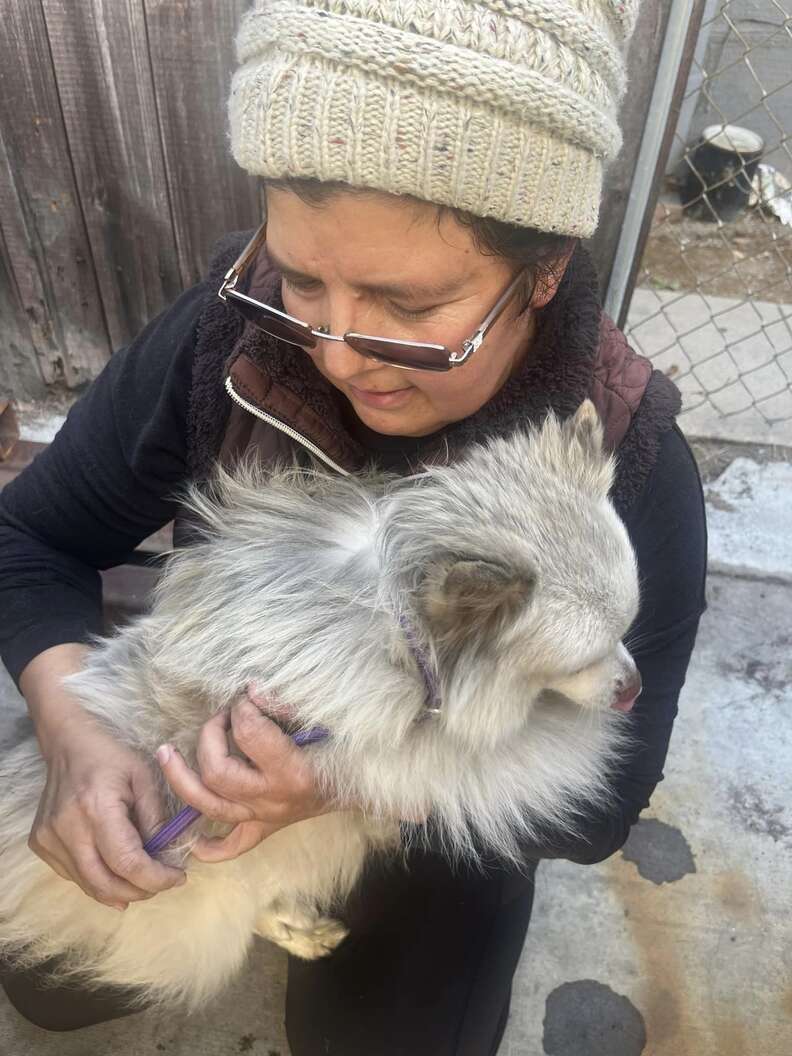
“Marshmallow is the sweetest cuddle bug,” Hall told The Dodo. “He loves to be held — it’s like he can’t believe he finally gets to.”
Soon, Marshmallow will be ready for adoption. His fur, once matted and gray with dust, now shines ivory white in the sunlight. He plays, he naps, and sometimes, when the world grows quiet, he still curls up small — as if remembering the place he came from.
But those tracks no longer hold his story. His story now is one of rescue, of kindness, of second chances.
Somewhere out there, trains still thunder past, and stray dogs still wander the edges of the city — waiting for someone like Rosario or Suzette to notice.
And thanks to them, one little soul named Marshmallow no longer has to wait. 🐾