
Mounting Pressure on Iran: Inside the Strategy Shaping a Critical Moment in the Middle East
Growing Questions About the Strategy Toward Iran
As tensions continue to rise across the Middle East, a central question has begun to dominate political and strategic discussions: do the United States and Israel have a long-term plan for Iran?

Recent developments, statements from military analysts, and remarks by former officials suggest that the unfolding situation may be part of a broader and carefully constructed strategy rather than a series of isolated actions. According to several observers, the objective may involve applying sustained pressure on Iran’s leadership while simultaneously creating conditions that allow internal political change to emerge from within the country.
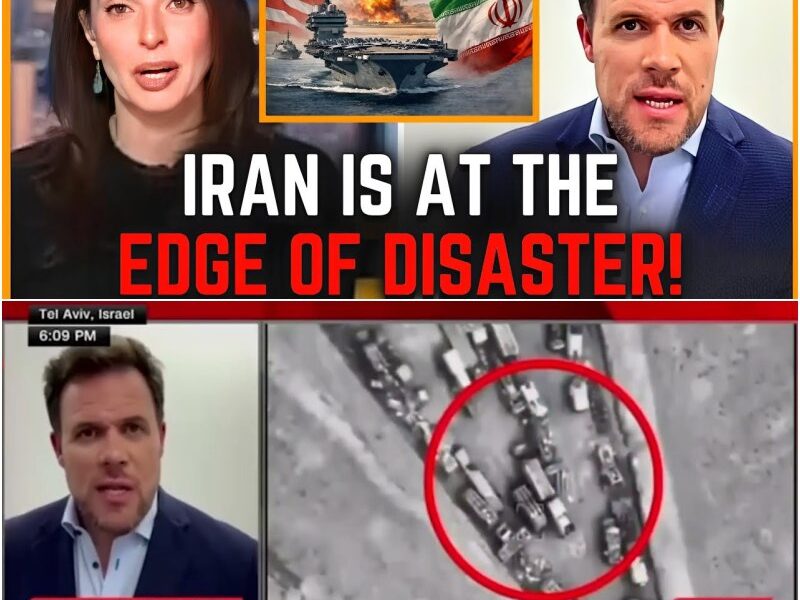
Former Israel Defense Forces spokesperson Jonathan Conricus recently suggested that such a plan likely exists and may already be unfolding, though it has not yet been publicly detailed. The strategy, he argued, appears to involve multiple layers of pressure designed to weaken the current leadership structure and encourage internal challenges to the government.
A Multi-Dimensional Approach
Analysts say the approach being discussed goes far beyond traditional military confrontation. Instead, it appears to involve a multi-dimensional strategy that combines diplomatic influence, intelligence operations, regional alliances, and support for various opposition elements inside Iran.
According to Conricus, the strategy includes maintaining consistent pressure on Iran’s governing system through different channels. While public attention often focuses on visible military actions, other forms of pressure may be taking place more quietly.
These could involve intelligence operations conducted by Western agencies, support networks assisting opposition groups, and efforts aimed at amplifying internal political dissatisfaction within the country.
Such activities, if they exist, would not be unprecedented. Throughout modern history, major geopolitical confrontations have often included covert operations designed to influence internal political dynamics in rival states.
Reports of Support for Opposition Groups
One of the most widely discussed reports in recent weeks involves claims that Kurdish groups inside Iran may be receiving external support. Kurdish communities represent one of several ethnic minorities in Iran and have historically had tense relations with the central government.
However, analysts note that Kurdish populations account for roughly eight percent of Iran’s population. Because of this, relying solely on Kurdish movements would likely be insufficient to create nationwide political change.
Observers believe that any broader strategy would need to involve multiple segments of Iranian society, including urban populations, student movements, and other ethnic communities across the country.
Iran itself is an extremely diverse nation with a complex social structure that includes Persians, Azeris, Kurds, Arabs, Baluchis, and other groups. Any internal political transformation would almost certainly require cooperation among many of these communities.
Signs of Activity Inside Iran
Some analysts claim that signs of growing internal pressure may already be emerging. Reports have circulated suggesting that protests, underground political activity, and small-scale resistance movements may be expanding in several Iranian cities.
While independent verification of these developments remains difficult, observers point out that Iran has experienced several waves of protests over the past decade. Demonstrations related to economic conditions, political freedoms, and women’s rights have repeatedly drawn large numbers of participants despite strict government controls.
These movements highlight a key factor often emphasized by international analysts: dissatisfaction with the government exists among parts of the Iranian population, particularly among younger generations.
However, translating dissatisfaction into large-scale political change has historically proven extremely difficult due to Iran’s powerful security institutions.
The Importance of Planning for “The Day After”
A major concern frequently raised by policymakers involves what would happen if the current political system in Iran were to weaken significantly or collapse.
History has shown that the aftermath of regime change can be unpredictable and sometimes chaotic. Because of this, many analysts argue that any effort aimed at pressuring Iran’s leadership must also include a detailed plan for what comes next.
According to Conricus and other commentators, both the United States and Israel likely understand the importance of preparing for such a scenario. Lessons from previous conflicts in Iraq, Afghanistan, and other regions have demonstrated how difficult it can be to stabilize a country after major political upheaval.
For this reason, officials may be intentionally keeping long-term plans confidential. Revealing too much information about potential post-crisis leadership structures could undermine sensitive negotiations or create security risks for individuals involved.
Why the Strategy Is Not Public
Despite widespread speculation about the existence of a broader strategy, government officials have shared relatively few details publicly.
There are several possible explanations for this secrecy. First, geopolitical strategies often rely on surprise and flexibility. Publicly outlining detailed plans could give adversaries time to adapt or counter them.
Second, internal political dynamics inside Iran are highly fluid. The identities of potential future leaders or reform movements may still be evolving. Prematurely endorsing specific figures could complicate internal political developments.
Finally, the international environment surrounding Iran remains extremely complex. Several regional powers, including Saudi Arabia, Turkey, and Russia, have significant interests in the country’s future. Any strategy aimed at influencing Iran’s political trajectory must account for these external actors as well.
Israel’s Perspective on the Situation
From Israel’s perspective, the confrontation with Iran has deep historical roots. Israeli officials have long argued that Iran’s leadership represents a serious security challenge due to its missile programs, regional alliances, and ideological hostility toward Israel.
Over the past two decades, Israeli leaders have repeatedly warned about Iran’s nuclear ambitions and the influence of Iranian-backed groups across the Middle East.
These concerns have shaped Israel’s strategic thinking and contributed to its determination to counter Iranian influence wherever possible.
Supporters of Israel’s approach argue that confronting the issue early may prevent more serious challenges from emerging in the future.
The United States’ Strategic Calculations
For the United States, the situation involves a broader set of considerations. American interests in the Middle East include protecting energy routes, maintaining regional stability, and preventing the spread of nuclear weapons.
Iran’s actions in Iraq, Syria, Yemen, and other areas have frequently brought it into direct or indirect confrontation with U.S. forces and allies.
American policymakers therefore face the challenge of balancing deterrence with the risk of further escalation. While Washington has historically been cautious about large-scale military commitments in the region, it also seeks to limit the influence of governments that threaten its interests.
This balancing act has shaped U.S. policy toward Iran for decades and continues to influence strategic decisions today.
The Role of the Iranian People
One point repeatedly emphasized by analysts is that the future of Iran will ultimately be determined by its own citizens.
Iran has a long and complex history, and its population includes a highly educated and politically aware society. Many Iranians maintain strong national pride and cultural identity that predates the current government.
Throughout recent years, Iranian citizens have demonstrated their willingness to protest against policies they oppose. Movements advocating for women’s rights, political reform, and economic opportunity have attracted global attention.
These protests illustrate that the relationship between the Iranian public and its leadership remains a dynamic and evolving issue.
A Moment of Uncertainty
As international observers analyze the current situation, one theme emerges repeatedly: uncertainty.
While many analysts believe a strategic plan may exist among Western and Israeli policymakers, the outcome remains far from predictable. Political systems are complex, and major geopolitical shifts rarely unfold exactly as planners expect.
Regional alliances, internal political dynamics, economic pressures, and global diplomatic efforts will all influence the direction events ultimately take.
For now, the situation appears to represent a critical moment in the ongoing relationship between Iran and the international community.
Potential Global Consequences
Any major change in Iran would have profound implications for the Middle East and the world.
Iran occupies a strategically important geographic position and plays a central role in regional politics, energy markets, and international diplomacy. Developments inside the country could reshape alliances, alter economic relationships, and influence security calculations across multiple continents.
For this reason, governments, analysts, and citizens around the world are watching events closely.
Whether the current moment leads to de-escalation, political reform, or prolonged confrontation remains uncertain. What is clear is that decisions made during this period may shape the geopolitical landscape for years to come.
As events continue to unfold, the question remains: is the world witnessing the early stages of a carefully planned strategy, or the unpredictable evolution of a long-standing regional rivalry?
The answer may become clearer in the months ahead.