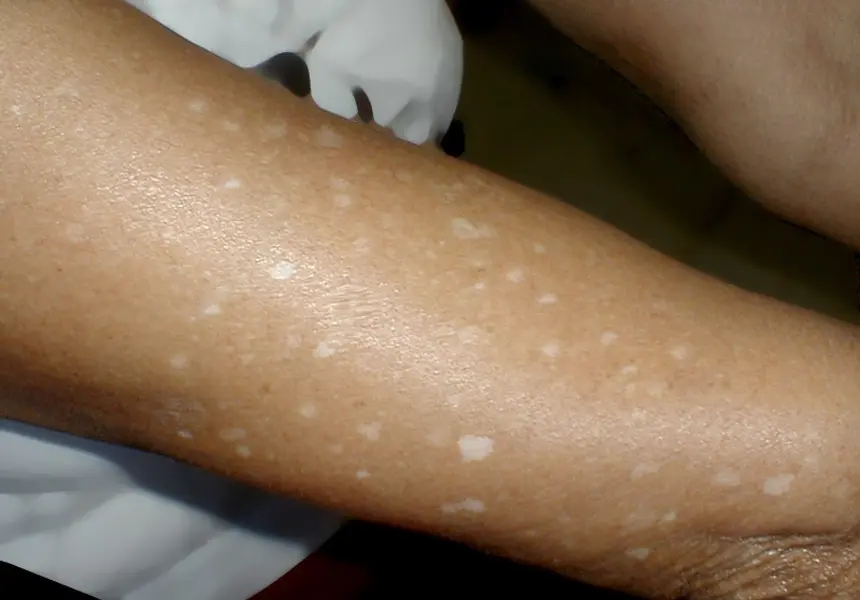
White Spots on Your Arms or Legs? Here’s What Your Body May Be Trying to Tell You

Noticing small white spots on the skin can be surprising and sometimes worrying. These spots may appear on:
- Arms
- Legs
- Hands
- Shoulders
- Other sun-exposed areas
In many cases, white spots are harmless and related to common skin conditions, aging, dryness, or sun exposure. However, doctors say certain skin changes should still be monitored carefully, especially if the spots:
- Spread quickly
- Change appearance
- Become itchy
- Develop scaling
- Appear alongside other symptoms
Because the skin often reflects changes happening inside or outside the body, white patches may sometimes provide clues about:
- Pigment changes
- Fungal infections
- Autoimmune conditions
- Nutritional issues
- Sun damage
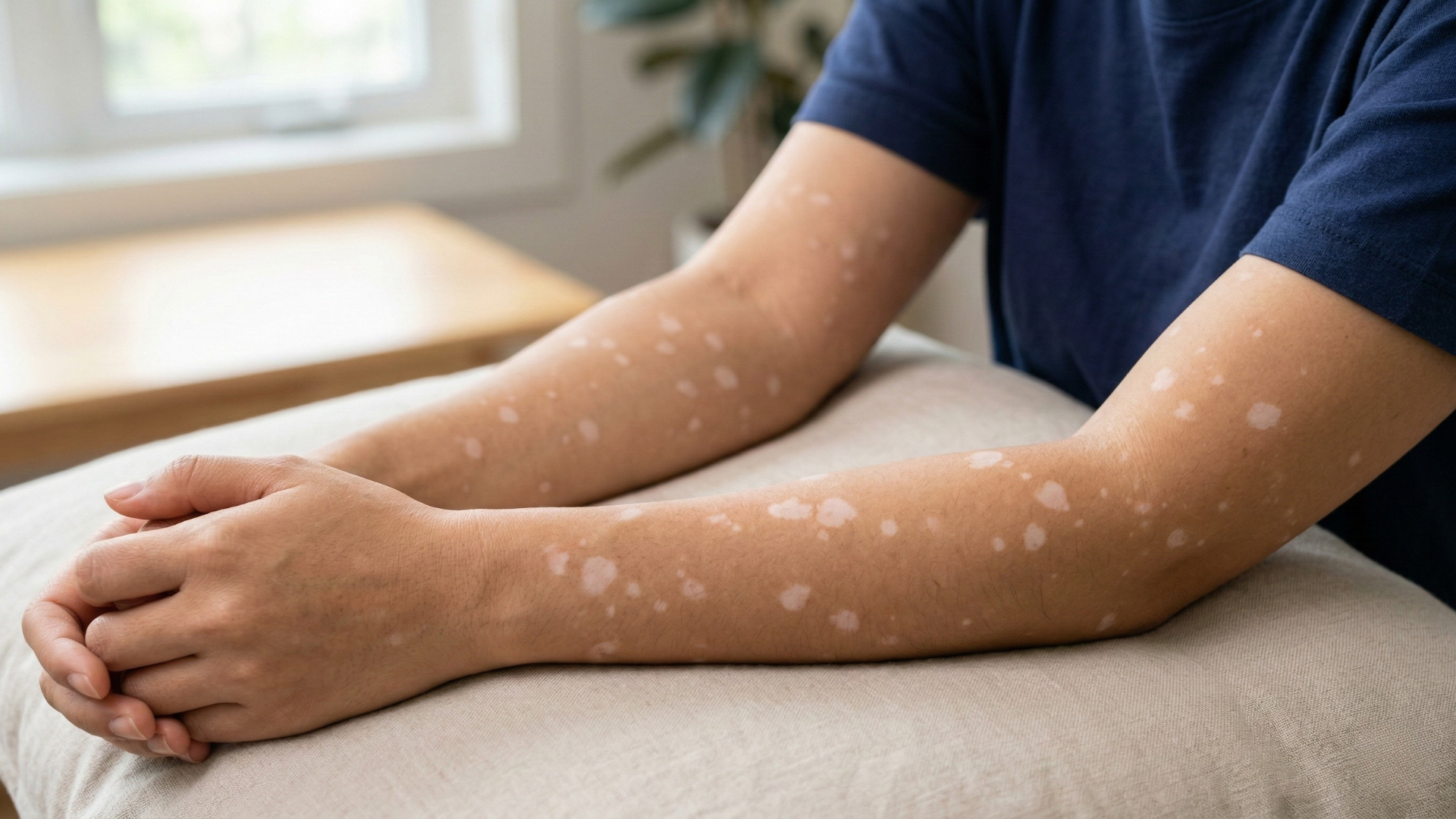
Why White Spots Appear on the Skin
Skin color is controlled by melanin, a pigment produced by specialized cells called melanocytes.
White spots may appear when:
- Melanin production decreases
- Skin becomes damaged
- Pigment cells stop functioning normally
- Fungal organisms affect pigmentation
The exact cause depends on the specific condition involved.
1. Sun-Related White Spots
One common cause of small white spots is a harmless condition sometimes associated with aging and sun exposure.
These tiny pale spots often appear on:
- Forearms
- Shins
- Legs
- Hands
especially in older adults.
Why They Happen
Years of ultraviolet (UV) exposure may gradually affect pigment-producing cells.
These spots are often:
- Flat
- Smooth
- Small
- Non-itchy
and usually harmless.
2. Fungal Skin Infections
Certain fungal infections may interfere with skin pigmentation and create lighter patches.
A common example is tinea versicolor, which may cause:
- White patches
- Light brown spots
- Mild scaling
- Itching in some cases
The condition often becomes more noticeable after sun exposure because surrounding skin darkens while affected areas remain lighter.
Areas Commonly Affected
- Chest
- Back
- Shoulders
- Upper arms
3. Vitiligo
Vitiligo is an autoimmune-related condition in which pigment-producing cells are lost.
This may lead to:
- Clearly defined white patches
- Symmetrical pigment loss
- Progressive spread over time
Vitiligo may affect:
- Arms
- Legs
- Face
- Hands
- Around the eyes or mouth
The condition is not contagious.
Why Vitiligo Happens
Researchers believe the immune system mistakenly attacks pigment cells in susceptible individuals.
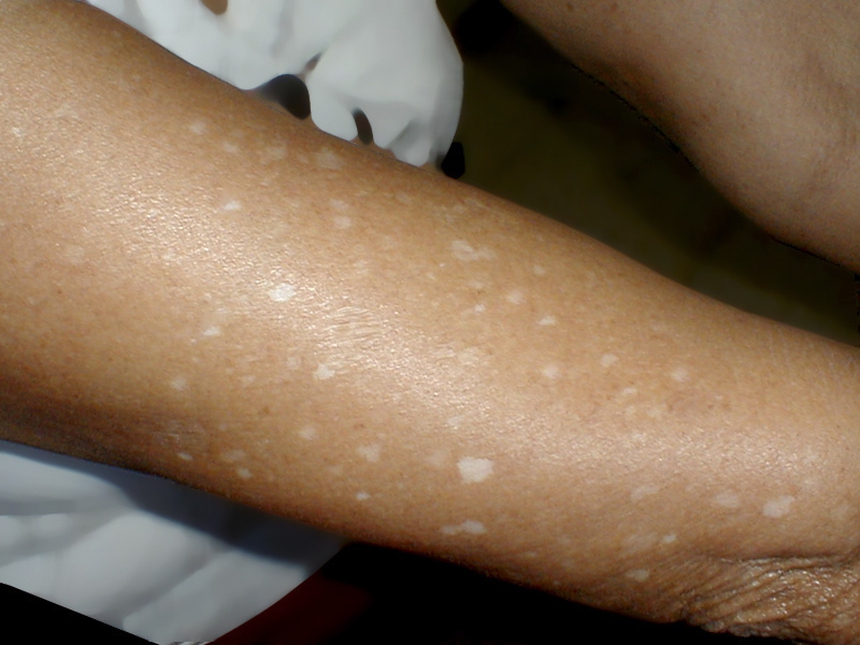
4. Dry Skin and Eczema
Dry irritated skin may sometimes leave temporary lighter patches after inflammation heals.
This is especially common in:
- Children
- People with eczema
- Individuals with sensitive skin
These patches may become more visible after sun exposure.
5. Nutritional Deficiencies
Although less common, certain nutritional problems may occasionally affect skin appearance.
Doctors sometimes evaluate:
- Vitamin deficiencies
- Zinc levels
- General nutrition
when skin symptoms appear alongside fatigue or other health concerns.
However, white spots alone rarely confirm a nutritional problem.
6. Post-Inflammatory Skin Changes
After:
- Cuts
- Rashes
- Burns
- Insect bites
the skin may temporarily lose pigment during healing.
These lighter areas often improve gradually over time.
7. Autoimmune Conditions
Some autoimmune conditions may occasionally affect pigmentation or skin texture.
Doctors may consider additional evaluation if skin symptoms occur with:
- Fatigue
- Hair loss
- Joint pain
- Other systemic symptoms
Why Sun Exposure Makes White Spots More Noticeable
Sun tanning darkens surrounding healthy skin.
Areas with reduced pigmentation do not tan as easily, making white spots appear more obvious during summer or after vacations.
This is why many people first notice them after sun exposure.
Most White Spots Are Not Dangerous
This is extremely important.
Many white spots are caused by:
- Harmless pigment loss
- Mild fungal conditions
- Dry skin
- Sun exposure
Serious medical conditions are far less common.
The goal is awareness — not panic.
When Should Someone See a Doctor?
Medical evaluation may be important if white spots:
- Spread rapidly
- Become very noticeable
- Itch severely
- Scale or peel
- Change shape
- Appear with other symptoms
Doctors may perform:
- Skin examination
- Wood’s lamp evaluation
- Fungal testing
- Blood tests in some cases
depending on symptoms.
Healthy Habits That May Support Skin Health
Doctors often recommend:
- Using sunscreen
- Moisturizing regularly
- Avoiding excessive sun exposure
- Eating balanced nutrition
- Staying hydrated
Protecting the skin barrier is important for long-term skin health.
Why Self-Diagnosis Online Can Be Misleading
Many skin conditions look similar online.
For example:
- Fungal infections
- Vitiligo
- Dry skin patches
- Sun spots
may appear nearly identical in photos.
This is why persistent or spreading skin changes should be professionally evaluated rather than self-diagnosed from internet images alone.
Stress and Skin Changes
Stress may indirectly affect skin through:
- Immune system activity
- Hormonal changes
- Inflammation
- Skin barrier disruption
Some chronic skin conditions may flare during stressful periods.

Final Thoughts
White spots on the arms or legs are often harmless and commonly related to sun exposure, dry skin, fungal infections, or natural pigment changes. However, doctors say persistent, spreading, or unusual skin patches should not always be ignored because they may occasionally reflect underlying skin or immune-related conditions.
Experts emphasize that proper skin care, sun protection, healthy lifestyle habits, and medical evaluation when necessary remain important for maintaining healthy skin and overall wellness.