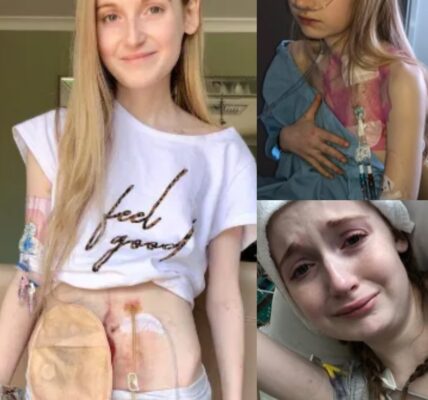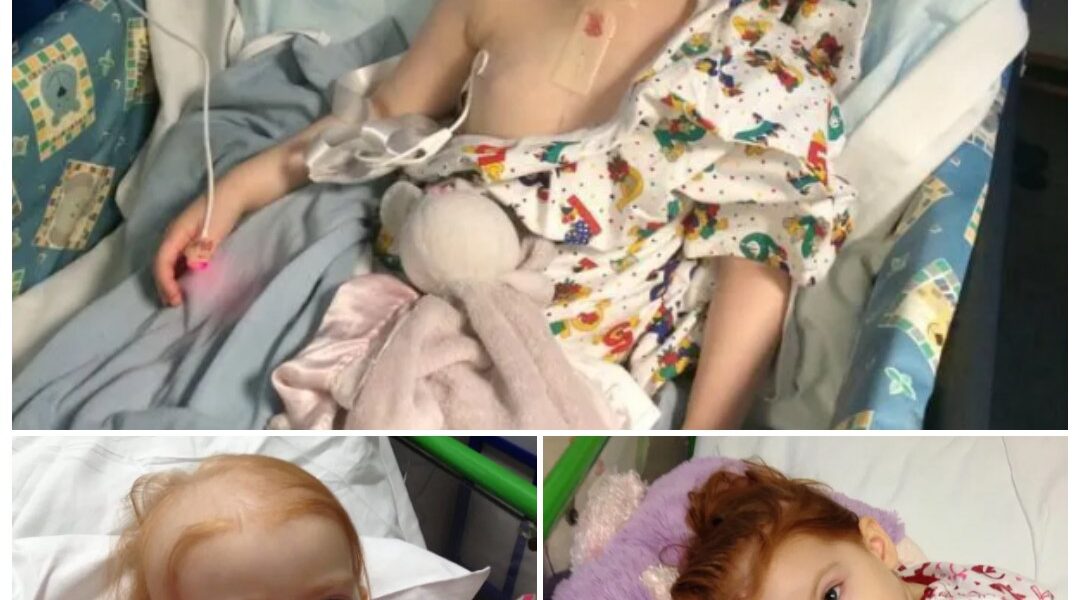

Chloe Balloqui’s story is one of courage, heartbreak, and unyielding hope. Diagnosed with stage 4 high-risk neuroblastoma at just two years old, her life has been a series of medical battles that no child should ever face. At ten years old, Chloe now fights cancer for the third time, a battle that has pushed her family to their limits.
From the very beginning, Chloe’s diagnosis was devastating. At just 18 months, her parents noticed she was unusually bloated, uncomfortable, and struggling to sleep. They initially suspected a minor illness, perhaps constipation or a urinary infection, but the truth was far more serious.
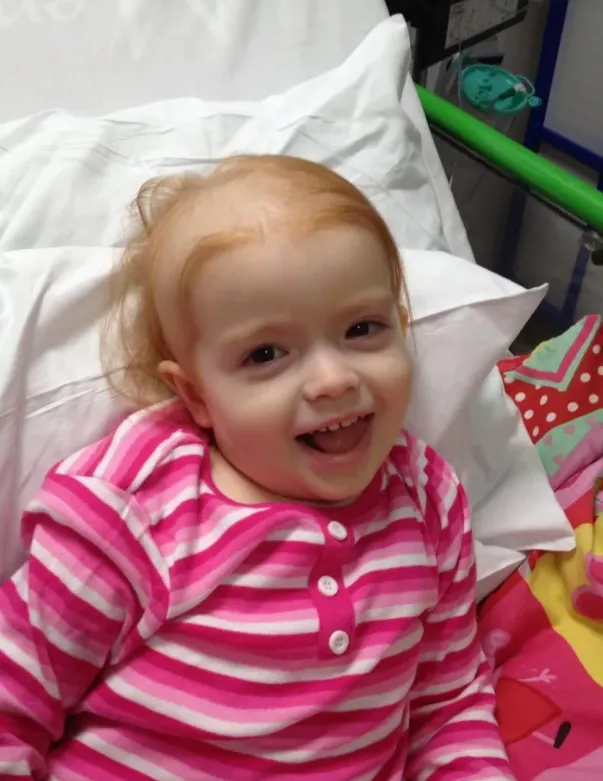
An urgent visit to the doctor revealed the shocking reality: Chloe had neuroblastoma, a rare cancer affecting nerve cells. The disease was already at an advanced stage, and treatment needed to begin immediately. Her parents, Karen and Richard, faced a frightening decision, one that would shape the next decade of their lives.
For the first eleven months, Chloe underwent intensive treatment under the NHS in the UK. Chemotherapy, surgeries, and supportive care dominated her days, each procedure a step towards remission but also a test of her resilience. By the time she was three years old, Chloe celebrated her first remission, a moment of relief for her family.
But the respite was brief. Just months later, Chloe’s cancer returned. Her small body endured another fourteen months of aggressive treatment. Chemotherapy, radiation, and surgery became routine, yet Chloe’s spirit never wavered. Even in the face of immense pain and uncertainty, her optimism remained intact.
During this period, Chloe’s journey reached the public eye through an ITV documentary, “Raining In My Heart.” The program captured the realities of childhood cancer, showcasing not only her family’s struggle but also Chloe’s bravery. Her story inspired viewers, raising awareness about the challenges faced by children with rare cancers.

After a brief period of remission, the family sought further treatment abroad. They raised funds to enroll Chloe in a pioneering preventative vaccine trial in New York in 2016. The trial offered hope that Chloe could remain cancer-free for years. Their gamble paid off: Chloe experienced three years without any signs of the disease.
Yet fate intervened again. In February 2020, nearly four years after her remission, Chloe began experiencing pain behind her eyes. Routine checkups had shown no issues, making the symptoms unexpected and frightening. MRI scans revealed a new tumor, signaling the third recurrence of her aggressive neuroblastoma.
The news hit Chloe’s family like a tidal wave. Karen and Richard had devoted years to caring for their daughter, sacrificing careers, time, and personal energy. Now, they faced the unthinkable once again: seeking treatment options that were not available on the NHS in the UK.

The only hope lay in specialized immunotherapy trials available overseas. Specifically, Chloe required a trial of HU3F8 immunotherapy combined with chemotherapy, a treatment designed to combat relapsed neuroblastoma. The trial locations were limited to New York and Barcelona, with immediate access crucial to her survival.
The treatment costs were staggering. A ten-month trial in Barcelona was priced at £273,000, with subsequent treatments in the United States potentially bringing the total to £400,000. For a family already drained emotionally and financially, these figures represented an immense challenge.
Karen explained the difficult reality: “This is our only option to try to control the disease or bring Chloe into remission again. If the trial were available here, we would do it immediately. But we have no choice but to look abroad.” The urgency of the situation left no room for delay.

Chloe, though courageous, faced her own emotional hurdles. At ten years old, the idea of being away from her school, friends, and brother James for ten months was daunting. The family had to explain the gravity of her condition and why this long, arduous journey was necessary for her life.
Despite the fear and disruption, Chloe accepted the challenge. Her bravery shone through, as she prepared mentally and emotionally for the upcoming treatment. The family sought to balance hope with honesty, ensuring she understood both the risks and the potential life-saving benefits.
Meanwhile, the family mobilized to raise the necessary funds. Friends, neighbors, and supporters organized fundraising events ranging from charity runs and auctions to slime challenges and sponsored walks. Their community rallied, knowing that every donation could make the difference between life and death for Chloe.

By mid-May 2021, the family had raised £210,000, more than half of the required amount. Yet the pressure remained intense. Time was critical; any delay in starting the treatment could reduce Chloe’s chances of survival. Each day became a countdown towards a life-saving intervention.
The physical symptoms Chloe experienced were challenging and sometimes painful. She endured eye discomfort, fatigue, and lingering side effects from prior treatments. Yet her resilience never waned, and her spirit inspired everyone around her.
Chloe’s parents had given up their jobs to focus entirely on her care. Karen, previously a manager at Sainsbury’s, and Richard, a former banker, devoted their full attention to Chloe’s treatments, appointments, and emotional well-being. Their sacrifices underscored the family’s unwavering commitment to her survival.
Explaining the situation to her eight-year-old brother James was another challenge. The family had to navigate his understanding of cancer, treatments, and the temporary absence of his sister. Communication, patience, and honesty became essential tools in managing the family’s collective stress.

The nature of neuroblastoma made Chloe’s case particularly serious. The cancer originates from nerve cells left over from fetal development, often appearing in adrenal glands or along the spinal cord. In advanced stages, it can spread to bone marrow, liver, skin, and lymph nodes, as had been the case for Chloe.
Symptoms are varied and often subtle. Chloe had initially presented with abdominal swelling, urinary retention, limping, fatigue, and loss of appetite. These early warning signs were easily mistaken for less serious ailments, highlighting the insidious nature of neuroblastoma.
For the treatment in Barcelona, Chloe would undergo a combination of radiotherapy, chemotherapy, and immunotherapy under strict medical supervision. The trial’s goal was to halt the progression of her relapse and ideally induce a new remission.

The family’s emotional journey paralleled the medical one. Anxiety, hope, despair, and resilience intertwined daily. Each scan, appointment, and consultation carried monumental weight, with every result capable of altering the family’s plans and expectations.
Chloe’s experience also highlighted the limitations of local healthcare systems. While the NHS had provided vital initial care and support, certain cutting-edge treatments were only available abroad. This reality forced families like Chloe’s to navigate international medical logistics, financial burdens, and extended family separations.
To fund the treatment, the family collaborated with Solving Kids’ Cancer, a charity dedicated to supporting children with life-threatening conditions. Funds raised would be directly allocated to Chloe’s medical expenses, ensuring transparency and efficiency in securing her care.
Chloe’s story also underscored the power of community. From local neighbors donating to global supporters sharing online fundraising pages, the response demonstrated humanity’s capacity for empathy and action in the face of life-threatening adversity.
The urgency of treatment added immense pressure. The family had only weeks to secure funds, obtain necessary approvals, and travel to Barcelona. Every logistical detail — visas, accommodation, school arrangements, and medical coordination — had to be managed under intense stress.
Despite the intensity, Chloe remained the heart of the story. Her tenacity, humor, and innocence brought light to a situation fraught with fear. Even during chemotherapy, scans, and hospital stays, she maintained a childlike curiosity, finding joy in books, games, and small moments of laughter.
The narrative of Chloe Balloqui is not just medical; it is profoundly human. It reflects the extraordinary lengths families go to protect their children, the resilience of a child confronting unimaginable challenges, and the intersection of medicine, hope, and compassion.
Fundraising efforts continued around the clock. Auctions, sponsored events, and donations from corporations and individuals alike contributed to inching closer to the £400,000 goal. Each contribution represented not just money, but a lifeline and a vote of confidence in Chloe’s survival.
Chloe’s journey has also raised awareness about neuroblastoma, a rare but aggressive childhood cancer. Educating the public about symptoms, treatment options, and the urgency of early intervention has become a secondary mission for the family and supporting charities.
For medical professionals, Chloe’s case is a study in perseverance and innovation. Accessing specialized immunotherapy trials requires coordination across borders, adherence to trial protocols, and meticulous planning to ensure patient safety. Her case exemplifies the challenges and potential rewards of pioneering treatments.
The personal cost to the family has been immense. Years of emotional strain, financial uncertainty, and the constant presence of fear have tested their resilience. Yet through it all, love, unity, and determination have prevailed as guiding forces.
Chloe’s story resonates beyond the UK. Families worldwide dealing with rare childhood cancers see in her journey a reflection of their own struggles and hopes. Her courage inspires both patients and medical teams to keep pushing forward against formidable odds.
Every step of Chloe’s medical journey is a testament to human determination. From her first diagnosis at two, through two previous remissions, to her current battle for life, she embodies resilience, bravery, and the indomitable spirit of a child determined to survive.
Her treatment in Barcelona, if successful, would not only provide a potential cure but also set a precedent for access to life-saving trials for children across the globe. It demonstrates that cutting-edge medicine, combined with family advocacy and community support, can create paths to survival even in the most dire circumstances.
Chloe’s family continues to navigate each day with courage and grace. While the road ahead remains uncertain, they are united in purpose: to ensure their daughter receives every possible chance to live a full, healthy life.
At the heart of this story lies a universal truth: childhood cancer is a battle not just for the patient, but for the entire family. The emotional, physical, and financial toll is immense, yet love and determination can propel families through unimaginable challenges.
As Chloe approaches her eleventh birthday, her journey remains a symbol of hope. Every scan, treatment, and challenge she faces is a step toward reclaiming a normal childhood and a long-term future free from cancer.
The fight against neuroblastoma continues, and Chloe Balloqui’s story serves as a powerful reminder of what can be achieved when medical innovation, family dedication, and community support converge. Her courage and resilience illuminate a path for others confronting similar battles.
Through relentless treatment, fundraising, and unwavering hope, Chloe and her family are showing the world that even in the face of repeated setbacks, survival is possible. Their journey continues to inspire, educate, and rally those who wish to support children in need.
This is more than a story of illness; it is a story of human spirit, of a young girl who has faced the impossible three times and continues to fight, surrounded by the love of her family and the hope of a medical breakthrough.
When an 8-Year-Old Shows the World How Courage Really Looks
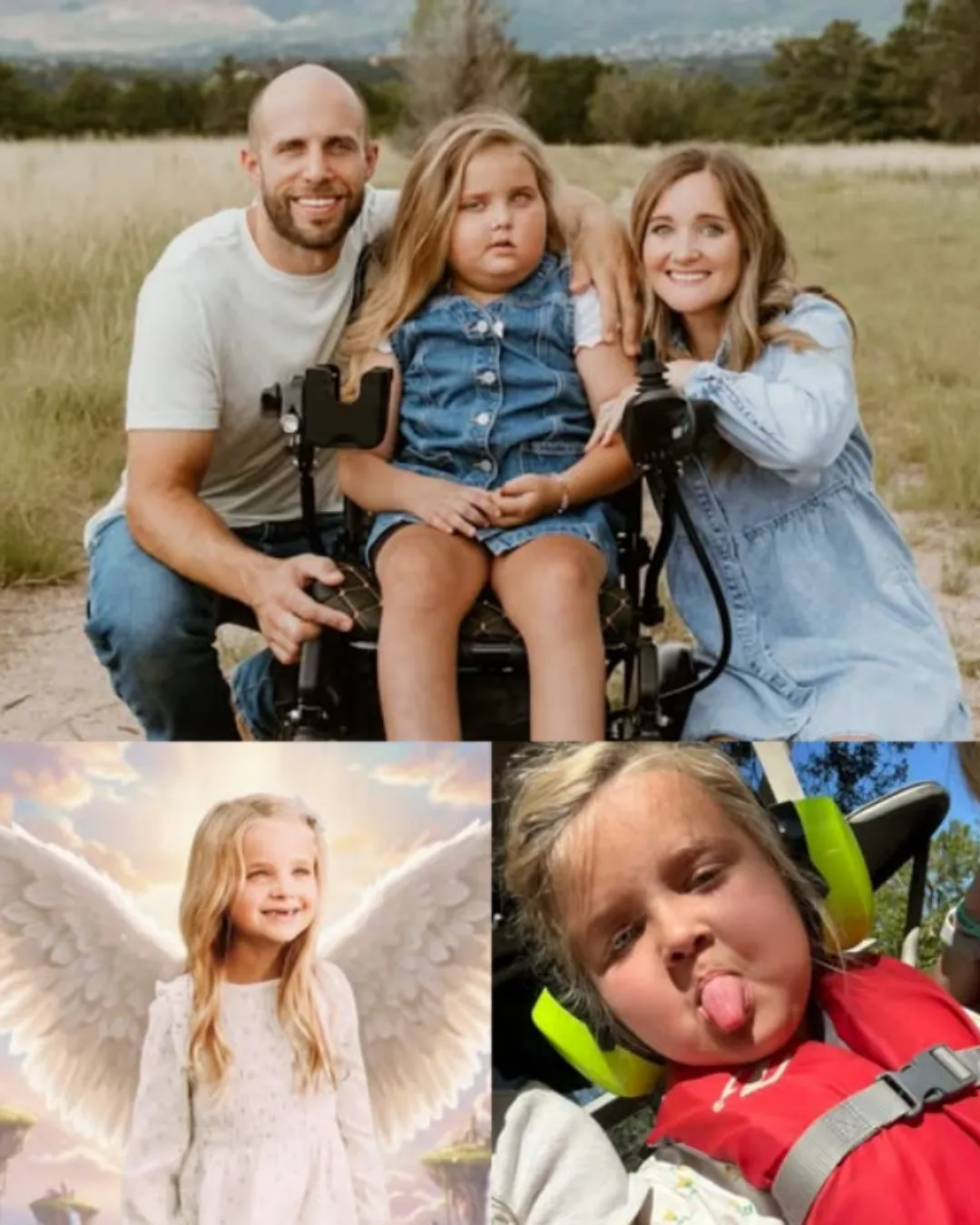
There are children whose presence brightens a room.
And then there are children whose presence brightens an entire world.
Eight-year-old Maddie was the second kind.
She wasn’t ordinary.
She wasn’t typical.
She was a burst of joy in human form.
Her laughter didn’t just echo — it radiated.
Her humor didn’t simply entertain — it healed.
Her spirit didn’t just shine — it blazed.
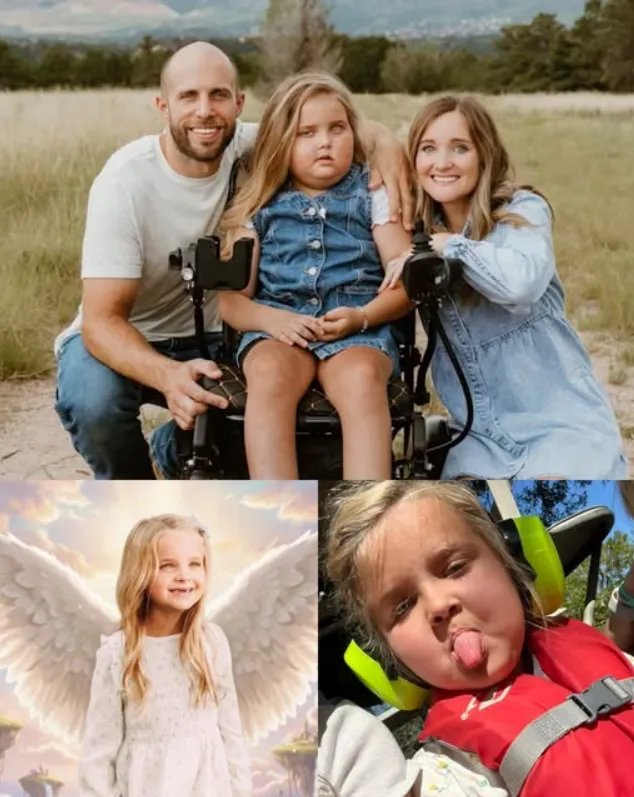
And now, after a nearly 14-month battle with one of the cruelest childhood cancers known to medicine, her family is facing the unthinkable truth:
Their little warrior has traded her sword for angel wings.
She is gone from this world — but her light refuses to leave it.
This is the story of a child who refused to be defined by cancer.
A child who told adults, over and over again, “DIPG is no big deal.”
A child who carried more courage than most people do in a lifetime.
This is Maddie’s story.
She was diagnosed with DIPG — Diffuse Intrinsic Pontine Glioma — one of the deadliest pediatric brain cancers in existence.
Doctors know how to identify it, but not how to cure it.
It steals futures.
It steals childhoods.
It steals time.
But somehow, it didn’t steal Maddie.
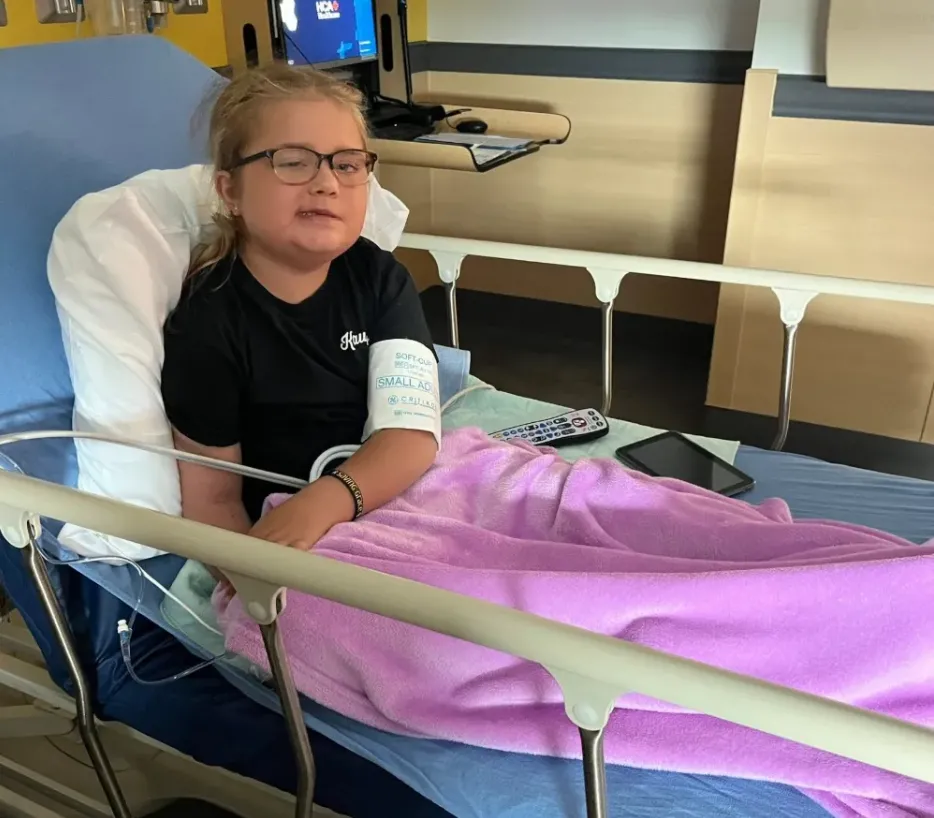
She didn’t break when she heard the diagnosis.
She didn’t crumble.
She didn’t cry the way adults did.
Instead, she shrugged and said,
“DIPG is no big deal.”
And another day, “DIPG is just fine.”
No fear.
No panic.
Just a child whose bravery left grown adults speechless.
Her parents often looked at her and whispered to each other,
“How can someone so small carry courage this big?”
No one had an answer.
But Maddie didn’t need one.
She just lived bravely.
Her laugh was unforgettable.
Not a soft giggle — a bright, explosive, room-filling laugh that made everything feel lighter.
A laugh that made other children giggle until they fell over.
A laugh that made adults smile through tears they didn’t want anyone to see.
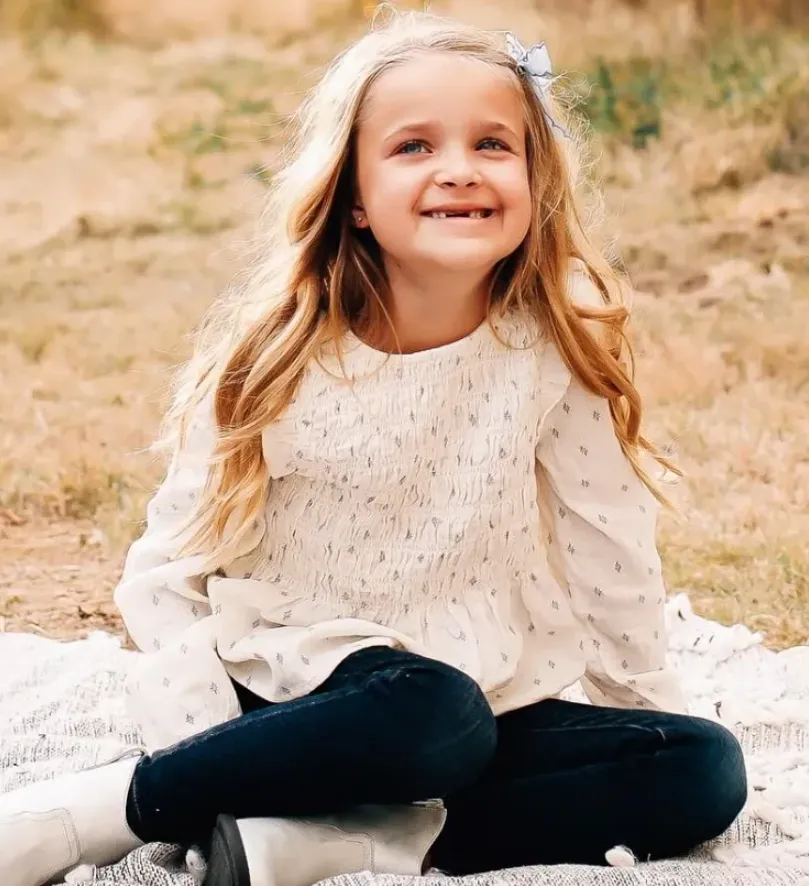
It was impossible to hear her laugh and not believe in hope again.
It had a warmth that wrapped itself around people, pulling them out of sadness.
It had a magic that made doctors forget, just for a moment, what she was fighting.
She was the kind of child who could bring sunlight into a storm.
And she carried that gift with her everywhere.
Despite everything happening inside her own body, she always looked outward.
She was the best big sister — protective, loving, gentle.
If her siblings cried, she was the first one there with snacks, hugs, or silly faces.
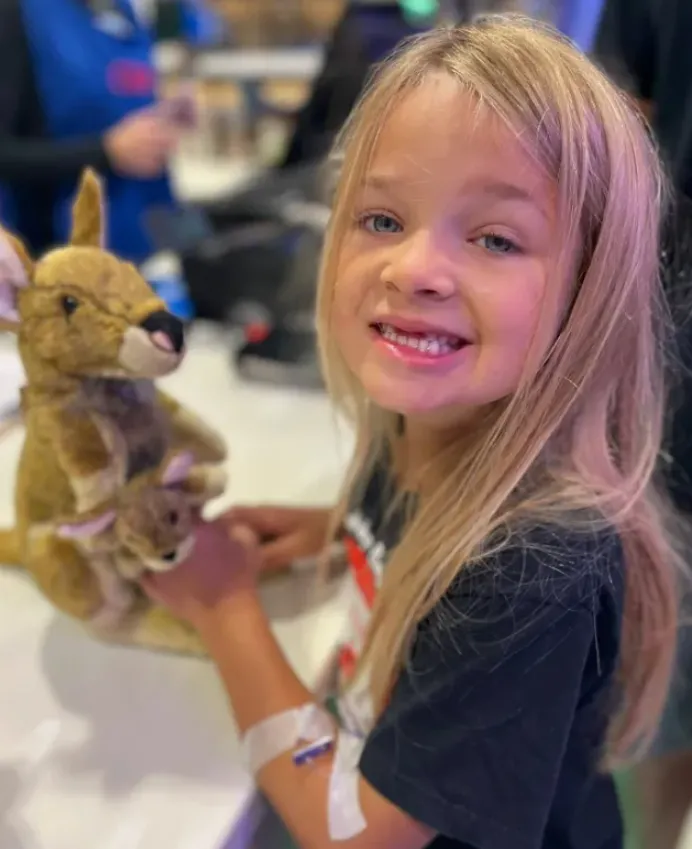
She would ask, even on her worst days,
“Are my brother and sister okay?”
“Do they need anything?”
“Can I make them something?”
Her love had no limits.
Her kindness had no breaks.
Her heart had no edges — it simply overflowed.
She adored animals, especially llamas.
Their fluffy heads.
Their goofy faces.
Their gentle, curious eyes.
People often described her as “a farm girl with the biggest heart,” and it was true.
She had a tenderness in her hands, in her voice, in the way she approached every living thing.
She knelt beside tiny creatures and whispered to them softly.
Animals trusted her instantly — maybe because they felt something pure in her spirit.
And maybe, in their own way, they loved her right back.
Maddie was also a dreamer.
A thinker.
A creator.
She painted.
She baked.
She crafted.
She wrote stories and invented imaginary worlds.
Her creativity never slept.
Sometimes she planned surprise parties for no reason at all — decorating rooms with homemade crafts and performing songs as if she were on a Broadway stage.
She didn’t need an audience.
She was the show.
Even on days when treatments drained her energy, she still brought color into the world.
Some children draw.
Maddie lived in color.
And she was hilarious — genuinely, effortlessly funny.
She made jokes in hospital rooms.
She pulled pranks on nurses.
She made faces at cameras.
She brought humor into places where fear normally lived.
Cancer tried to steal her joy, but it failed.
Every time.
Adults often tried to be strong for her.
But more often, Maddie was the one making them stronger.
She lifted people without even trying.
She healed people without even knowing.
But DIPG is relentless.
It takes and takes and takes.
It pushes until bodies give out, even when spirits refuse to.
Yet even as her body weakened, her courage never dimmed.
Even when symptoms worsened, her smile stayed.
Even when treatments caused pain, her hope remained steady.
Her bravery was not loud.
It was quiet.
Unshakeable.
The kind that grows roots instead of wings.
Near the end, her family watched the energy drain from her small frame.
Her laugh softened.
Her steps slowed.
Her tiredness deepened.
But her light?
It refused to go out.
And when the moment finally came — the moment no child should experience and no parent should witness — the world softened.
A hush settled across the people who loved her.
It felt as though the earth itself paused to honor her.
She passed gently, lovingly, surrounded by family.
Their hearts broke in ways that will never fully heal.
Their world dimmed in ways that will never fully brighten again.
But they imagine her now —
running through the heavens, laughing loudly, cracking up angels who have never known a child like her.
Her sword replaced by wings.
Her pain replaced by freedom.
Her courage turned into something eternal.
She left this world the way she lived in it:
bravely, joyfully, quietly extraordinary.
Her legacy now rests in the lives she touched.
In the people she made laugh.
In the siblings she protected.
In the animals she adored.
In the worlds she built with imagination.
In the courage she taught without meaning to.
Her family says God has wrapped His arms around her.
And they believe God wraps His arms around them too — because nothing else can soften a loss like this except faith, memory, and the echo of a child who loved fearlessly.
Maddie was eight.
She was radiant.
She was brave.
She was kind.
She was magic.
And she will be loved for the rest of time.
Her light did not fade.
Her courage did not die.
Her story did not end.
It lives in every heart she touched.
It lives in every life she brightened.
It lives in every person who remembers her name.
Rest in peace, sweet Maddie.
Your wings were earned.
Your story will never be forgotten.
Your light is still shining.