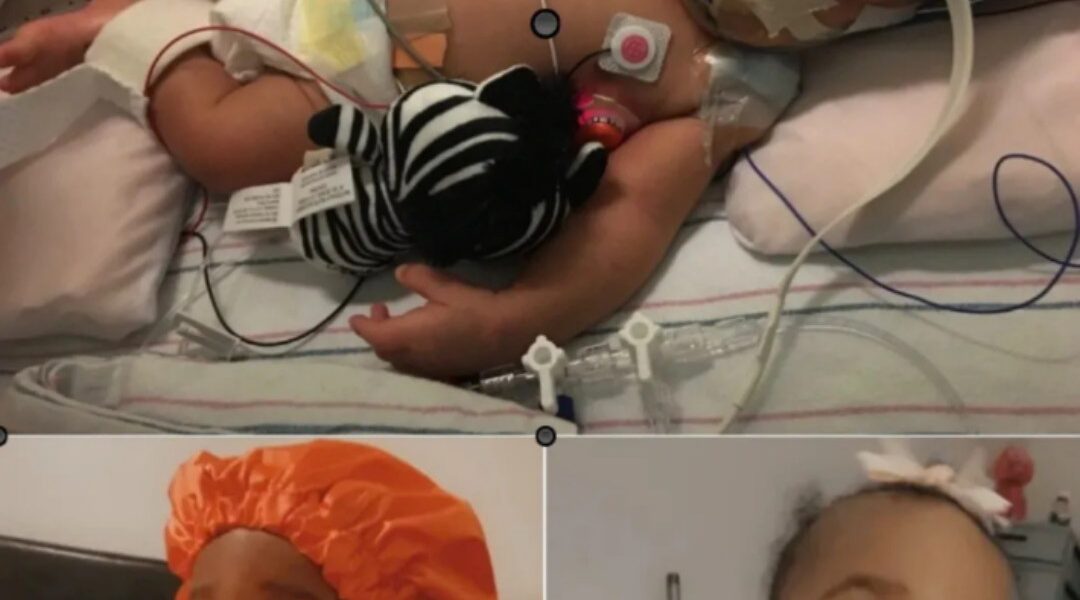

everything changed. What had once been a season of hopeful anticipation instantly became a journey defined by fear, uncertainty, and prayers whispered in the quietest hours of the night. Her parents learned quickly that CDH was not just a diagnosis — it was a fight for breath, for time, for life itself.
Before Empress ever took her first breath, doctors explained the odds with careful honesty. Her lungs were fragile and underdeveloped. Her airway would be delicate. Surgery would be unavoidable. Survival was uncertain. Every word carried weight, and every appointment felt heavier than the last. Still, even before she was born, Empress was already living up to her name — holding on, refusing to give up.
When she entered the world, there was no pause to admire her tiny features or cradle her in warm arms. Empress was immediately surrounded by machines and hands moving with urgent precision. Breathing did not come easily. Her lungs struggled to do what they were meant to do, and her tiny body worked harder than any newborn ever should. Each breath was borrowed, supported, and fought for.
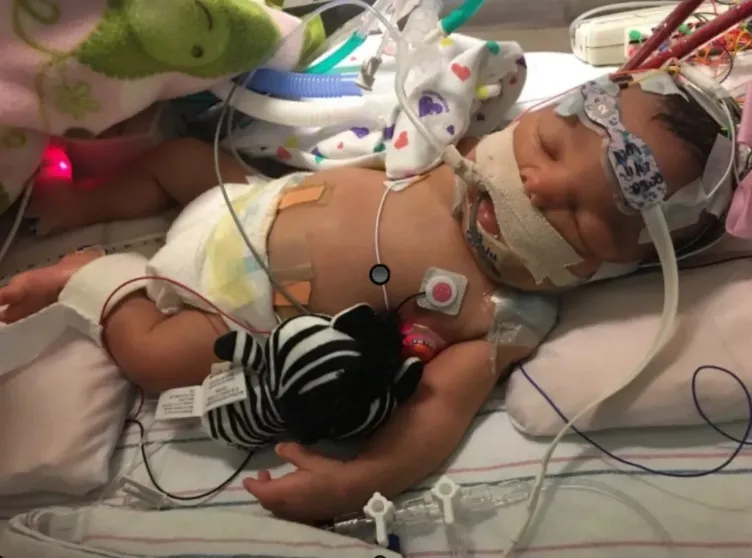
The ICU became her first home.
Nights blurred into days under constant fluorescent light. Monitors hummed, alarms echoed, and time seemed to stretch endlessly. ECMO — a machine that would take over the work of her heart and lungs — became her lifeline. For her family, it was terrifying and miraculous all at once. Watching a baby sustained by machines is a pain no parent can prepare for. It is fear in its rawest form — loving someone so deeply while knowing how fragile their life truly is.
There were moments when hope felt impossibly thin. Surgeries loomed. Complications threatened progress. Doctors spoke in careful tones, and every update felt like it could change everything. But Empress stayed. She held on through procedures stacked against her. She endured ICU nights that seemed endless. She fought quietly, steadily, with a resilience that stunned everyone watching.
Every breath she took became a victory.
There were no dramatic leaps forward, no sudden transformations. Progress came in inches, not miles. A slight improvement in oxygen levels. A moment of stability. A night without new complications. Each small gain was celebrated as if it were monumental — because it was. In Empress’s world, survival was measured moment by moment.

Her parents learned a new way to live. They learned how to hope without expectations, how to celebrate tiny milestones, how to find strength in exhaustion. They learned that love sometimes means sitting silently beside a hospital bed, trusting that presence alone matters. They learned that miracles do not always arrive loudly — sometimes they arrive quietly, disguised as persistence.
Against every prediction, Empress began to grow stronger.
Machines that once defined her existence became less central. Her body started to do what doctors once feared it might never do. Breathing became steadier. Recovery, though slow, became possible. Fear never fully disappeared, but it no longer ruled every moment.
The day Empress went home felt unreal.
After months defined by ICU walls and constant vigilance, the world outside felt overwhelming. Sunlight. Fresh air. The quiet absence of alarms. Holding her without wires and tubes felt like reclaiming something that had been stolen. Home was not just a place — it was a symbol. Proof that she had made it through what once felt impossible.
Today, Empress is one year old.

She laughs. She grows. She thrives in ways that once seemed unimaginable. The baby who entered the world fighting for every breath now fills rooms with life. Her existence is not just a survival story — it is a testament to resilience, to medical dedication, to relentless love, and to hope that refused to let go.
Her journey does not erase the fear that came before it. It does not diminish the pain of those ICU nights. But it transforms them. What once felt like endless darkness now stands in contrast to the light of who she has become.
Empress carries her story in every heartbeat. In every breath taken freely. In every milestone reached. She is living proof that predictions do not define destiny, and that even the smallest fighters can defy the greatest odds.
For every child still in a hospital bed. For every family still waiting, still praying, still holding on — Empress’s story is a reminder that miracles can happen. Not because the road is easy, but because strength can exist even in the most fragile bodies.
She was never meant to survive, they said.
But Empress stayed.
And in doing so, she became exactly what her name promised — a miracle, crowned not by perfection, but by perseverance.
Britain’s Tiniest Twin Survivors: A Miracle Journey 738
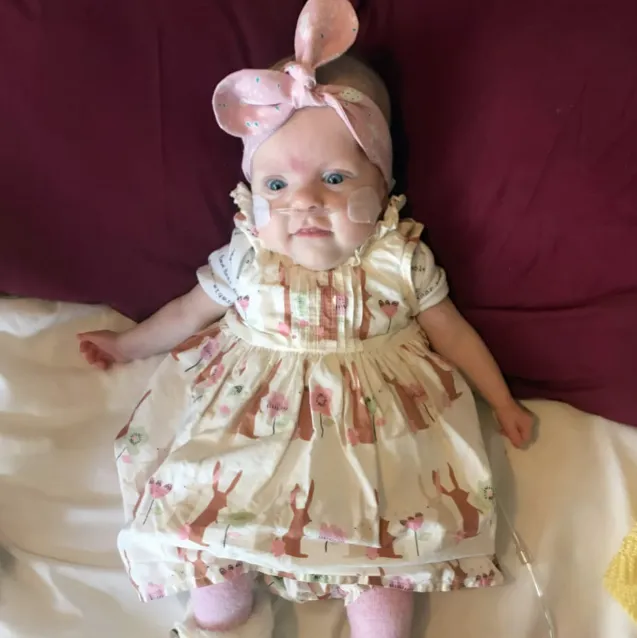
When Annabelle and Imogen Weir entered the world in April 2016, their arrival was marked by uncertainty and fear. Born at just 23 weeks and four days, they were so tiny they could fit in the palm of a hand, making them among the earliest-born twins ever to survive in the UK. Their birth was nothing short of a miracle, but it also marked the beginning of a long and challenging fight for survival.
Weighing only 15.5 ounces and just over a pound, Annabelle and Imogen were immediately whisked into intensive care, where they would spend the next three months of their lives. Their fragile skin was so delicate that even the softest fabrics were considered too harsh for them. They required round-the-clock care, multiple blood transfusions, and emergency surgery. For their parents, Claire and James Weir, the emotional toll was immeasurable. They could barely comprehend the gravity of the situation, but they never gave up hope.
The journey to this point began with an unexpected pregnancy. Claire and James, both 31, had no family history of multiple births, so the news of expecting twins came as a surprise. However, complications arose at just 22 and a half weeks when Claire’s waters broke prematurely. Despite the growing risks, Claire was transferred to Princess Royal Maternity Hospital in Glasgow, one of the few facilities equipped to care for babies born before 28 weeks. Claire’s health deteriorated further when she developed sepsis, but she remained steadfast in her determination to keep the pregnancy going for as long as possible.
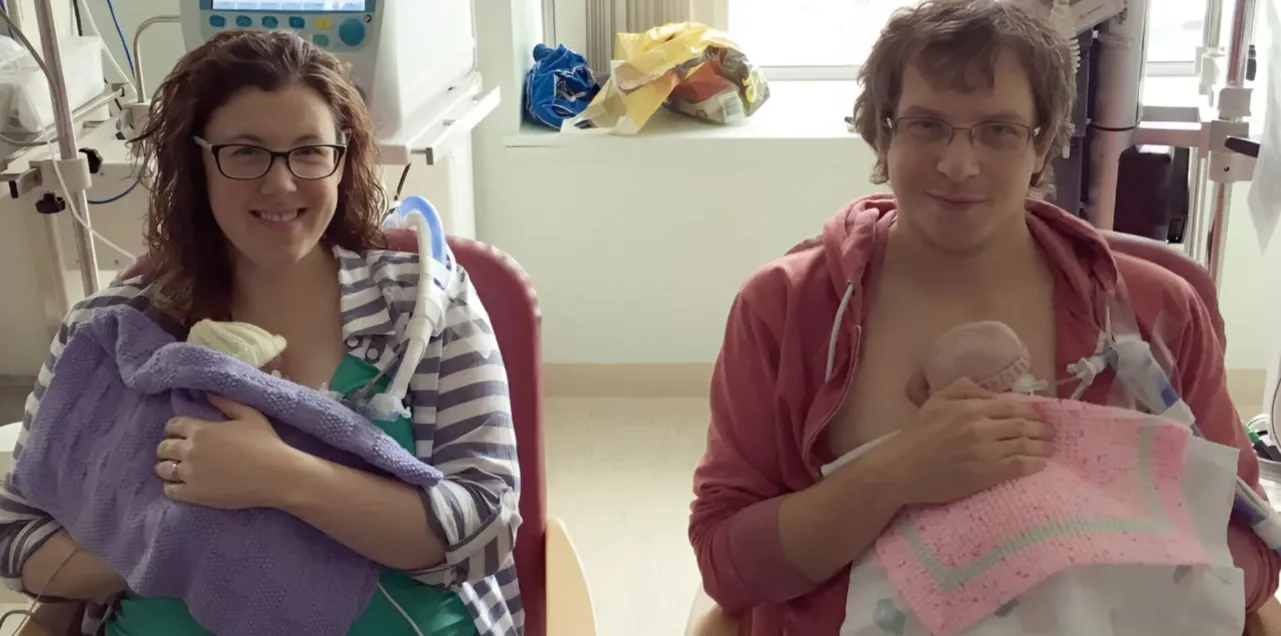
Just days later, Annabelle and Imogen were born, three days shy of the 24-week threshold, which is often considered the boundary of survival. Claire remembers feeling a sense of disbelief. “I had never heard of twins this small surviving,” she said. “It felt impossible — not just one baby, but two.”
The twins’ time in intensive care was a battle from the start. Both were placed in incubators and required gentle ventilation to help them breathe. Annabelle’s condition was the most fragile, and it took weeks before her parents could hold her. Imogen, while slightly stronger, was not able to be held until six days later. The days and weeks that followed were a blur of medical procedures, uncertainty, and constant care from the dedicated hospital staff.
The twins spent six weeks in advanced incubators, monitored 24/7 by a team of specialists. Each gram gained was a victory, a small but significant sign of progress. Over time, the girls began to grow stronger, but the journey was far from over. Claire and James held on to hope, trusting in the medical teams and their own unwavering belief in their daughters’ strength.
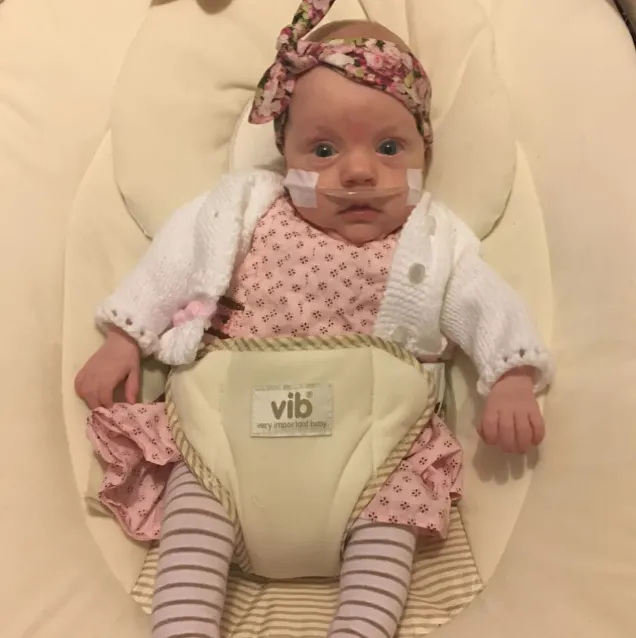
Now, nine months later, Annabelle and Imogen have flourished beyond what anyone could have expected. They weigh around 11 and 12 pounds and are finally fitting into newborn clothes. The once tiny, fragile babies are now learning to roll, experimenting with solid foods, and filling their home with the sound of laughter. “They’re developing their own personalities,” Claire shares. “Imogen is definitely the bossy one, while Annabelle is much more relaxed. Watching them interact is just wonderful.”
The joy Claire and James feel today is matched only by their gratitude for the medical teams who fought tirelessly to save their daughters. “Without the doctors and nurses at both hospitals, our girls wouldn’t be here,” Claire says, her voice thick with emotion. “We owe them everything.”
The support they received from The Twins and Multiple Births Association (Tamba) also played a crucial role in their journey. Helen Peck, the association’s coordinator, described the twins’ progress as “exceptionally rare,” calling Annabelle and Imogen “true miracles.”
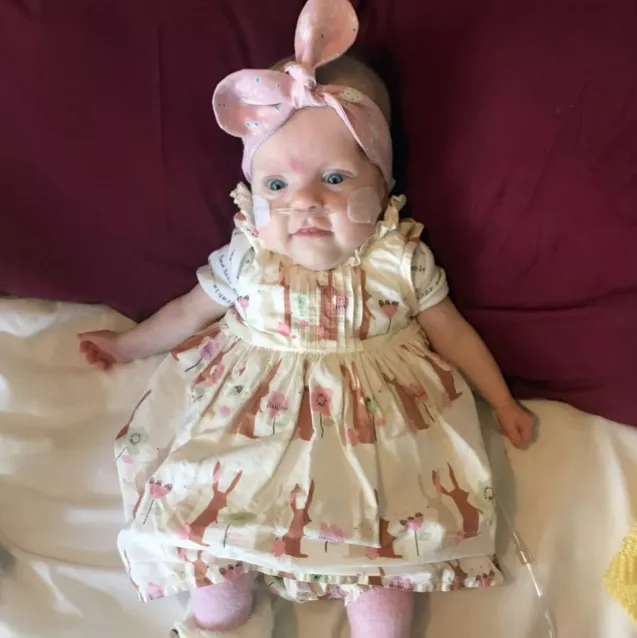
From weighing less than a pound to now thriving at home, Annabelle and Imogen’s journey is a powerful testament to the advances of modern medicine, the unbreakable strength of their parents, and the extraordinary resilience of the tiniest of fighters. These two beautiful girls, once considered too small to survive, are now thriving, proving that even the smallest lives can leave an indelible mark on the world.
Their story is a reminder to all of us of the miracles that exist every day, sometimes in the most unexpected places. It is a story of love, hope, and unwavering determination—a story that will continue to inspire everyone who hears it.