

Memphis didn’t wake up the moment the news broke.
The city simply shifted, almost imperceptibly, like a house learning that one of its walls was gone.
It took a while for the echo to reach every phone, every porch, every group chat where his jokes once lived.
They said, “Whyte Folkz is gone.”
Phones lit up in the dark like a silent vigil.
Screenshots of his videos floated through the night like digital candles.
Somewhere, in one small apartment on the South side, a woman pressed her hand to her mouth and whispered, “No, not him.”

For a long time, Memphis had measured its days by sound.
There was the rumble of freight trains announcing morning.
There was the low murmur of traffic on Union, the occasional wail of a siren.
And somewhere in between all that noise, like seasoning on a pot of greens, there was the sharp, familiar cadence of Whyte Folkz’s voice bleeding out of somebody’s speaker.
He didn’t start out as a “personality.”
He was just a kid who watched the world closely.
He noticed the way old men leaned back on milk crates outside corner stores, telling the same story three different ways until it turned into a sermon.
He noticed how aunties could turn gossip into stand-up, how a family argument could collapse into laughter in the same breath it started with.
He grew up on those sounds.

He grew up on front-porch music and kitchen-table confessions.
He learned early that there were only two ways to survive the weight of this world—through God or through humor, and some days, both at once.
So when he finally picked up his phone and started recording sketches, he wasn’t inventing anything new.
He was just translating Memphis.
At first, the videos were simple.
A shaky phone propped against a jar, a cheap ring light that flickered whenever the air conditioner kicked on.
He’d slip into characters the way other people slipped on jackets—one second a tired uncle, the next second a loud cousin, then a church lady with a hat big enough to block the sun.
May you like

People watched because they recognized themselves.

They saw their grandmother in the way he rolled his eyes and said, “Baby.”
They heard their cousins in the way he dragged out a word, letting the accent hang between syllables like a door left half-open.
It wasn’t just comedy; it was memory, stitched together with slang and side-eyes.
Then the views started climbing.
At first, it was just the neighborhood talking.
Then it was the city.
Then it was strangers in other states writing, “I don’t even live in Memphis, but this feels like my family.”
One day, he walked into a gas station and a little boy froze.
The child’s chip bag crinkled in his hand as he whispered, “Mama, that’s him.
That’s the funny man on your phone.
That’s Whyte Folkz.”
The mother turned, halfway embarrassed, halfway starstruck.
“Lord, my child watch you every day,” she said, laughing, pushing her hair back like she needed a second to steady herself.
“You be having him in here screaming at the screen like you can hear him.”
Whyte smiled, shook the little boy’s hand like he was meeting a mayor.
“Thank you for watching me, lil’ man,” he said softly.
The boy grinned so wide his cheeks nearly split.
He looked at his mother like he’d just shaken hands with a superhero.
And for a moment, in the florescent hum of that gas station, everybody forgot they were standing between lottery tickets and cigarette ads.
That’s the thing about real connection.
It can turn the simplest place into holy ground.
He wasn’t perfect.

He had days when the jokes came slow and the bills came fast.
He had nights when he stared at the ceiling, wondering if people really saw him or just the mask he wore when the red recording light blinked on.
Sometimes he scrolled through his own comments, laughing along with strangers and still feeling surprisingly lonely.
Fame—no matter how small or local—has a way of making a person feel both seen and invisible at the same time.
Still, he kept posting.
He kept going live from his car between errands.
He’d crack jokes about family barbecues, about church announcements that went on too long, about cousins who always had a “business” but never any customers.
People tuned in from break rooms and bus stops, hospital parking lots and overnight shifts.
There was a woman named Denise who watched every night from her hospital cot.
She was a nurse by trade and a caregiver by necessity.
Her daddy was sick, lungs tired and heart stubborn, clinging on even when his body seemed ready to go.
Denise would sit with him through the night, the monitors humming around them, and when his pain medicine finally lulled him to sleep, she’d put on Whyte Folkz.
Sometimes she muted him and just watched his face move.
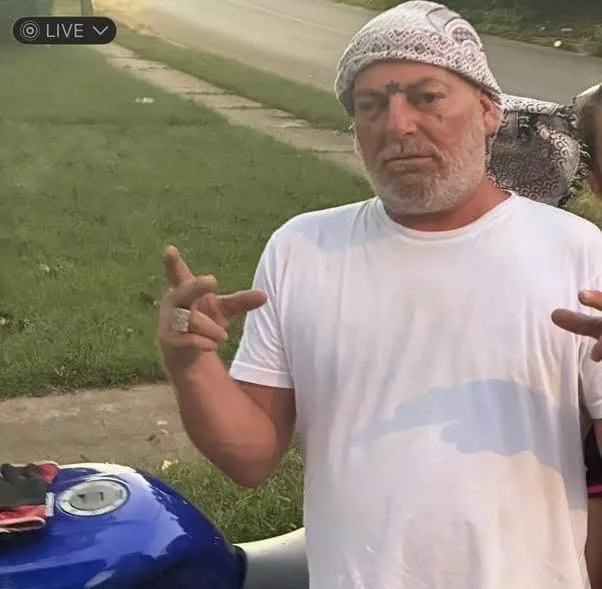
The way his eyebrows danced.
The way his hands punctuated every joke like exclamation marks.
On the nights when the grief felt heavy in advance—because some people start grieving before the last breath comes—she turned the sound back on and let his laughter fight her tears.
He never knew her story.
But that didn’t make the connection less real.
Some nights, after recording, he’d sit alone in his apartment and think about all the unseen lives on the other side of his screen.
He’d imagine tired mothers laughing in dark bedrooms so they wouldn’t wake their kids.
He’d picture men on night shifts, eating out of vending machines and leaning back against concrete walls, smiling quietly at a joke only they could hear through their earbuds.
He didn’t have their names, but he carried them like an audience in his chest.

He knew the responsibility of making people laugh when the world hurt.
Then, one day, the world hurt in a different way.
The details of that day will always be blurry in the retelling.
Some say it was sudden, like a light switched off with no warning.
Others say there were signs—tired eyes, canceled lives, a heaviness in his voice between punchlines.
Grief has a way of rewriting memory.
People go back and search for clues.
Someone remembered a live where he paused a little too long before the joke.
Someone else remembered a caption that suddenly felt like a goodbye.
But hindsight is a cruel director; it edits everything to look inevitable.

What is certain is this: one day the laughter stopped coming from him directly.
Instead, it came from reruns.
From old uploads and saved Reels.
From the archives of a man who was suddenly no longer making new material.
The first posts about his death were disbelieving.
“This better be a joke,” one person wrote.
“Stop playing,” another said.
But the confirmations kept stacking—friends, then family, then people who’d loved him long before he was a username.
Memphis felt the news like a punch.
It traveled from barber shops to beauty salons.
From church pews to factory floors.
From the corner store where he once filmed a bit about expired snacks to the living rooms where those videos became family traditions.
Some people mourned quietly.
They put their phones face down and sat with the shock pressing against their ribs.
They walked through their days like someone had turned down the volume of the world.

Others mourned loudly—crying on live, streaming his videos, turning their profiles into digital murals.
Murals started appearing off-screen too.
On the side of a building near a busy intersection, someone painted his face.
The artist captured his eyes mid-laugh, as if he’d just heard something so funny his body had no choice but to bend.
Beneath it, in looping script, were three words: “You Felt Like Family.”
That was the thing everyone kept saying.
He felt like family.
Even people who never met him in person used that word.
He was the cousin who called out what everybody was already thinking.
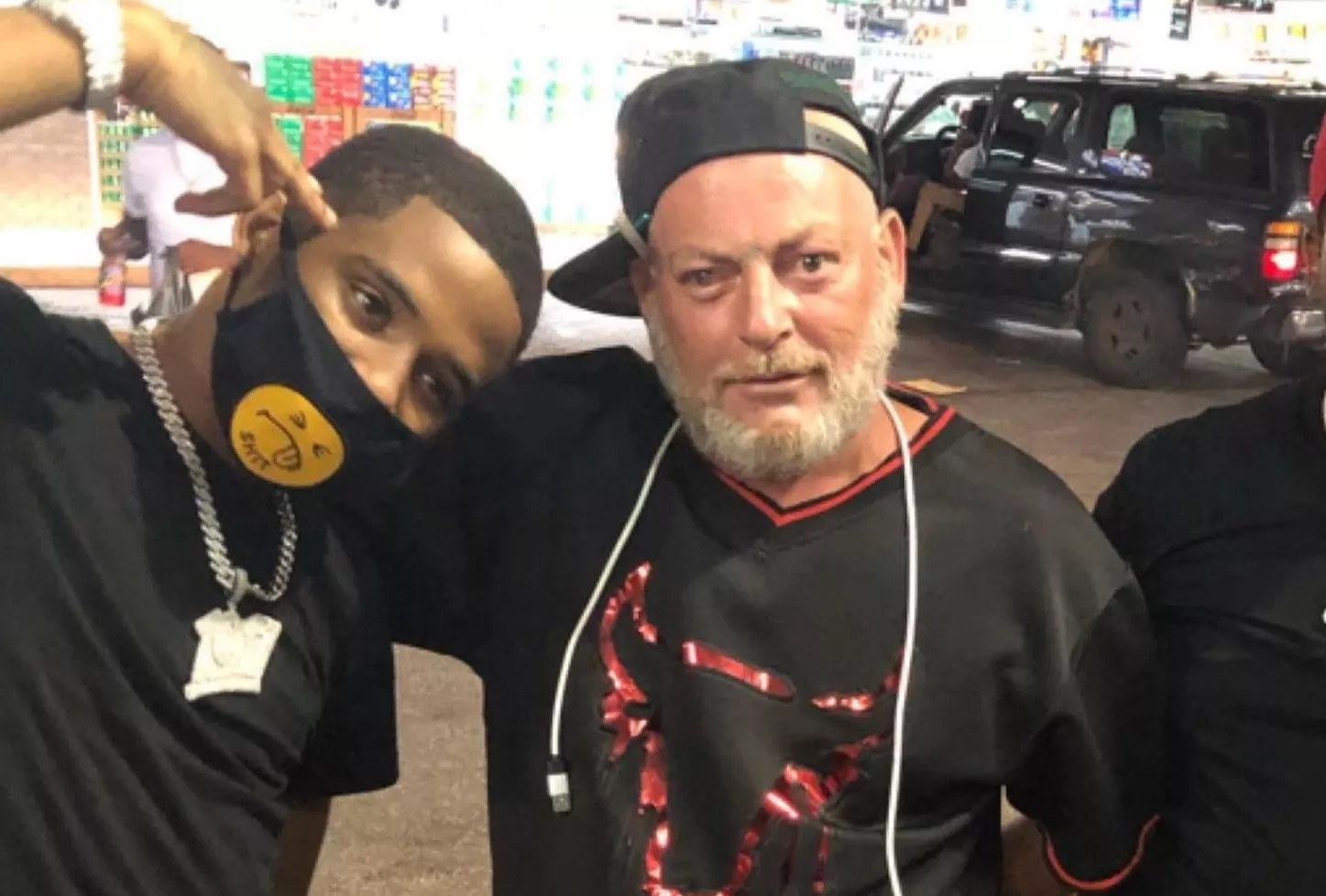
He was the uncle who made holidays bearable.
He was the big brother who roasted you and defended you in the same breath.
At his homegoing, the church filled early.
People lined the walls, dressed in their best—some in suits, some in T-shirts printed with his face, some with “Rest Easy, Legend” stretching across their chests.
The choir sang the kind of songs that hold both sorrow and celebration in the same note.
Every now and then, a laugh would break through the sniffles when someone shared a story only he could have inspired.
A childhood friend took the mic.
“We grew up broke, but we ain’t never grow up without laughter,” he said.
“Man, I remember this fool doing stand-up in the cafeteria, using a broken mop handle like a microphone.
Lunch lady be threatening to write him up, but even she be laughing behind that hairnet.”
The congregation chuckled through their tears.
It felt right, somehow, that even his funeral couldn’t stay serious for too long.
Grief and laughter are cousins, after all.
They show up to the same house wearing different clothes, but they both leave your face wet.
In the weeks after his passing, the algorithm did what algorithms do—it kept moving.
New faces appeared on feeds.
New jokes cycled through trends.
New sounds replaced old ones.
But for the people who loved him, time didn’t move so easily.
There was a barber named Reggie who left one of his videos pinned on the TV in his shop.
He’d let it loop silently all day, a kind of background blessing.
Every now and then, a client would look up, see Whyte’s face frozen mid-gesture, and shake their head slowly.
“Man, he was one of a kind,” they’d say, and the entire shop would hum in agreement like a choir singing “Amen.”
Kids still quoted his lines.
They mimicked his voices during playground games.
Mothers still heard his jokes in their heads when they dealt with the chaos of everyday life.
The city carried him like a secret it refused to put down.
Legacy is a strange thing.

It’s not measured in money, not really.
It’s not even measured in follower counts or views.
It’s measured in how many people feel a little less alone because you existed.
By that measure, Whyte Folkz was rich.
He was rich in shared memories.
Rich in borrowed phrases that slipped into everyday conversation.
Rich in the quiet, private moments when someone, somewhere, hit play on an old video just to survive one more hard night.
There was a young man—Marcus—who found him at his lowest point.
Marcus had left Memphis for Atlanta chasing a playlist of dreams that didn’t quite translate into reality.
The rent was higher, the loneliness louder.
He missed home in a way that hurt his teeth when he thought about it.
One night, after a long shift and a longer train ride, Marcus sat on the edge of his mattress and opened his phone.

There, in his suggested videos, was Whyte.
Doing a bit about people who swear they leaving Memphis every year and always come back.
“Memphis like, ‘Aight, I’ll see you when you get tired of paying eight dollars for a taco,’” he joked.
Marcus laughed so hard he startled himself.
It wasn’t just the joke.
It was the accent, the mannerisms, the way Whyte dragged out certain words like only someone from home could.
In that small, stuffy apartment, hundreds of miles away, Marcus suddenly didn’t feel so alone.
Years later, when he heard the news of Whyte’s death, Marcus sat on that same mattress—this time in a nicer apartment, with a better job—and cried like he’d lost a cousin.

We grieve the people who bring us home, even when they never knew our names.
As time passed, the city learned how to carry his memory without breaking under it.
New comedians rose up, many of them openly saying, “He inspired me.
He made it look possible.”
They borrowed his courage, his honesty, his refusal to water down the Southern soul in his voice.
But they didn’t replace him.
Legends don’t get replaced.
They get referenced.
They become the “before” in every “after” conversation.

“Before Whyte, people wasn’t really doing it like that.”
“Before Whyte, we ain’t know Memphis comedy could travel like that.”
“Before Whyte, I didn’t think anybody would care about our little stories.”
Some nights, if you ride through certain neighborhoods with your windows down, you can still hear him.
Not literally.
But in the rhythm of people telling stories on porches.
In the way a cousin clowning another cousin sounds just like one of his sketches.
His humor didn’t vanish—it folded back into the community that created him.

There is a kind of immortality in that.
Not the glittering, unreachable kind reserved for marble statues and history books.
But the softer kind, the everyday kind.
The kind that lives in inside jokes, in remembered phrases, in the way someone tilts their head before delivering a punchline.
Whyte Folkz may be gone.
The account may stop updating.
The lives may never go live again.
The notifications may stop lighting up the corner of somebody’s screen at midnight.
But somewhere, a woman still plays his videos to get through a long shift.

Somewhere, a child is discovering him for the first time through an old clip.
Somewhere, a young creator is pointing a phone at their own face, thinking, “If he could do it being himself, so can I.”
And somewhere deep in the heart of Memphis, a city that knows both suffering and joy intimately, his name is still being said with a smile that trembles.
Memphis has lost a true original.
But legends don’t end, not really.
They just change format.
From live videos to living memory.
Rest easy, legend.
The laughter you gave out here is still working.