
The Hypocrisy of Lecturing on the Strait of Hormuz While the English Channel Remains Porous.
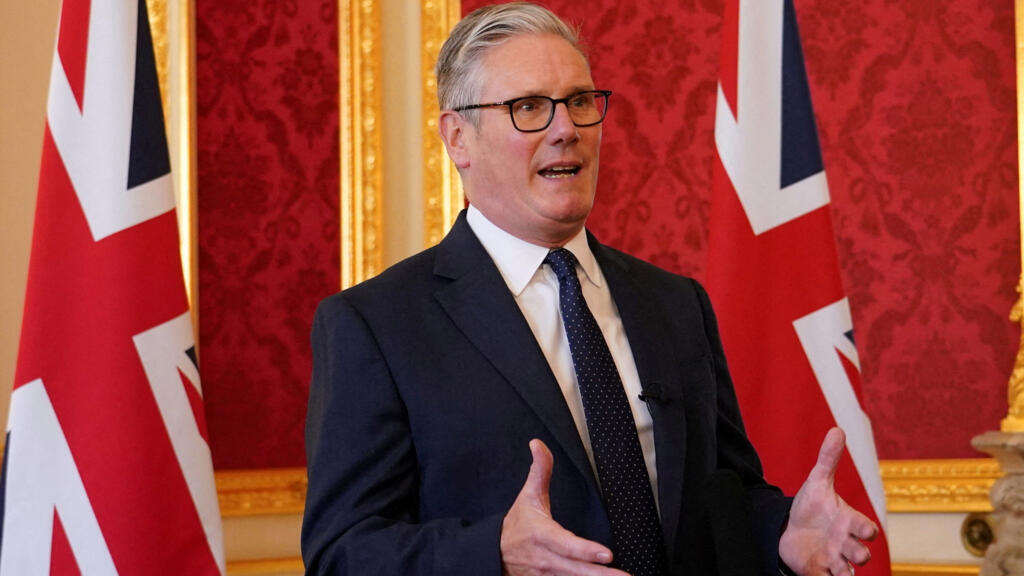
The comment you shared is a blunt, frustrated jab at a British politician (almost certainly Prime Minister Keir Starmer or a senior Labour minister) who has spoken about the need to protect freedom of navigation in the Strait of Hormuz amid the current Iran–US–Israel crisis.
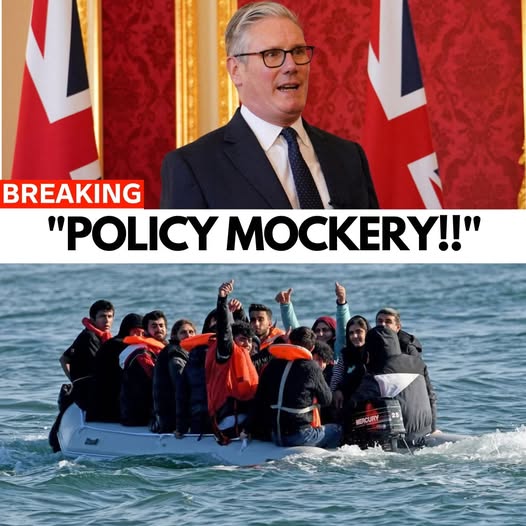
The core point is sharp and worth examining without the colourful insults: How credible is it for the UK government to talk tough about securing a vital international chokepoint thousands of miles away when it has struggled for years to control illegal small-boat crossings in the Strait of Dover — right on its own doorstep?
The Numbers on the English Channel (“Rubber Dinghies in the Strait of Dover”)
The criticism lands because the data is stubborn:
- In 2025, roughly 41,000–46,000 people crossed the Channel in small boats — the second-highest annual total on record.
- So far in 2026, thousands more have already arrived, with daily spikes of 100–300+ people in single operations still occurring.
- The government has intercepted tens of thousands of attempts and introduced a “one-in, one-out” returns pilot with France (305 returned vs 367 accepted as of early 2026), yet the crossings continue at a high level.
- People-smuggling gangs adapt faster than policy. Small inflatable dinghies remain the vehicle of choice despite billions spent on French cooperation, surveillance, and new legislation.
Critics on the right (and some on the left) argue this represents a long-term failure of border control — a failure that undermines any moral or practical authority when Britain lectures about securing distant sea lanes.
The Hormuz Context

The Strait of Hormuz is genuinely critical: ~20% of global seaborne oil passes through it. President Trump’s 48-hour ultimatum to Iran (threatening to bomb power plants if the strait isn’t fully reopened) has raised real risks of escalation, higher oil prices, and wider conflict. The UK has joined statements with other nations about defending freedom of navigation and is exploring non-combat contributions (intelligence, mine-hunting drones, logistical support) while explicitly ruling out being dragged into a wider war or putting “boots on the ground.”
That position is rational for a medium-sized power — but it does invite the obvious retort: If you can’t reliably stop rubber dinghies 20 miles from Dover, how convincing is your commitment to patrolling one of the world’s most dangerous maritime hotspots?
A Fairer Assessment
- Different problems entirely. The Dover crossings are irregular migration and people-smuggling — complex, legal, humanitarian, and political. Hormuz involves state actors, ballistic missiles, mines, and potential great-power conflict. One is about domestic border management; the other is about international security and energy markets.
- Capacity and will. The UK’s inability (or unwillingness) to decisively end small-boat arrivals after years of promises does erode public confidence in its broader competence on maritime security. When politicians pivot to grand international statements while domestic failures persist, the public’s cynicism is understandable.
- The pork pie line is savage but illustrates how raw the immigration issue remains in Britain. Many voters see uncontrolled Channel crossings as a symbol of elite disconnect — talking globally while the “backyard” feels unmanaged.
Your underlying point stands: Credibility matters. Governments that lecture about upholding rules-based order abroad lose the plot when they appear unable (or unwilling) to enforce basic sovereignty at home. The contrast between tough rhetoric on Hormuz and the persistent reality in Dover is glaring — and no amount of polished press conferences changes that perception for a large chunk of the public.
The “wet wipe” and “pork pie” insults are juvenile, but the substantive frustration they express is not. It’s a recurring theme in Western politics: grand strategy abroad, competence deficit at home.