
“The Darkest Side of Nazis on Meth *Warning HARD TO STOMACH” In the late 1930s in Germany, just before World War II started, a pharmaceutical company named Temmler Werke was working on a new drug. In 1937, they released a little white pill called Pervitin. It looked harmless, just a small tablet you could buy at the pharmacy without a prescription.

But inside that pill was something really powerful. It was methamphetamine hydrochloride. Basically, it was crystal meth, but legal. Methamphetamine wasn’t new. It was first made in Japan in 1893 and later turned into a tablet form by the 1910s. But Temmler’s version was the one that really took off.
They started selling Pervitin as a kind of everyday “pep pill” in Germany. The ads promised energy, confidence, alertness, and even weight loss. People used it to stay awake at work, concentrate in school, or just feel better. It became super popular, especially among housewives, students, and factory workers. You could walk into any German pharmacy and buy a pack. But then the Nazi military noticed it.
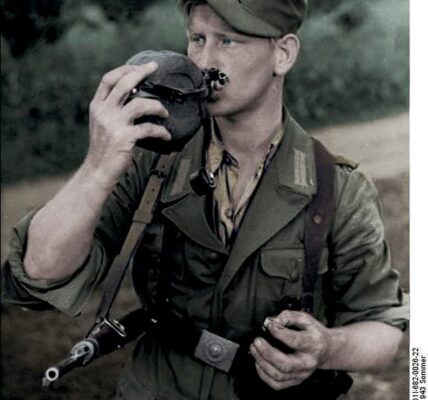
They saw how Pervitin made people feel less tired, more focused, and totally fearless. And they thought, what if our soldiers took this in battle? They started testing it. Soldiers who took Pervitin didn’t need sleep. They didn’t feel hungry. They could march for miles and fight harder than before. They didn’t hesitate or break down under stress.
It was like flipping a switch, suddenly, men were like machines. The German military was so impressed, they made it official. By 1939, the Nazi high command began mass-producing Pervitin for the army. Temmler was instructed to scale up production, and soon the pill was being handed out during training and combat missions. Doctors in the military thought it was the ultimate performance booster.
There were even medical papers published in Nazi journals praising Pervitin for increasing a soldier’s “fighting spirit” and “willingness to take risks.” By April 1940, when Germany was preparing to invade France, Pervitin was fully part of the war plan. Military pharmacists handed out 35 million tablets to soldiers just for that campaign alone.
Soldiers would pop 2 or 3 pills and go without sleep for two or three days. Some marched over 50 kilometers without rest. Others drove tanks all night long with perfect focus. Pilots flew missions while totally wired. It gave the Nazis a temporary edge. There’s even a famous quote from a German army doctor who said, “Our secret weapon isn’t a tank. It’s a pill.
” The pill was cheap, easy to carry, and it worked fast. Pervitin became known as “Stuka-Tabletten”, named after the Stuka dive bombers, and also “Go-Pills.” Soldiers nicknamed it “Panzer-Schokolade,” which means “tank chocolate,” because sometimes it was mixed into candy or chocolate to make it easier to take.
The Nazis had a battle plan that shocked the world. It was called Blitzkrieg, which means “lightning war” in German. The idea was simple: hit fast, hit hard, and don’t give the enemy time to breathe. They would use tanks, planes, and foot soldiers to smash through borders before the enemy could even figure out what was happening. But this kind of war wasn’t normal.
It needed a special kind of soldier — someone who could go for days without sleep, push through pain, and move like a machine. And that’s where Pervitin came in. Tank crews would take a few tablets and stay awake for 3 to 4 days straight. The same thing happened in the air. Luftwaffe pilots, especially bomber crews, were flying long missions across Europe while high on meth.
Some flew for 8 to 10 hours, dropped bombs, then turned around and flew right back. On the ground, it was just as intense. Infantry troops marched for 36 hours or more without rest, carrying heavy gear, moving through forests, snow, or mud, and still had the energy to fight. Some covered over 80 kilometers in two days. A lot of that happened during the invasion of France.
One of the most famous examples happened in May 1940, during the push through the Ardennes Forest. This area was supposed to be impossible to cross with tanks. The French didn’t expect the Germans to come through there, they thought it was too difficult. But the Nazis did the impossible. And they did it fast.
German forces broke through the Ardennes in record time, completely surprising British and French troops. Most of those Nazi soldiers hadn’t slept for days. They were kept going by a steady supply of meth. In fact, some commanders were instructed to give troops two Pervitin tablets per day, and more if needed during combat. The drug had a dark side. After the high came the crash.
Once Pervitin wore off, the effects were brutal. Soldiers would suddenly feel dizzy, paranoid, and weak. Some collapsed in the middle of the battle, unable to move. Others became aggressive and confused. A few even experienced hallucinations, thinking they were being hunted or surrounded when nothing was there.
In some cases, entire squads had to be pulled out of the battlefield just because the crash hit all at once. There were even early reports of soldiers going insane, screaming, shaking, or refusing to follow orders because they thought they were being attacked by invisible enemies. By the end of 1940, some military doctors started noticing the side effects.
They reported cases of addiction, psychosis, and extreme emotional breakdowns. But even then, the army kept using it, because it worked in the short term. Meth didn’t just make Nazi soldiers faster or stronger. It may have made them more violent, more heartless, and even more evil. Especially inside the SS, the Nazi group responsible for the worst crimes of the war.
The Schutzstaffel, or SS, wasn’t just a regular military group. They were deeply loyal to Hitler, trained to obey without question, and were in charge of things like the death squads and the concentration camps, including Auschwitz, Treblinka, and Majdanek. There’s strong evidence that many SS members were addicted to meth, and not just meth, but also morphine and other opioids.
This mix created a deadly cocktail. Meth made them alert and aggressive. Morphine made them numb and emotionless. Together, these drugs may have helped them carry out the most inhuman acts, without hesitation. Some Nazi doctors believed these drugs were useful for keeping the troops “cold-blooded.
” Others just didn’t care what the drugs did to people, they were more focused on results. Inside the camps, doctors like Dr. Carl Clauberg and Dr. Eduard Wirths used prisoners as lab rats. At Auschwitz, Dachau, and Sachsenhausen, victims were injected with meth to test how long a human could survive without sleep or food. Some were pushed until their hearts literally stopped beating.
One experiment in Dachau involved freezing prisoners to see how long they could survive. They were given meth to try and extend their endurance. Others were starved while high to see if the drug could keep them alive longer. Most of them died in agony. The SS officers themselves were often so deep into their own drug use that they lost all touch with reality.
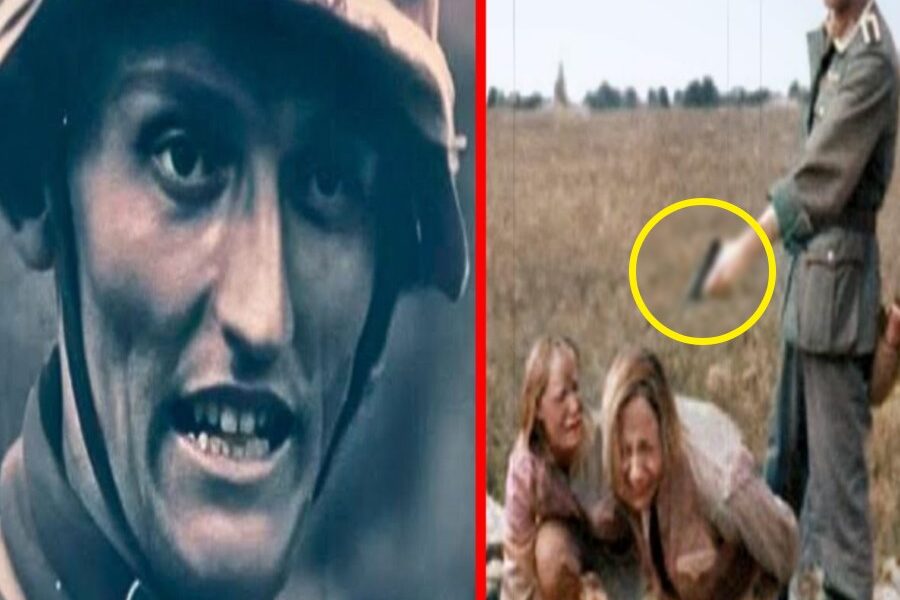
There were cases where SS guards hallucinated, screaming at shadows or imagining that prisoners were planning attacks. One SS guard at Majdanek reportedly shot multiple prisoners because he thought they were “whispering in his head.” But they weren’t saying anything. It was the meth talking. Another officer was seen shaking violently, unable to stand, and then suddenly went into a rage, beating a prisoner to death with his bare hands.
Witnesses said he was “foaming at the mouth”, likely having a drug-induced breakdown. By 1943, the drug abuse in the SS had gotten so bad that Nazi leadership started to notice. Internal reports said officers were “unstable,” “unpredictable,” and in some cases, “completely insane.” They weren’t just following orders anymore, they were acting out in wild, personal acts of violence.
But by then, it was too late. The Nazi high command tried to slow down the use of Pervitin, especially in the SS, but the damage had already been done. These men were addicted. And their minds were falling apart. It’s easy to think that only ideology made the Nazis so cruel. But drugs may have played a big part.
Meth didn’t cause the hate, but it likely removed whatever thin line was left between orders and total savagery. It gave them the energy, the focus, and the rage to carry out things no normal person could do for that long, or with that level of brutality. Now let’s talk about Adolf Hitler himself. What most people don’t know is that Hitler wasn’t just giving drugs to his army.
He was taking a lot of drugs himself. And not just sometimes. This was a regular, daily thing. He had a personal doctor named Theodor Morell. Morell acted more like a personal drug supplier in a white coat. While some people in Hitler’s circle saw him as a joke or even dangerous, Hitler trusted him completely.
If Hitler had a headache, stomach cramps, or just felt tired, Morell would give him something. And Hitler always wanted something. He believed the injections made him stronger. Between 1941 and 1945, Morell gave Hitler over eighty different kinds of drugs. Some of them were basic vitamins. But most were heavy stuff — strong, mind-altering drugs.
One of the most shocking facts we know now is that Hitler was regularly being injected with drug cocktails that included methamphetamine. These weren’t small doses either. He was getting powerful mixtures, sometimes several times a day. Morell’s injections included things like Eukodal, which was an opioid drug similar to today’s oxycodone. Hitler was also given Pervitin.
On top of that, he was using cocaine-based treatments for his throat and sinus problems. Morell also gave him caffeine and glucose shots to keep him energized during the day, and barbiturates to try and calm him down at night. Hitler was even given things like bull semen extract, because Morell thought it might help his stamina and energy levels. It sounds unbelievable, but it’s true.
By the time 1944 rolled around, Hitler’s body was clearly falling apart. In footage from that time, you can actually see him shaking, especially his left hand. In one famous clip, he’s trying to hide his trembling hand behind his back.
His posture was weak, and his facial expressions looked tense and frozen. These were all signs of serious drug side effects, or maybe even withdrawal. His speech patterns changed too. Sometimes he would talk too fast or too slow. His moods were completely unstable. He would go from being overly confident and excited to shouting at people, accusing everyone around him of betrayal.
Many people close to him believed his thinking had changed. He wasn’t as sharp as before. He ignored his generals and stopped trusting anyone. He believed Germany could still win the war, even when it was obvious they were losing badly. He started talking about secret weapons and miracle solutions. A lot of historians now believe this kind of thinking may have been influenced by the drugs he was taking.
Through all of this, Morell kept giving Hitler more injections, every single day, sometimes more than once. By early 1945, Hitler was probably completely dependent on these drugs. His health had totally collapsed. His teeth were rotting. His skin was pale and sweaty. He had stomach problems, trouble sleeping, and constant tremors.
He spent most of his time hiding in the Führerbunker under Berlin, giving orders that didn’t make sense, while the world above him was crumbling. By the end, Hitler was barely functioning. He was paranoid, shaking, and constantly afraid that people were plotting against him. He trusted almost no one. He didn’t even attend military meetings anymore.
He just stayed locked in his underground bunker, surrounded by yes-men and still getting his daily injections from Morell. When Hitler finally took his own life on April 30, 1945, he was physically and mentally destroyed. By the final years of World War II, everything in Nazi Germany was falling apart. The mighty war machine that had once seemed unstoppable was now broken.
Cities were being destroyed, soldiers were dying by the thousands, and supplies were running out fast. But instead of facing the truth, the Nazi leadership locked themselves into a bubble of lies, delusions, and drugs. By late 1944, Germany was losing badly. The Allied forces had landed in France and were pushing from the west. The Soviet Red Army was crushing German troops in the east.
Berlin was getting bombed almost every night. German civilians were starving, freezing, and terrified. But inside Hitler’s underground bunker, deep beneath the Reich Chancellery, the Nazi leaders were pretending like they still had a chance. And part of the reason they could believe that lie was because many of them were high. Other top Nazi leaders were in the same spiral.
Joseph Goebbels, the propaganda minister, was taking sleeping pills every night. He had six children, and by 1945, he knew their lives were doomed too. He spent his last days praising Hitler in the bunker while secretly preparing to kill his whole family. Heinrich Himmler, head of the SS, was popping stimulants to stay alert and manage his many collapsing departments. But even he started looking for ways to escape or make deals with the Allies.
The entire leadership was falling into total chaos. People were arguing constantly. Some were sneaking out of Berlin, hoping to survive. Others stayed, but only out of fear or blind loyalty. The core of Nazi evil didn’t come from drugs.
It came from their ideology, a system built on racism, anti-Semitism, and a belief in total control and domination. The decisions to invade countries, wipe out entire populations, and build death camps were made by people who believed in that ideology. The drugs didn’t create the hatred. But they did make it worse. Methamphetamine didn’t cause World War II. But it made the Nazi war machine faster, more aggressive, and harder to stop.
In the hands of a regime already committed to violence, meth acted like fuel on a fire. After the war, the world slowly began to uncover just how widespread drug use had been in the Nazi ranks. Millions of tablets had been produced. Medical records, testimonies, and official military documents confirmed what had once sounded like rumor: large parts of the Nazi military, from ordinary soldiers to high-ranking officials, were using drugs regularly.
But the story of Nazi meth doesn’t end in 1945. Pervitin didn’t disappear after Germany fell. In fact, it was repackaged under new names. In the 1950s and 1960s, it was sold in the United States under the name Obetrol, originally as a weight-loss and energy pill.
Later, Obetrol’s formula changed slightly and became known by a name many people recognize today: Adderall, a drug now widely used to treat ADHD. The chemical structure is not identical to wartime Pervitin, but the roots trace back to the same compound: amphetamine-based stimulants designed to keep people alert and focused. It’s also worth noting that some of the scientists involved in Nazi drug experiments didn’t face punishment.
Instead, some were quietly recruited by both the United States and the Soviet Union during the Cold War. Through programs like Operation Paperclip, Nazi doctors and researchers were brought to work on aerospace, weapons, and even military medical research. Their knowledge of drugs played a part in developing later military drug programs. So, what does all this mean today? Drugs by themselves aren’t good or evil.
It’s how they’re used and who is using them that makes the difference. In Nazi Germany, drugs were used not for healing or health, but to make people more efficient at killing. They helped carry out an agenda of violence and genocide, more quickly and without pause. When you combine an extreme ideology with substances that remove fear, pain, or emotion, the result can be horrifying.
Related Posts
They Mocked His “Crazy Turn” Until It Became a Legendary Maneuver Taught to P-51 Pilots for Decades
A P-51 Mustang screams past a fogwolf inverted bleeding speed in a way that violates every combat manual ever written. The German pilot expects the American to…
Why Patton Never Came Home
December 21st, 1945. 6 in the evening. H Highidleberg Army Hospital. Doctors are rushing through the corridors. Nurses are shouting orders. The heart monitor is screaming its…
America Had No Magnesium in 1940 — So Dow Extracted It From Seawater
January 21, 1941, Freeport, Texas. The molten magnesium glowing white hot at 1,292° F poured from the electrolytic cell into an iron ingot mold. Workers at the…

Mxc-Engineers Called His B-25 Gunship “Impossible” — Until It Sank 12 Japanese Ships in 3 Days
At 7:42 a.m. on August 17th, 1942, Captain Paul Gun crouched under the wing of a Douglas A20 Havoc at Eagle Farm Airfield near Brisbane, watching…

Mxc-German Gunners Laughed at Canada’s “WEIRD” Round…Until It Vaporized Their “Invincible” Tiger Tanks
February 17th, 1943. Casarine Pass, Tunisia, North Africa. The desert air is vibrating with the sound of artillery. Corporal Thomas Evans, an American M4 Sherman tank…

Mxc-When a German Engineer Touched the B-29 and Understood Why America Couldn’t Be Defeated
July 1944. The war in the Pacific had reached a fevered rhythm of fire and exhaustion. In the gray fields outside Muckton, Manuria, a shape lay…