OBR Turns on Reeves: Watchdog Chiefs Publicly Challenge Misleading Budget Claims in Stunning Blow to Chancellor

Rachel Reeves suffered another huge blow in the Budget lies scandal today as the OBR lashed out at misleading briefings.
Senior officials from the watchdog said they had to ‘set the record straight’ on what forecasts the Chancellor had been given after ‘unhelpful’ information appeared in the media.
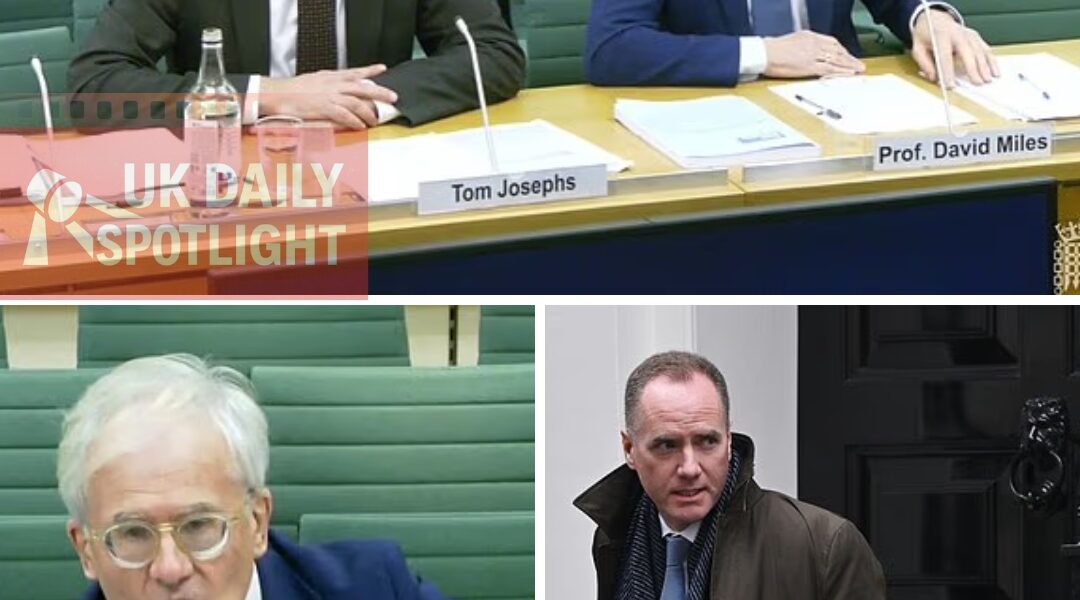
Giving evidence to the Treasury Select Committee after the body’s chair was ousted last night, David Miles said the OBR had complained to the government about ‘misconceptions’ that were being fostered.
While admitting it was not clear exactly where the briefing was coming from, he said there was a perception that watchdog’s forecasts had ‘fluctuated’ and that was ‘adding to the difficulties of this Budget’.
The suggestion that an income tax hike had been dropped because the OBR had suddenly found some money ‘down the back of the sofa’ was of particular concern, as it implied the organisation was a ‘patsy’ for ministers.
‘It was clear there was lots of information appearing in the press which wouldn’t normally be out there, and this wasn’t from our point of view particularly helpful,’ he said.
‘We were not in a position of course to put them right.’
Prof Miles suggested the chaotic briefing around the Budget ‘exacerbated’ the economic damage from uncertainty about what would happen.
The OBR has been effectively at daggers drawn with Ms Reeves and her team over the way forecasts were deployed before the fiscal statement last week.
That culminated last week when former chair Richard Hughes took the unusual step of spelling out the timetable of what economic forecasts were supplied when – exposing that Ms Reeves had talked up dire numbers even after being told the government was on track to run a surplus.
The Treasury responded by saying they had received assurances that such transparency would not be the ‘usual’ practice.
Mr Hughes dramatically quit as the head of the OBR last night, ostensibly due to the early publication of Budget documents following a technical glitch.

Giving evidence to the Treasury Select Committee after the OBR’s chair was ousted last night, David Miles said it had complained to the government about ‘misconceptions’ that were being fostered

Senior officials from the OBR said they had to ‘set the record straight’ on what forecasts the Chancellor had been given after ‘unhelpful’ information appeared in the media

Rachel Reeves is braced for the Budget lies storm to escalate again today

Speculation is swirling about Richard Hughes’ intentions after he dramatically quit as the head of the OBR following months of tensions with the Chancellor
Last week Mr Hughes took the unusual step of spelling out the timetable of what economic forecasts were supplied when – exposing that Ms Reeves had talked up dire numbers even after being told the government was on track to run a surplus
Ms Reeves is said to have regarded Mr Hughes as a ‘brick wall’ for refusing to include the minor effects of trade deals in forecasts, while Keir Starmer made clear yesterday he had been infuriated by the decision to stage a review of long-term productivity.
Professor Miles rejected the criticism over the timing of the productivity review today, saying the impact of Covid and the energy price spike had to wear off first.
‘To try and reach a judgment a year ago, two years ago… would have been very difficult,’ he said.
Fellow OBR committee member Tom Josephs also made clear that the body will still publish figures in the Spring showing whether the Chancellor’s fiscal rules are being met.
Ms Reeves announced at the Budget that in future the watchdog will only be asked to make a formal assessment at Autumn Budgets, as part of her drive only to have one fiscal statement a year.
However, Professor Miles did stop short of criticising Ms Reeves directly over her highly unusual breakfast time speech on November 4, when she stressed the OBR’s downgrades but did not mention that they had been completely offset by bigger projected tax revenues and inflation.
The economist suggested it was fair for Ms Reeves to flag the ‘very challenging’ backdrop.
‘A number that was plus £4billion in the pre-measures forecast is not inconsistent with the statement, the sentiment that this is a very challenging fiscal position,’ he said.
But he said there was nothing from the OBR afterwards which justified Treasury briefings that the forecasts had improved.
‘I don’t think it was misleading for the Chancellor to say that the fiscal position was very challenging at the beginning of that week,’ Prof Miles said.
‘Whether a message was then put out to say ”well, it’s less challenging by the end of the week”, I don’t know, and I don’t know where that message would have come from.
‘It certainly didn’t reflect anything that was news from the OBR being fed into the government.’
Professor Miles played down fears that the OBR was ‘at war with the Treasury’, but suggested the Budget process must be ‘smoother’ in future.
‘We have a very close relationship with the Treasury. In fact, we rely not just on the Treasury but other departments in government for analysis of many sorts of measures,’ he said.
‘There are lots of very good – from my point of view – economic analysts in the Treasury and we rely heavily upon them.
‘I hope we can run a process in the future, and we’ll do everything we can, that is somewhat smoother than the process we’ve just been through.’