Restore Britain Records Unprecedented Early Membership Growth but Faces Steep Electoral Challenges Under First-Past-the-Post.

Restore Britain, the recently registered political party led by former Reform UK deputy chairman Rupert Lowe, has reported exceptionally rapid membership expansion since its formal launch as a party in mid-February 2026. The organisation announced reaching 100,000 members within 15 days of Lowe’s announcement video, a pace that significantly exceeds the timelines achieved by other right-leaning parties in modern British political history.

The party’s launch video, filmed on Lowe’s Norfolk farm and posted on 13 February, garnered over 30 million views across platforms, bolstered by an endorsement from Elon Musk that directed attention toward Restore Britain as an alternative vehicle for decisive policy change. Membership, set at an annual fee of £20 with a digital-only sign-up process, climbed quickly according to the party’s own updates: 50,000 by day three, 70,000 by day five, 80,000 by day seven, and the 100,000 threshold by 28 February. Lowe described the trajectory as historic, noting the activation of dozens of local branches, more than 10,000 reported volunteers, and the selection of initial council candidates, including five for Norfolk County Council seats.
For context, Reform UK — under Nigel Farage’s leadership from June 2024 — required approximately five months to grow from around 40,000 to 100,000 members. UKIP, despite its prominence over more than a decade, never surpassed roughly 45,000. The Social Democratic Party’s rapid rise in the early 1980s reached 65,000 in its first full year, while the Green Party’s notable surge between 2014 and 2015 added about 52,000 members over 18 months. Restore Britain’s claimed figures, while self-reported and yet to be independently audited, indicate an extraordinary initial mobilisation even after accounting for differences in sign-up barriers compared with older parties that often required higher fees or in-person registration.
The party converted from a pressure group to a formally registered entity with the Electoral Commission on 4 March 2026. Its policy platform, outlined in a 133-page document, includes proposals for mass deportations with detailed consideration of legitimacy, legality, and logistics; net-negative immigration; a referendum on capital punishment; abolition of the Scottish Parliament and Senedd; and measures to protect traditional British institutions such as the pub. These positions place Restore Britain firmly on the hard-right spectrum of immigration and constitutional debates.
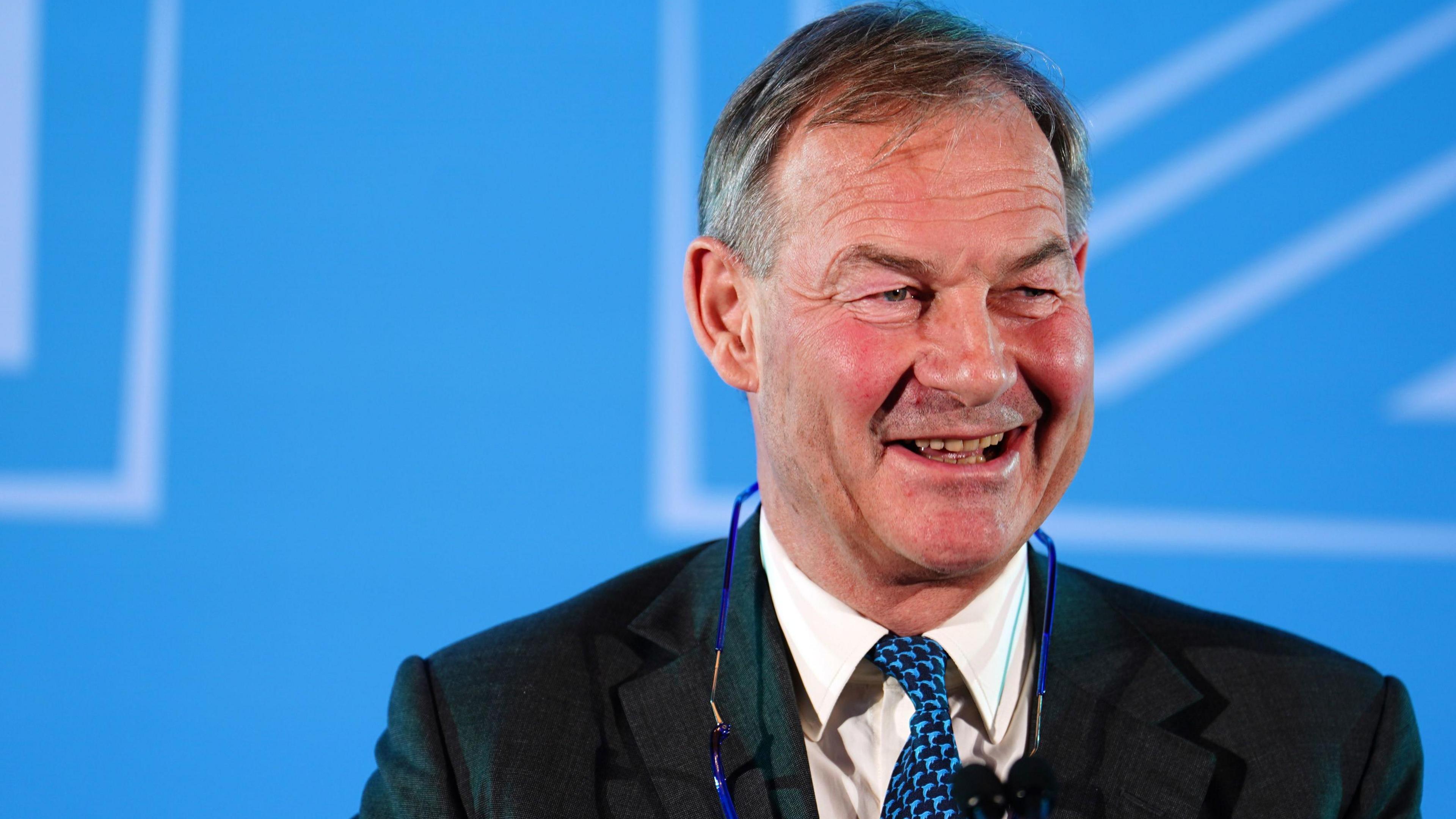
Early polling provides additional perspective on the group’s potential reach. Independent tracker surveys conducted by Find Out Now in late February and early March 2026, each sampling around 2,000–3,000 adults, recorded Restore Britain at 7 per cent national vote intention despite its recent formation. The figure held steady between the two polls and positioned the party as the sixth-largest in the tracker, behind Reform UK (25 per cent), the Greens (18 per cent), Labour and the Conservatives (both around 16 per cent), and the Liberal Democrats (11 per cent). Support appeared strongest among 18- to 29-year-olds at 11 per cent, and 15 per cent of respondents who backed Reform in 2024 indicated a shift toward Restore Britain.
Yet significant obstacles remain. Name recognition for Rupert Lowe stands at a low level: a JL Partners poll in February 2026 found that 86 per cent of the general public could not identify him from a photograph, while among Reform voters the figure ranged between 71 and 86 per cent. By contrast, Nigel Farage remains highly recognisable. Low visibility poses a particular challenge under the United Kingdom’s first-past-the-post electoral system, which rewards geographical concentration and penalises evenly spread support.
Historical parallels illustrate the difficulty. In the 2024 general election, Reform UK secured 14.3 per cent of the vote (more than 4.1 million votes) but won only five seats, requiring roughly 800,000 votes per MP returned. The Liberal Democrats, with fewer votes overall, secured 72 seats due to more efficient vote distribution. UKIP’s 12.6 per cent in 2015 yielded one seat; even at higher national shares, challenger parties without regional strongholds have struggled to convert votes into representation. Analysts project that a new party polling at 7 per cent with diffuse support would likely secure zero to very few seats under current boundaries and voting patterns. Best-case scenarios for Restore Britain centre on one to five seats in areas of concentrated organisation, such as Great Yarmouth, while the more probable outcome involves acting as a spoiler that fragments the right-of-centre vote and potentially aids Labour, Liberal Democrat, or Green holds in marginal constituencies.

The emergence of Restore Britain has coincided with visible policy repositioning by both major parties and Reform UK itself. Labour’s May 2025 speech by Keir Starmer warning of the United Kingdom becoming an “island of strangers,” followed by an immigration white paper titled “Restoring Control Over the Immigration System,” adopted language and measures — including extended settlement periods and tighter deportation powers — that echoed earlier Reform and Brexit-era rhetoric. Academic assessments, including studies from the University of Southampton and the London School of Economics, concluded that Labour’s rightward shift on immigration cost support among its own base without attracting meaningful numbers from anti-immigration voters.
Reform UK, meanwhile, has hardened aspects of its immigration stance while moderating economic messaging and adopting a more mainstream tone on certain international figures. Farage has publicly described Restore Britain’s mass-deportation proposals as beyond reasonableness, decency, or morality, and warned of a rise in what he termed “extreme right ethno-nationalism.” The comments reflect an effort to distance Reform from harder-line competitors while broadening its appeal.
The crowded right-of-centre field — encompassing Reform, the Conservatives, Restore Britain, Advance UK, UKIP, the Heritage Party, and smaller entities — increases the risk of vote splitting in first-past-the-post contests. Advance UK, which claimed 40,000 members, secured an early endorsement from Elon Musk (later switched to Restore Britain), and attracted high-profile figures including Tommy Robinson, finished seventh in the February 2026 Gorleston and Denton by-election with 154 votes — five fewer than the Official Monster Raving Loony Party candidate “Sir Oinkalot,” who did not campaign actively.

The pattern underscores that membership totals and online visibility do not automatically translate into electoral viability. Restore Britain’s most plausible long-term influence may lie not in winning parliamentary majorities but in shifting the terms of debate, much as UKIP did with European Union membership before the 2016 referendum. By maintaining pressure on immigration, sovereignty, and cultural issues, the party could force established actors to respond even if its own seat count remains limited.
Whether that agenda-setting role proves durable will depend on sustained organisation, clearer public profile for its leadership, and the ability to convert digital momentum into local campaigning strength. For the moment, Restore Britain represents one of the more striking examples of rapid political mobilisation in recent British history, yet the structural realities of the electoral system continue to impose tight constraints on new entrants seeking Westminster representation.