
She knew something was wrong before anyone else did.
Not because she was paranoid, but because her body recognized danger faster than her mind could explain it.
So she did the one thing that would outlive fear: she hit record.
February 13, 2017, felt like a gift of a day.
Warm for winter, bright enough to make the trees look less bare, calm enough to feel ordinary.
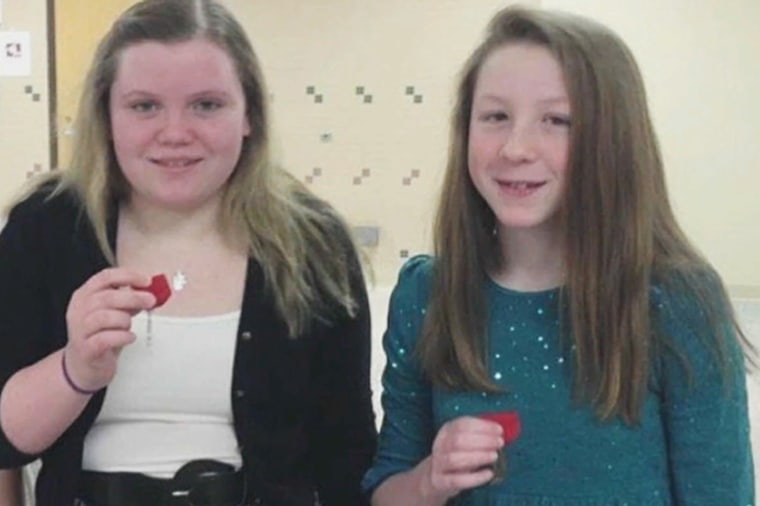
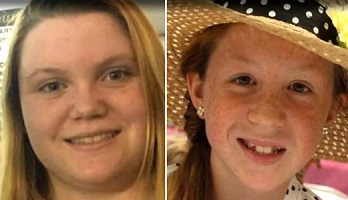
Liberty “Libby” German and Abigail “Abby” Williams stepped onto the trail like two best friends stepping into a small adventure.
They were the kind of girls who made plans quickly and laughed easily.
A day off school meant freedom, and freedom meant a walk, a bridge, a little story to tell later.
They’d been there before, so the place didn’t feel like the unknown.
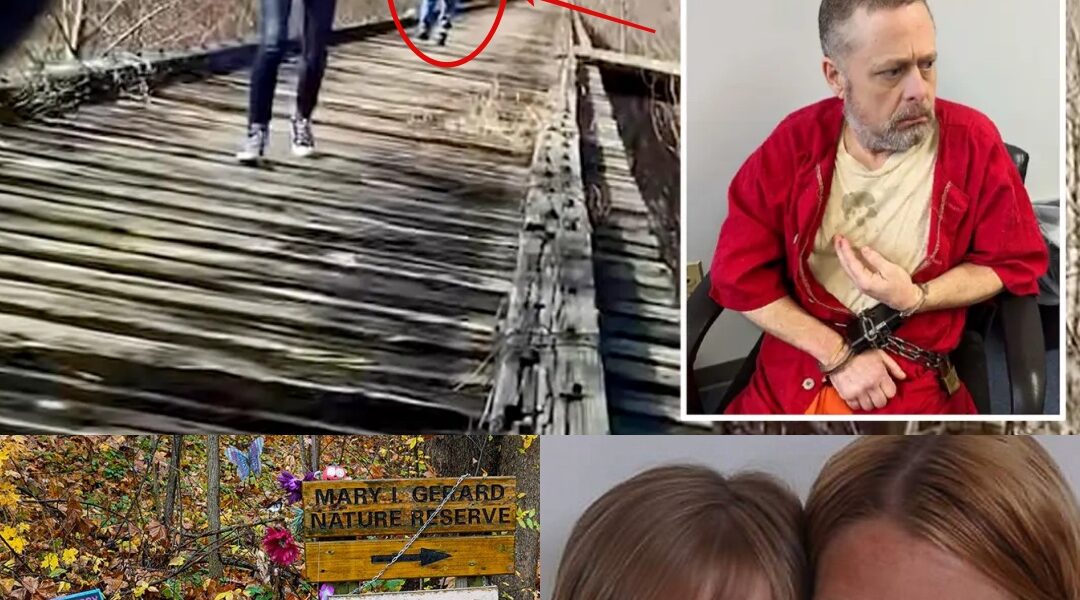
The Monon High Bridge was old, high, and narrow.
It carried history in its rusted beams and missing ties, and it demanded attention under your feet.
To teenagers, that kind of danger can feel thrilling, not threatening.
Libby took photos the way teens do—without thinking twice.
At 2:07 p.m., she posted Abby walking on the bridge, a simple snapshot of a simple moment.
Friends saw it, family saw it, and the world kept turning.
But time has a way of splitting into “before” and “after.”
Sometimes it happens with a scream, sometimes with a sound you can’t quite name, sometimes with a feeling that settles in your stomach.
For Libby, it happened in the next few minutes when she saw a man approaching.
There’s a kind of fear that doesn’t shout.
It whispers, and the whisper is more convincing than any loud warning.
Something about him didn’t fit the afternoon.
The bridge was a thin line with nowhere to step aside.
Every footfall mattered, every glance carried weight, every second narrowed choices.
And then Libby did something that still stops people cold when they hear it.
She didn’t run right away.
She didn’t freeze.
She recorded.
It wasn’t a dramatic decision with heroic music behind it.
It was a teenager’s quick, quiet calculation: if something happens, someone needs to know what I saw.
So she lifted her phone like she was doing what she always did and let it capture the truth.
The video was only 43 seconds, but it was enough.
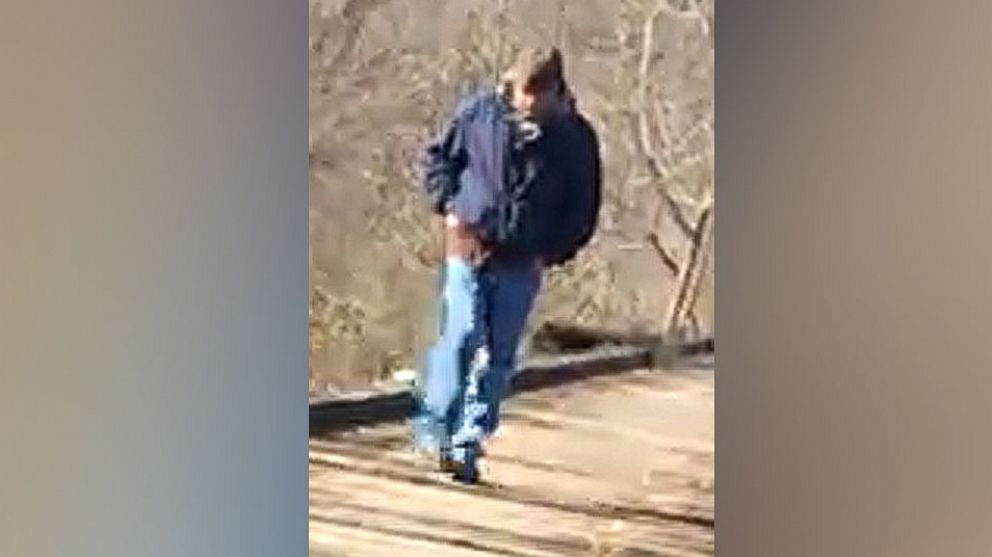
A man in blue jeans, a blue jacket, a dark hat—walking toward them with steady intent.
The footage wasn’t perfect, but it didn’t need to be perfect to matter.
Then came the sound that would echo for seven years.
A calm voice, not frantic, not loud, just certain.
“Down the hill.”
Three words.
Three words that turned a warm afternoon into a nightmare.
Three words that would become one of the most recognized audio clips in American true-crime history.
After that, the recording stopped.
Whatever happened next happened beyond the frame, beyond the microphone, beyond the reach of the phone.
But Libby had already done something almost impossible: she had pulled evidence out of a moment designed to leave none.
When 3:15 p.m. came and the girls didn’t arrive where they were supposed to be, families felt it immediately.
Parents know the difference between late and wrong.
That empty space between expectation and silence can feel like a cliff.
People started calling.
People started driving to the trail.
A search formed the way communities form them when a child is missing—fast, urgent, and fueled by hope.
Flashlights cut through the early darkness.
Names were shouted into the trees.
Every rustle became a possibility, every shadow a maybe.
The next day, February 14, they were found.
The details of that discovery belong to the families, to the investigators, to the grief that never stops moving.
What the public understood was simple and unbearable: Abby and Libby did not come home.
Then the phone was recovered.
And inside that phone was the thing Libby had left behind like a message in a bottle.
Video, audio, proof.
Investigators watched it and understood instantly how rare it was.
Most cases don’t come with the suspect walking toward the camera.
Most cases don’t come with a voice captured in real time.
It was evidence, yes.
But it was also a portrait of courage—quiet, practical, and devastating.
A fourteen-year-old had realized she needed to document danger while she was still in it.
Law enforcement released still images from the video.
They released the audio.
They asked the public to listen, to look, to recognize.
“Bridge Guy,” people began calling him.
A name that turned a person into a symbol—an unknown face, an unknown voice, an unknown set of footsteps.
And soon the entire country was searching too.
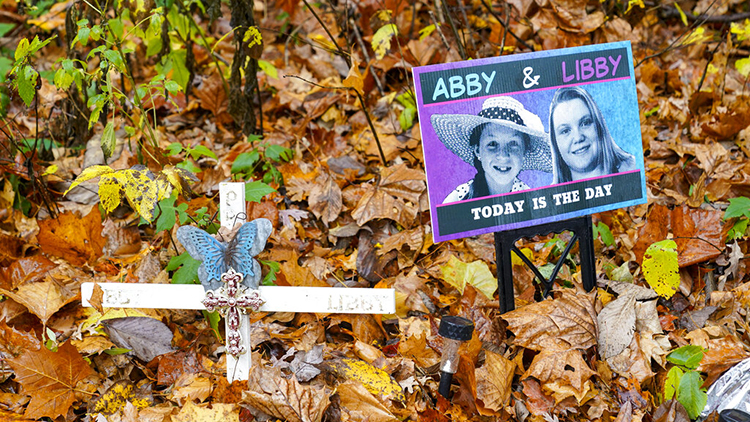
Tips poured in.
Tens of thousands of them, from all corners—people sure they knew that walk, that jacket, that voice.
Each tip carried someone’s certainty, someone’s hope to be the one who helped solve it.
The case became a storm that never fully passed.
It lived in news segments, podcasts, documentaries, online forums where strangers tried to piece together the same 43 seconds.
A community of grief grew into a community of obsession.
Years went by.
The trail became quieter again, but the questions did not.
How could someone be captured on video and still remain unnamed?
Families lived inside a kind of time that doesn’t move normally.
Birthdays came and went without the girls.
Holidays arrived like reminders instead of celebrations.

In the town, people locked doors a little tighter.
They watched strangers a little longer.
They learned what it feels like when a place you love becomes a question mark.
Investigators kept working.
They built timelines, rechecked statements, followed leads that went nowhere and started over again.
That kind of work is patient, exhausting, and often invisible to the public.
The video became both a blessing and a burden.
It gave the case a heartbeat, but it also gave the killer a mask: an image everyone knew, yet no one could name.
And in that gap, rumors grew like weeds.
People accused the wrong people.
Online theories hardened into convictions without evidence.
Sometimes the loudest voices weren’t the most careful ones.
But somewhere beneath the noise, the case kept breathing.
Files were opened and closed, reopened again.
Old interviews were revisited, old details re-examined.
Because sometimes the answer isn’t new evidence.
Sometimes it’s looking at the same evidence with sharper tools and a different question.
Sometimes it’s simply refusing to accept that time gets the last word.
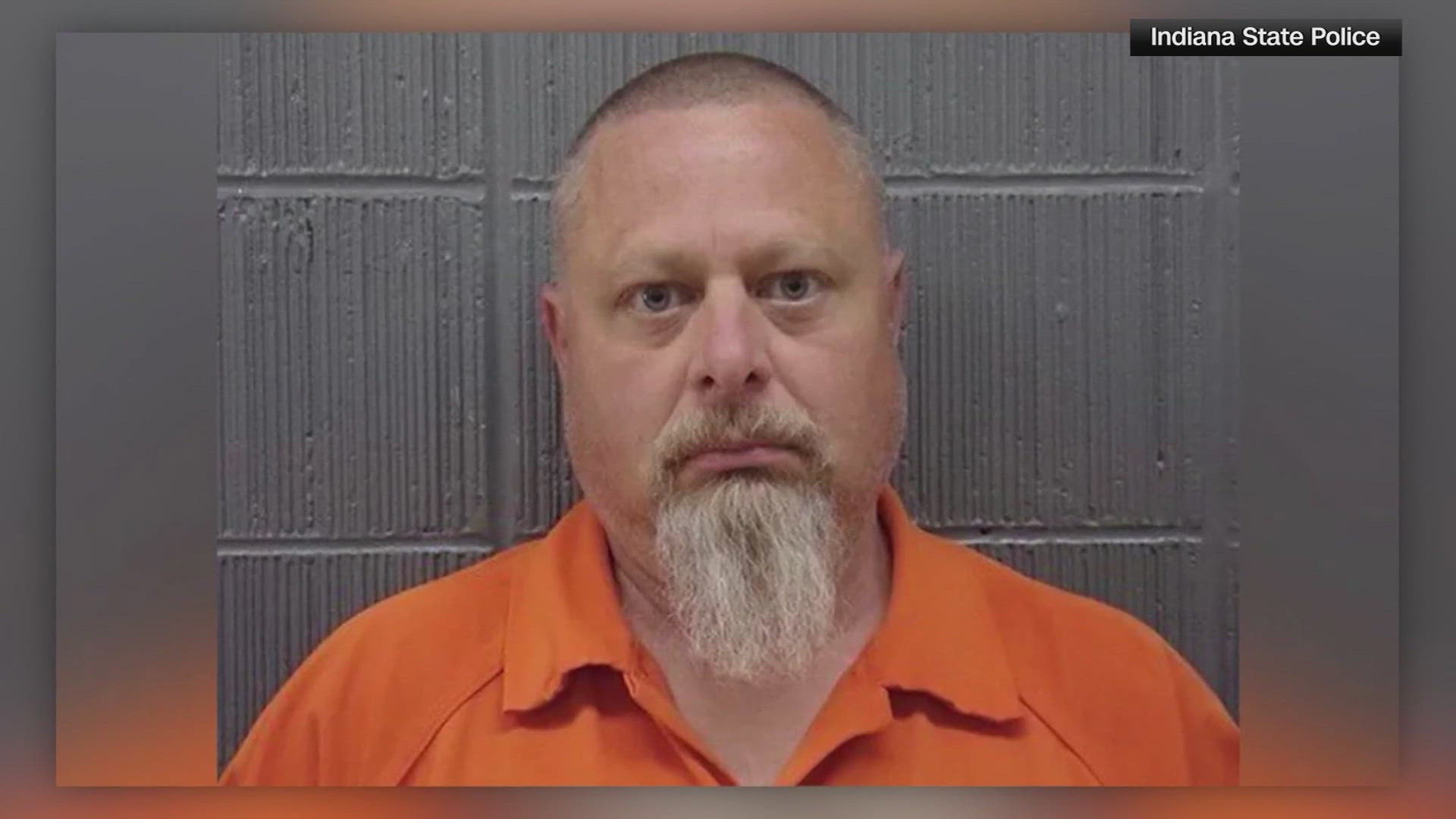
In October 2022, the arrest finally came.
Richard Allen, a man who lived in Delphi, a CVS pharmacy technician, a familiar face in a familiar place.
The kind of name that made people pause because it didn’t sound like a villain’s name—just a name.
That’s what shocked people most.
Not just that an arrest happened, but the idea of “hiding in plain sight” becoming real.
The suspect hadn’t been a stranger passing through; he’d been part of the background.
He had been there the whole time.
In the same town, among the same streets, close enough to blend in.
Close enough to be ordinary.
And ordinary is where danger often lives best.
It doesn’t wear a costume.
It looks like a neighbor, a customer, a man you pass without noticing.
Investigators traced the case back through old statements and old timelines.
They re-interviewed people who had been on the trail that day.
They looked again at what had been said in 2017 and what had been filed away.
They looked at the clothing described.
They looked at the movements.
They looked at the logic of time, the geometry of place, the way one small detail can suddenly glow when the puzzle shifts.
Technology had changed since 2017.
Audio enhancement methods improved, tools became sharper, analysis more sophisticated.
What once sounded muddy could become clearer, what once seemed too thin could become usable.
And crucially, investigators didn’t treat the case like a closed story.
They treated it like a living one, a file that still had breath in it.
Because Libby’s recording had always been there, waiting for the world to catch up.
By 2024, the case moved into a stage the families had waited years for.
A trial, a courtroom, a place where evidence is spoken aloud and weighed.
A place where truth has rules, even when grief feels ruleless.
A month-long trial can feel like a lifetime.
Every detail becomes a blade you have to hold.
Every day requires families to keep showing up to the worst story of their lives.
The public watched closely.
The community held its breath again, the way it had on day one.
Because a verdict is never just a legal outcome; it’s a moment that changes what people believe is possible.
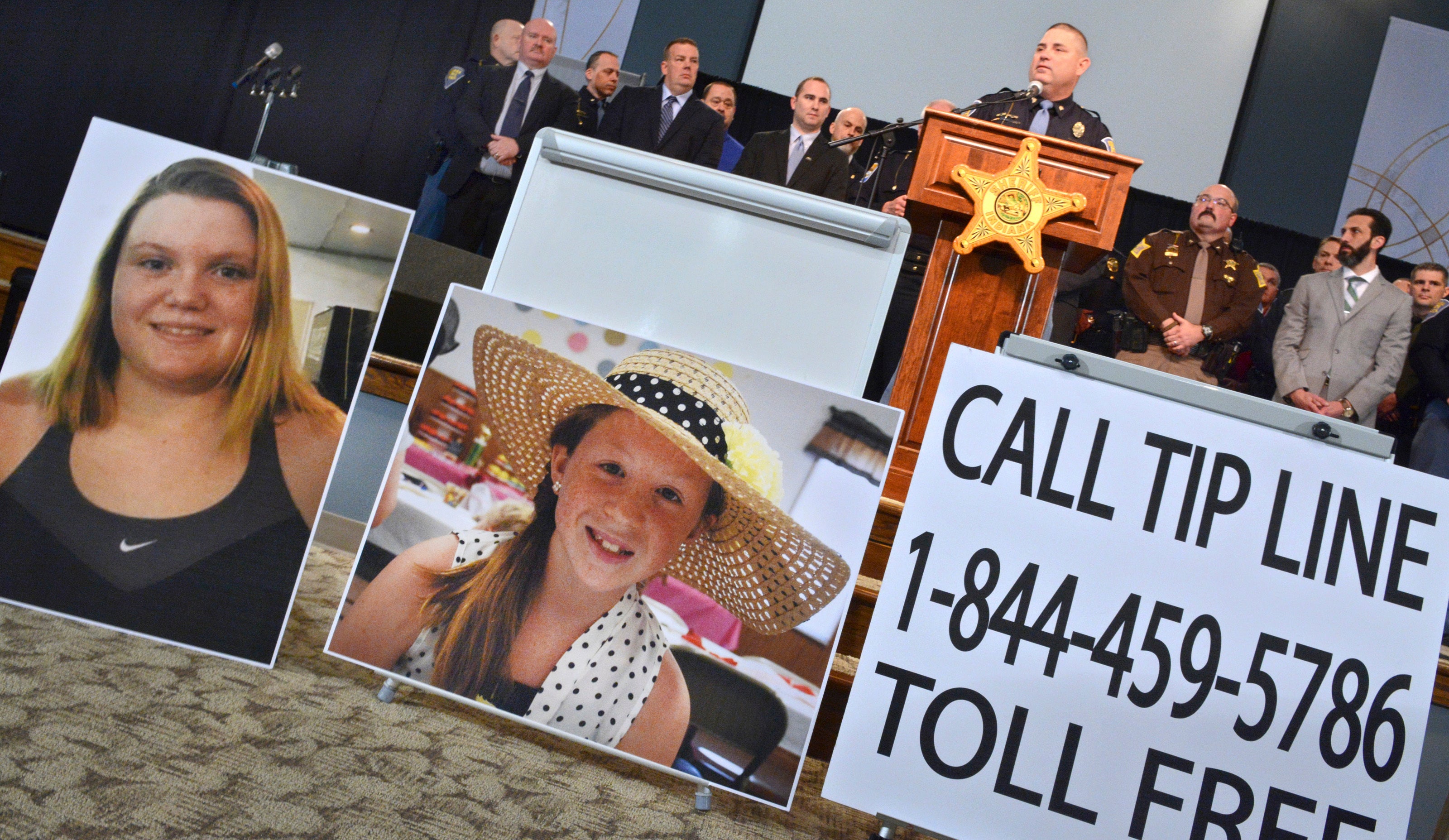
On November 11, 2024, the jury found Richard Allen guilty on all counts.
Seven years after a fourteen-year-old pressed record, a courtroom finally said the words the town had waited for.
Guilty.
For some people, it felt like closure.
For others, it felt like a door that finally stopped swinging.
For the families, it was justice arriving late, carrying both relief and fresh pain.
Because nothing restores what was taken.
No sentence rewinds time back to that warm February day.
No verdict gives Abby and Libby back to the people who loved them.
Still, something mattered deeply in that moment.
The world heard, officially, that the evidence was real, that the recording held weight, that truth could be reached even through years of darkness.
And in the center of that truth stood Libby’s courage.
Law enforcement called her a hero.
Her family said she had always been brave, always quick, always protective.
A girl who didn’t just capture a moment—she fought back with the only weapon she had.
Think about what that means.
Fourteen years old, standing on a bridge with fear tightening the air.
And instead of giving up to panic, she reached for proof.
Not proof for herself.
Proof for Abby.
Proof for their families, for their town, for a future where the man walking toward them could not stay hidden forever.
There is something haunting about that 43-second clip.
Not because it’s sensational, but because it is human.
You can feel the ordinary moment turning, feel the edge appear.
You can hear how calm the voice is.
You can feel how quickly danger can step into a place that looked safe minutes before.
And you can understand, in your bones, why people couldn’t let the case go.
Libby’s recording became a thread.
A thin thread, but strong enough to hold seven years of searching.
Strong enough to pull the truth back into the light.
It also became a lesson the country couldn’t ignore.
That intuition matters.
That paying attention matters.
That sometimes the smallest action—a thumb pressing “record”—becomes the difference between a mystery and a conviction.
That sometimes courage is quiet and practical and born in seconds.
That sometimes a child understands what adults wish they’d understood sooner.
Abby and Libby went to the trail for a normal afternoon.
They didn’t know they were stepping into history.
They didn’t know their names would become symbols.
But in the middle of fear, Libby made a choice that would not let the world look away.
She left behind a voice and a walk and three words that refused to fade.
And seven years later, those 43 seconds spoke louder than the silence that tried to swallow them.
If you ever wonder what bravery looks like without a spotlight, remember this.
It looks like a teenage girl realizing she needs evidence and finding a way to get it.
It looks like a phone held steady while the world narrows.
A Son Wanted His Parents’ Inheritance—So He Allegedly Had Them Murdered in Their Own Home.5977

On December 15, 2025, a horrific double murder shook the community of Clovis, New Mexico.
A chilling truth emerged that rocked not only the family but also the entire town.
A teenager, in the depths of greed and manipulation, orchestrated a plan to have his parents murdered so he could claim their inheritance.

This crime, which involved not only betrayal but also the ruthless use of a close friend, became one of the most disturbing stories the community had ever encountered.
It’s a story of deception, malice, and the heartbreaking lengths some are willing to go when driven by the promise of wealth and power.
The First 911 Call
The day began like any other on December 15, when the Clovis Police Department received a distressing 911 call about a potential burglary at the Munoz family’s home.
The caller, Darren Munoz, seemed calm on the phone, though there was an underlying tension in his voice.

When officers arrived at the house, Darren greeted them and claimed that everything was fine.
But something about his demeanor struck the officers as suspicious.
He told them that his parents, Oscar Steve Munoz, 58, and Dina Munoz, 71, were still asleep in their bedroom, and he didn’t want them disturbing them because “they sleep naked.”
After some persuasion, Darren finally allowed the officers to enter the house, where they discovered a scene that would haunt them forever.
Both Oscar and Dina Munoz had been shot in the head.
Dina Munoz had already passed away at the scene, while Oscar Munoz was rushed to the hospital but tragically succumbed to his injuries.

The officers were left stunned by the brutality of the act, as the house seemed to hold so many secrets beneath its quiet, suburban exterior.
Darren Munoz’s Suspicious Story
During his interrogation, Darren Munoz explained that his parents had just returned from a wedding anniversary trip.
He claimed that he had gone to bed around 9:00 PM and woke up only when he heard the garage door alarm go off.
But the details of his account didn’t add up.
How could he have heard the garage alarm from the other side of the house, yet not heard the gunshots coming from the bedroom just a few feet away?
There was no sign of forced entry, and nothing had been stolen from the house.
These inconsistencies raised immediate suspicions in the minds of the officers.

As they pressed him further, Darren’s story began to unravel.
He had lied about being the one who made the 911 call, and his behavior seemed increasingly odd.
He appeared to be playing up his confusion, almost as if trying to appear helpless and innocent, but his actions spoke volumes.
Something was terribly wrong.
A Pre-Planned Murder Scheme
As investigators delved deeper into the case, they uncovered more disturbing revelations.
A close friend of Darren’s and his girlfriend came forward with information that changed the entire course of the investigation.
The friend revealed that Darren, along with his friend Julio Zamora, had been plotting the murder of his parents for weeks, if not months.
The motive was disturbingly simple: to inherit his parents’ wealth once they were gone.

This was not a crime of impulse; it was a carefully thought-out plan born from greed and the desire for control over his parents’ assets.
The friend explained that he had seen Darren with a gun and had overheard discussions about killing his parents.
This revelation was a turning point in the investigation, and the police began to focus on Darren as the key figure behind the murder.
The friend also mentioned that Darren was planning to trade an AR-15 rifle for a “ghost Glock,” a firearm without a serial number, which made the situation even more alarming.
It was clear that Darren had been preparing for this crime for some time, and his actions were driven by a cold and calculating mindset.
The Role of Julio Zamora
The investigation soon turned to Julio Zamora, Darren’s friend who was alleged to have played a key role in the plot.
Zamora was arrested at his home later that day.

When questioned, he invoked his Miranda rights but eventually admitted that Darren had asked him to help kill his parents.
Zamora also revealed that Darren had provided him with the weapon, a Glock, which was later confirmed to be the firearm used in the murder.
Zamora’s confession was a chilling piece of the puzzle, showing just how deeply involved he had been in carrying out the plan.
The police also discovered text messages between Darren and Zamora, which contained explicit plans for the murder.

These messages showed that the crime had been meticulously planned and executed with a level of coldness that left the investigators in disbelief.
It became clear that this was not a spontaneous act of violence, but a premeditated and deliberate effort to eliminate Oscar and Dina Munoz for financial gain.
The Motive Behind the Murders
Darren Munoz’s belief that his father owned a chain of Allsup’s convenience stores played a significant role in his motivation.
Local news reports confirmed that Oscar Munoz worked as a regional manager for Allsup’s, and Darren believed that the family fortune was tied to the success of these stores.

This misguided belief drove him to take extreme measures to secure the financial future he thought was rightfully his.
He saw the murders of his parents as a means to an end—an opportunity to take control of their assets and live a life free from the constraints his parents had placed on him.
However, what Darren failed to realize was that his actions would destroy not only the lives of his parents but also his own life.
The impact of his crime would forever change his future, and the consequences of his choices would be felt for years to come.
The Tragic End and Arrests
After the murder, Darren Munoz tried to cover his tracks.
He continued to act normal, pretending as if nothing had happened, but the evidence was mounting against him.
The investigation, which included a review of security footage, phone records, and testimony from friends, ultimately led to his arrest.

On December 22, Darren Munoz and Julio Zamora were both charged with two counts of first-degree murder, conspiracy to commit murder, and solicitation of murder.
They were both held without bond at the Curry County Jail and awaited their trial.
For Darren, the dream of wealth had turned into a nightmare that would haunt him for the rest of his life.
He had betrayed the very people who gave him life, and the consequences of his actions were now inescapable.
The Impact on the Community
The double murder of Oscar and Dina Munoz sent shockwaves through Clovis.

Their deaths were not just the tragic loss of two individuals; they were the loss of a family, a community, and a sense of trust.
People who had known the Munoz family for years were left reeling, unable to comprehend how a son could orchestrate such a heinous act.
It was a stark reminder of the darkness that can lie hidden beneath the surface of even the most ordinary lives.

The impact on the community was profound, and the memory of this crime would linger in the hearts of those who knew the Munoz family.
A Lesson on Greed and Betrayal
The case of Darren Munoz and Julio Zamora serves as a disturbing reminder of the lengths to which some will go for money and power.
It also highlights the deep and painful reality that greed can destroy everything it touches, leaving destruction and heartbreak in its wake.
For Darren, what began as a desire for wealth and freedom has ended in a life of incarceration, shame, and regret.

His actions have forever altered the course of his life, and the repercussions of his crime will echo through the generations to come.
This tragic tale is a powerful reminder that greed, when left unchecked, can lead to devastating consequences.
The loss of two lives, the destruction of a family, and the betrayal of trust are the ultimate price of one man’s hunger for wealth.
The Path Forward
As the trial approaches, the question remains:
Can justice truly heal the wounds left by such a brutal crime?
Or is there a deeper, more tragic truth about the human capacity for cruelty and greed that cannot be undone?
The Munoz family will never recover from the loss of Oscar and Dina.
And Darren Munoz, once a son, now faces a future marked by the terrible weight of his choices.