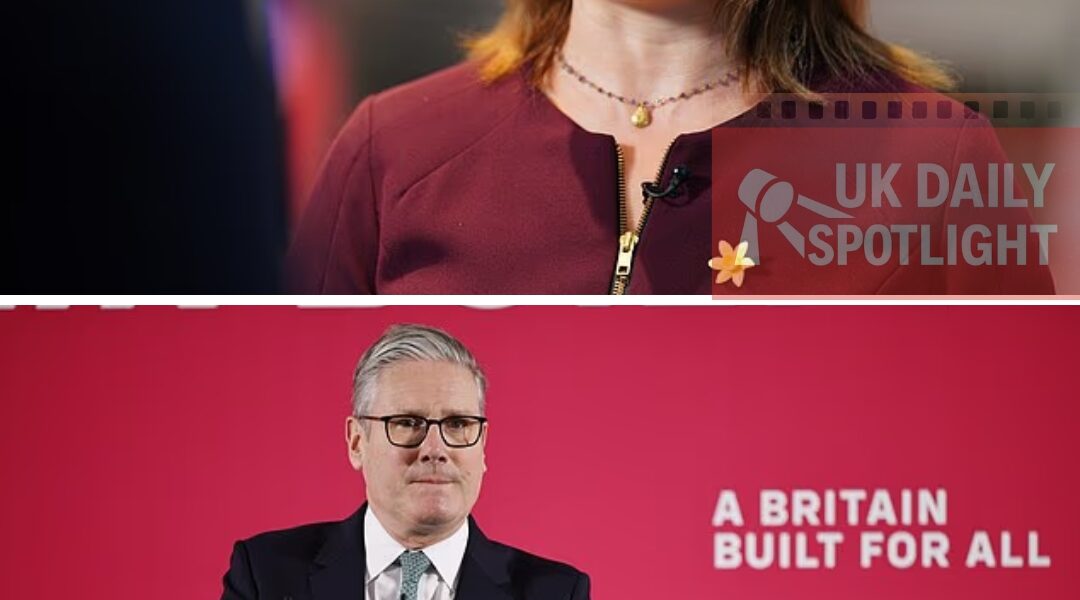
Starmer Denies ‘Misleading’ the Public as Reeves Admits Cabinet Never Saw True OBR Figures—Budget Scandal Explodes Again

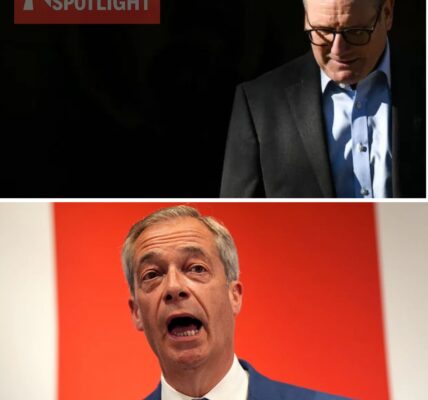
Keir Starmer insisted the Budget was not ‘misleading’ today as he launched a desperate bid to shore up his Chancellor.
The PM told a press conference that austerity or more borrowing were the only other options to imposing massive tax hikes as he defended Rachel Reeves’ fiscal package.
The claim will fuel fury after the OBR watchdog revealed it privately told ministers months ago that they had not detected any black hole in the public finances. In fact a large chunk of the extra £30billion raised is going on extra benefits costs.
Sir Keir begged angry Labour MPs to stick with his ‘long term plan’ after a weekend of brutal recriminations against Ms Reeves for repeatedly talking up a fiscal crisis to soften Britons for her tax raid.
Effectively tying his fate to that of his Chancellor, the premier said the government had now passed through the ‘narrowest part of the tunnel’.
‘Our choices were fair, they were necessary and they were fundamentally good for growth,’ the premier said, arguing that the government was ‘always going to have to raise revenue’.
In an effort to blunt criticism that the monster tax rises are being blown on benefits, Sir Keir vowed a new ‘moral’ crackdown on welfare. However, he refused to commit to spending being curbed before the next election in 2029.
Even ministers are said to be furious at being kept in the dark over the OBR forecasts, with Ms Reeves confirming this morning the Cabinet was not told. The Chancellor is facing a twin threat of probes from No10’s standards watchdog and the financial regulator.

Keir Starmer insisted tax rises were the only option at the Budget today as he launched a desperate bid to shore up his Chancellor

Even ministers are said to be furious at being kept in the dark over the OBR forecasts, with Ms Reeves confirming this morning the Cabinet was not told about the details
Sir Keir again kept referring to the OBR’s £16billion productivity downgrade this morning – but as this chart shows the full economic forecast actually left Ms Reeves with £16billion more to play with than in March

Kemi Badenoch insisted the Chancellor must not sack the OBR chief
Sir Keir repeatedly referred to the £16billion cost of a productivity downgrade, without mentioning that was completely offset by higher tax revenue and inflation estimates.
‘There was no misleading, and I simply don’t accept, and I was receiving the numbers, that being told that the OBR productivity review means you’ve got £16billion less than you would otherwise have had shows that you’ve got an easy starting point.
‘Yes, of course, all the other figures have to be taken into account. But we started the process with significantly less than we would otherwise have had.’
He said there was ‘no pretending’ that it was a ‘good starting point’.
He added: ‘There was a point at which we did think we would have to breach the manifesto in order to achieve what we wanted to achieve. Later on, it became possible to do it without the manifesto breach.
‘Given the choice between the two, I didn’t want to breach the manifesto, and that’s why we came to the decisions that we did.’
The premier swiped at the OBR saying he was ‘not sure’ why the productivity review had not been conducted at the end of the Tory government’s time in power.
Sir Keir said: ‘Doing it at the end of the last government might have been a good time to do a productivity review… it had to be done sometime but picking up the tab for the last government’s failure…
‘I am not angry, I am just bemused.’
Sir Keir said: ‘We have to be clear at this stage of our plan, the most important thing that we can do for growth, the most important thing that we can do for business, is first to drive inflation down so that interest rates come down further still, and the cost of business investment comes down with it and, second, to retain market confidence that allows for real economic stability so that businesses can plan with certainty.
‘That is what the country needs most right now.
‘It is what the Budget secured and that is why our choices were fair, they were necessary and they were fundamentally good for growth.
‘But I will level with you as the Budget showed the path to a Britain that is truly built for all requires many more decisions that are not cost-free and they’re not easy.’
In what amounted to a plea to Labour MPs, Sir Keir said: ‘We have now walked through the narrowest part of the tunnel,’ he said during a speech in London.
He acknowledged that the cost-of-living crisis has not gone away and said: ‘In the year ahead you will see the benefits of our approach, and not just in the national statistics, but in your communities.’
He added: ‘Bit by bit, you will see a country that no longer feels the burden of decline, or the sense that things can never get better.’