The Boy Called “Cyborg”: Mateus’ Extraordinary Journey of Strength and Rebuilding. Hyn

Before you meet him, the first thing you’ll hear is the nickname.
“Cyborg.”
It sounds like a character from a comic book — a superhero name, not a label for a boy born with a rare bone condition. But once you see the way he walks, the light in his eyes, and the quiet determination in his voice, you understand. He earned it.
This is the story of Mateus, a boy told his body would never be “normal.” But instead of giving up, he chose to rebuild it — stronger, better, more resilient.
From the start, Mateus faced a diagnosis that would shake any family. He was born with a rare condition affecting one in a million children: congenital short femur combined with limb hemimelia. One leg significantly shorter than the other, a tilted hip, a challenging gait — every step was a test.

Doctors explained gently but honestly. He would need multiple surgeries. Years of physical therapy awaited. Even then, they warned, he might never walk “normally.”
But what no medical record could predict was Mateus’ spirit.
From the very beginning, Mateus refused to see himself as limited. He gave himself a nickname, a symbol of his journey — not broken, but rebuilt.
“Cyborg.”
It started as a quiet joke whispered between nurses and his parents after his first major surgery. Soon, it became his identity — a badge of courage, resilience, and transformation.
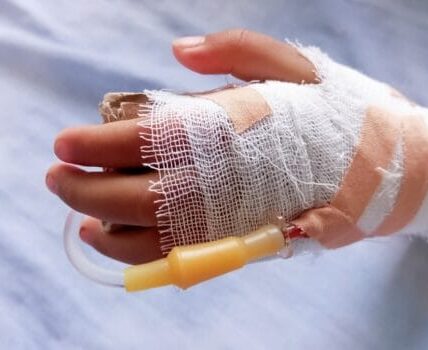
Every time surgeons adjusted the metal frames or tightened the rods used to lengthen his leg, Mateus would grin.
“See? Half metal, half me. I’m stronger now,” he would say.
And somehow, his optimism spread to everyone around him.

The science behind his recovery is remarkable. Mateus underwent a process called bone lengthening, a sophisticated procedure in modern orthopedics that is both science and miracle.
Surgeons carefully break the bone in a controlled way, attach an external fixator, and slowly stretch the bone over months, millimeter by millimeter. The body responds by creating new bone in the gap — growing bone from nothing.
The process is agonizing, physically and mentally. Every day the screws are turned. Muscles stretch painfully. Physical therapy pushes the limits of human endurance.
Yet Mateus fights through it all.
So far, he has completed two bone-lengthening surgeries, extending his affected leg by more than 10 centimeters — nearly four inches.
That number alone doesn’t capture the years of pain, the months spent in the hospital, and the countless nights his mother held him through the tears of aching bones and joints.
But ask him about it, and he shrugs.
“It hurt,” he says with a wide grin, “but it was worth it.”

Now, the treatment pauses briefly. Each phase of bone lengthening requires time for recovery — for bones to solidify, for muscles and joints to adapt, and for a growing body to catch up.
The plan is clear: Every two years, another lengthening until growth completes. If all goes well, by 2027, Mateus’ legs will be equal in length.
That means at least two more surgeries — possibly three. Weeks in the hospital, months of rehabilitation, and extraordinary patience. Most adults would crumble under such a schedule.
Mateus sees it as a challenge.

“When the next phase comes,” he says, “I’ll be ready.”
If you walk into the hospital where he is treated, you’ll see his name at the corner of a large whiteboard — underlined twice, with a smiling face beside it.
The nurses call him “our little warrior.”

He shakes hands with everyone in the hall, jokes with surgeons, and reminds other children that scars aren’t ugly — they are proof of survival.
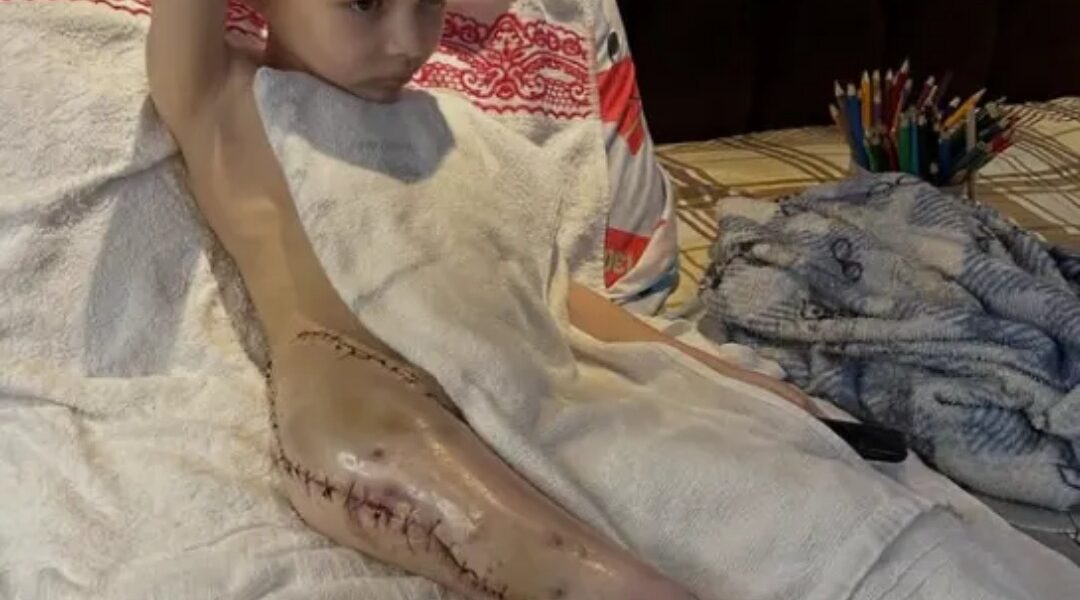
During one physical therapy session, a small boy cried from the pain of stretching exercises. Mateus rolled up his pants to reveal scars and pin marks along his thigh.
“Look,” he said, “these hurt too. But they help me run faster.”
The child stopped crying.
That is his influence — turning fear into courage just by being himself.

The head nurse, who has followed Mateus’ case from the beginning, speaks with pride bordering on awe.
“He is not just a patient,” she says. “He shows that medicine is not just science, it’s heart.”
She remembers seeing his X-rays for the first time — a short, curved femur, misaligned hip. The prognosis was grim. But each return visit told a different story — bones growing where they shouldn’t, strength developing where there was weakness.
On her desk, she keeps the latest medical summary. It reads like a record of miracles:
“Congenital short femur with limb hemimelia. Two bone-lengthening surgeries completed. Gained over 10 cm. Fully mobile during recovery. Prognosis: Excellent.”

Beneath it, in her handwriting, she adds a note:
“The boy refuses to stop growing.”
For Mateus’ mother, the hardest part is not the surgeries, but the waiting.
Waiting between phases. Waiting to see if the new bone holds. Waiting for the day he can run without limping, without braces, without pain.
At home, every victory is celebrated — each extra centimeter, each step forward, each night he sleeps pain-free. The refrigerator is covered in drawings and X-rays, each dated like milestones on a map.
Most prominent: a bold phrase —
“Strong like Cyborg.”

What makes Mateus extraordinary is not just his medical condition, but his mindset.
He does not see disability as limitation. He sees it as transformation.
When he talks about his leg, he never says “weak leg” or “injured leg.” He says, “strong leg.” Rebuilt. Fighting. Resilient.
He dreams of one day becoming a physical therapist — or maybe an engineer designing medical devices for children like him.
“I want to help other cyborgs,” he says with a wink.

Because that’s what he believes about them — children with metal, scars, and stories that make them unique, not broken.
Doctors predict that when Mateus matures, his legs will be nearly equal. No braces, no orthopedic shoes, no more surgeries.
But his legacy goes beyond medicine.

He inspires other children with similar conditions to believe their lives are not over because of a diagnosis. He teaches families and even doctors what true perseverance looks like. And perhaps most importantly, he reminds everyone that resilience is not something you are born with — it is something you build, piece by piece, through pain and determination.
When asked about his nickname “Cyborg,” his mother smiles.
“He gave it to himself,” she says. “He said if his bones are made stronger with metal, he’s part superhero now.”
And in a way, he is right.

Every surgery makes him stronger, not weaker. Every scar tells a story of pain, but also of strength.
Because Mateus is not just learning to walk straight. He is teaching the world that perfection isn’t symmetry — it’s endurance.
Strength isn’t having equal legs. It’s standing tall no matter how many times you fall.
The human body may be fragile, but the human spirit? Unbreakable.
By 2027, when the next phase begins, Mateus will face months of pain, patience, and perseverance again.
But if his story so far is any indication, he will meet it as he always has — brave, smiling, and lighting up the hospital room.

When asked what he looks forward to most, his answer is simple:
“To run — really run — with both legs equally.”
And when that day comes, the world will see what his family and doctors already know:
He was never broken. He is being rebuilt.

Because sometimes, heroes aren’t born with capes or in comic books.
Sometimes, they are made — surgery by surgery, scar by scar, miracle by miracle.
And the boy they call Cyborg?
He is living proof.
Kolymana the Polar Bear: A Mother’s First Walk with Her Cub at Yakutsk Zoo
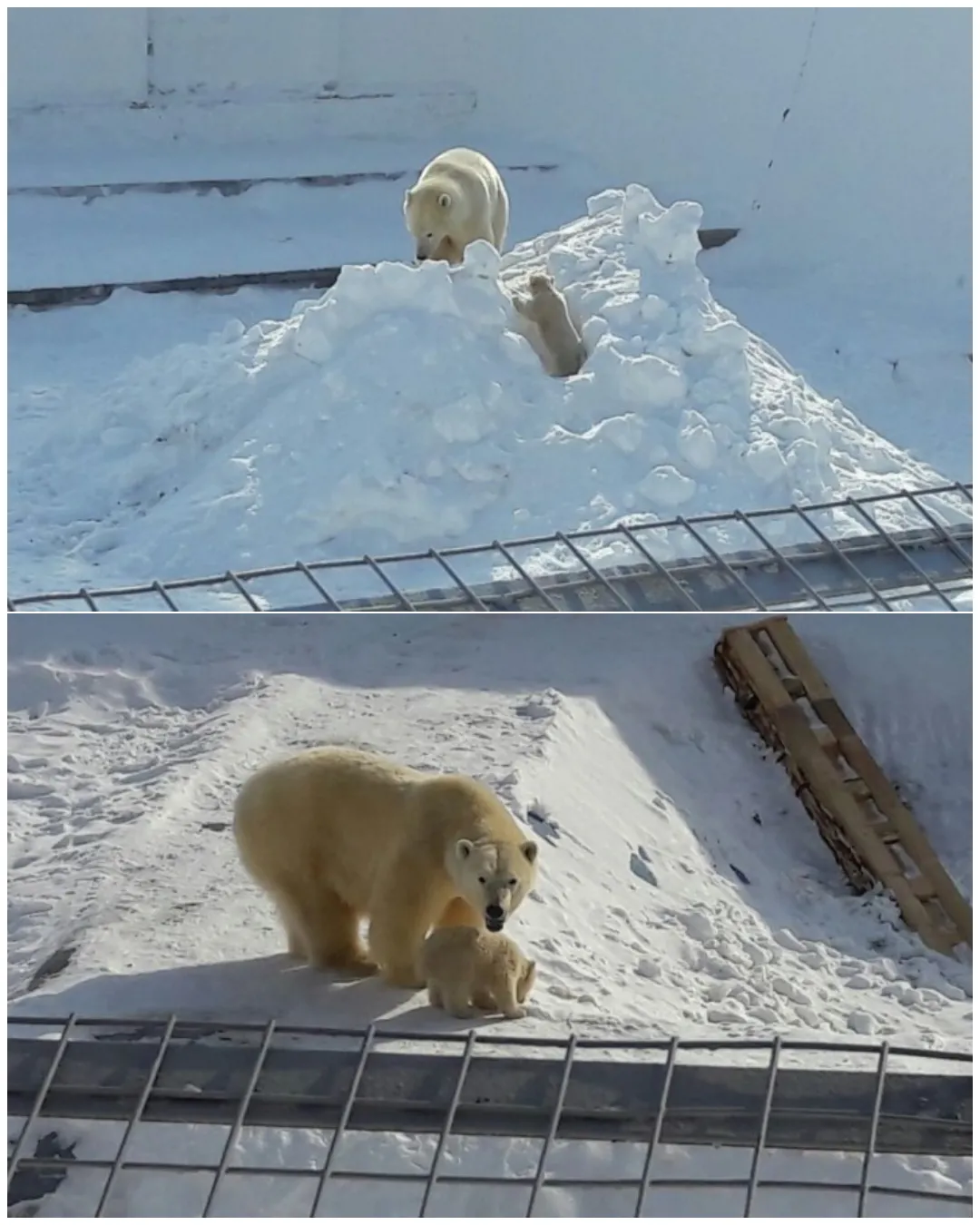
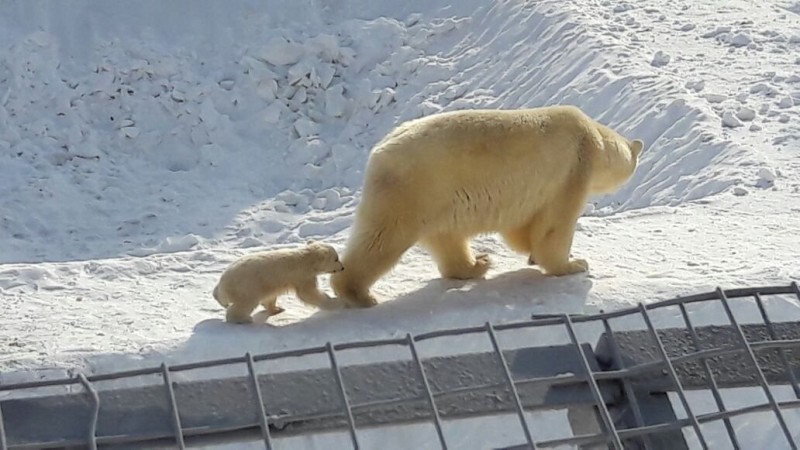
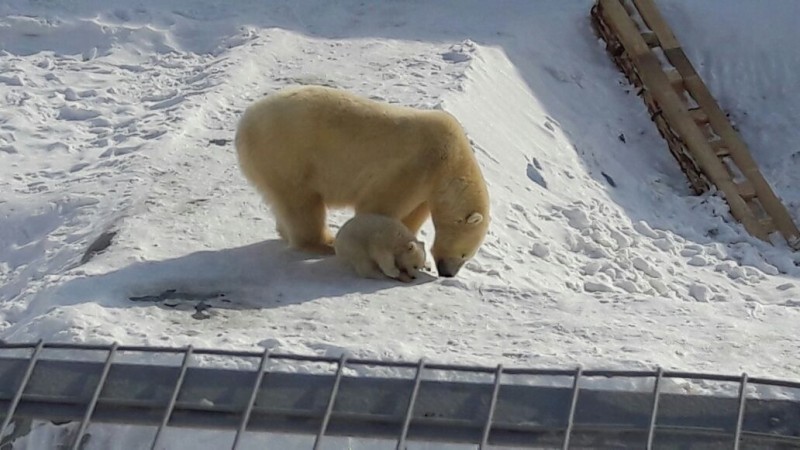
In the remote and icy region of Yakutia, Russia, a touching event captured the hearts of zoo visitors and animal lovers alike. At the “Orto Doidu” zoo, Kolymana, a five-year-old polar bear, took her newborn cub for its first walk, marking a significant milestone since the cub’s birth on November 30, 2016.
The arrival of Kolymana’s cub was eagerly awaited by staff and visitors. Polar bears are solitary in their natural habitat, and the early days of a cub’s life are delicate and critical. In captivity, special care is required to ensure the health and safety of both mother and cub. For Kolymana, this meant a period of complete isolation in her den, from which she emerged only after seventy-five days to begin introducing her cub to the outside world.
During the first seventy-five days, Kolymana did not eat or leave her den. Her energy was entirely devoted to nurturing her cub. In the earliest days, she curled around the cub in a tight ball, protecting it with every movement. As the cub grew, Kolymana’s posture gradually opened, allowing the young bear to move more freely within the safety of the den. Eventually, she would lie on her back and side, giving the cub opportunities to explore its immediate surroundings.
The cub opened its eyes on January 14, 2017, on its forty-fifth day. Its first tentative steps came on January 23, 2017, fifty-three days after birth. The cub’s development was carefully monitored by zoo staff, who provided guidance and ensured the young bear’s safety during these critical early stages.
Kolymana’s first meal outside the den occurred on February 15, 2017, when she was offered three herrings, which she ate eagerly. In the following weeks, her daily food portions were gradually increased to meet the growing nutritional needs of both mother and cub. On February 24, 2017, the cub tasted fish for the first time, eighty-six days after its birth, beginning to learn essential survival skills under the watchful eye of its mother.
The father, a male polar bear named Lomonosov, resided in a separate enclosure designed to keep him apart from females with cubs. Built the previous year with funding from the guardians of polar bears at PJSC “NK Rosneft,” this enclosure also featured a pool for swimming and enrichment activities. Lomonosov thrived in his space, while Kolymana could devote herself entirely to teaching her cub, unbothered by the presence of a male bear.
On February 19, 2017, the cub accidentally fell out of the den. Kolymana immediately intervened, assisting the cub to climb back safely. This incident demonstrated the mother’s attentiveness and protective instincts, which are vital for the survival of polar bear cubs both in captivity and in the wild.
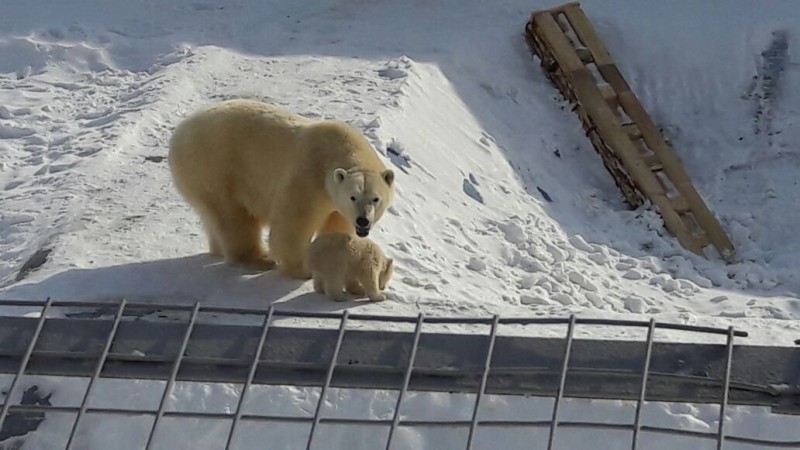
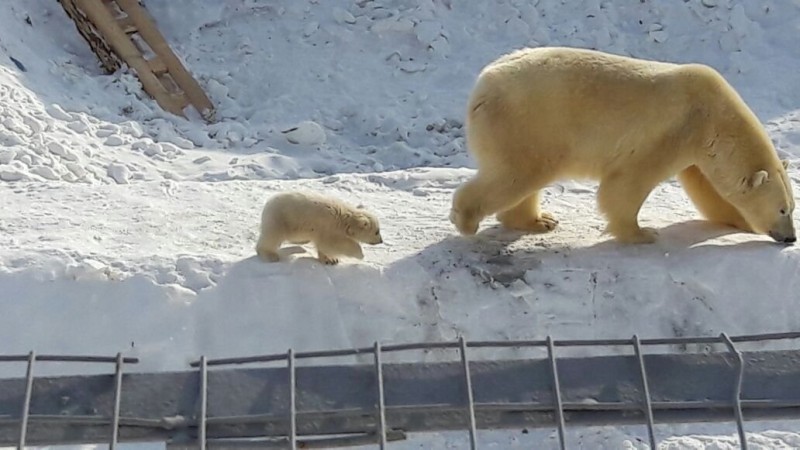
As March approached, Kolymana began teaching the cub to navigate its environment independently. She encouraged the cub to overcome thresholds on its own, nudging straw bedding into place to make climbing easier and guiding it through simple challenges. By March 24, zoo staff observed the cub moving skillfully, running after Kolymana, and imitating her actions. The young bear played joyfully in a snow trench that Kolymana had dug, demonstrating both curiosity and confidence in its developing motor skills.
Kolymana and Lomonosov, both five years old, reached sexual maturity at four. Their successful adaptation to life in the zoo, along with careful management of their enclosures, ensured the safety and well-being of the cub while allowing natural behaviors to emerge. Observers were amazed by Kolymana’s maternal care, noting her patience, adaptability, and nurturing instincts.
The story of Kolymana and her cub provides insight into polar bear behavior. In the wild, cubs depend entirely on their mothers for warmth, protection, and learning critical survival skills during the first year of life. Captive environments can replicate these conditions, but only with careful planning, attention, and respect for natural behaviors. Kolymana’s ability to teach her cub, protect it, and gradually introduce it to the world demonstrates the remarkable instincts of polar bears and the importance of proper animal care in zoos.
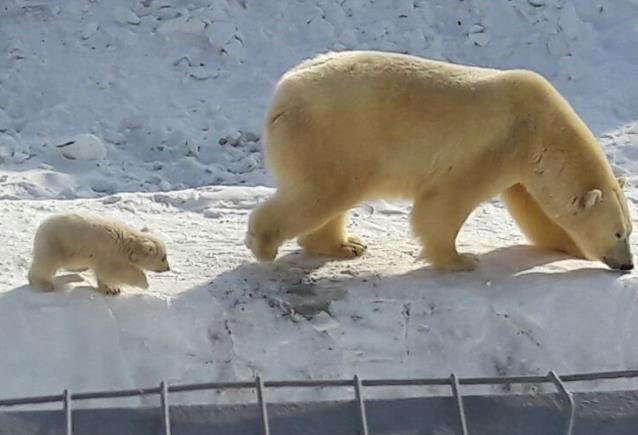
Visitors to the Yakutsk zoo were captivated by the sight of the mother and cub walking together for the first time. The cub followed closely, mirroring Kolymana’s movements, and began to understand how to interact with its surroundings safely. Observers were struck by the playful yet educational nature of these early walks, seeing in them the natural progression from helpless infant to an agile, curious young bear.
Beyond the immediate joy of observing Kolymana and her cub, the story carries a broader message about conservation and the role of zoos in educating the public. Polar bears face numerous threats in the wild, from climate change and melting ice habitats to human encroachment and pollution. Captive breeding programs, such as that at Orto Doidu, provide opportunities for education, research, and species preservation, highlighting the delicate balance between human intervention and natural development.
Kolymana’s dedication, combined with the careful management of her environment, ensured the cub’s survival and well-being. These early months are critical, as cub mortality can be high due to environmental stress, insufficient maternal care, or inadequate nutrition. In the controlled environment of the zoo, Kolymana was able to provide the protection and teaching that the cub required, with the added benefit of veterinary oversight to monitor health and growth.
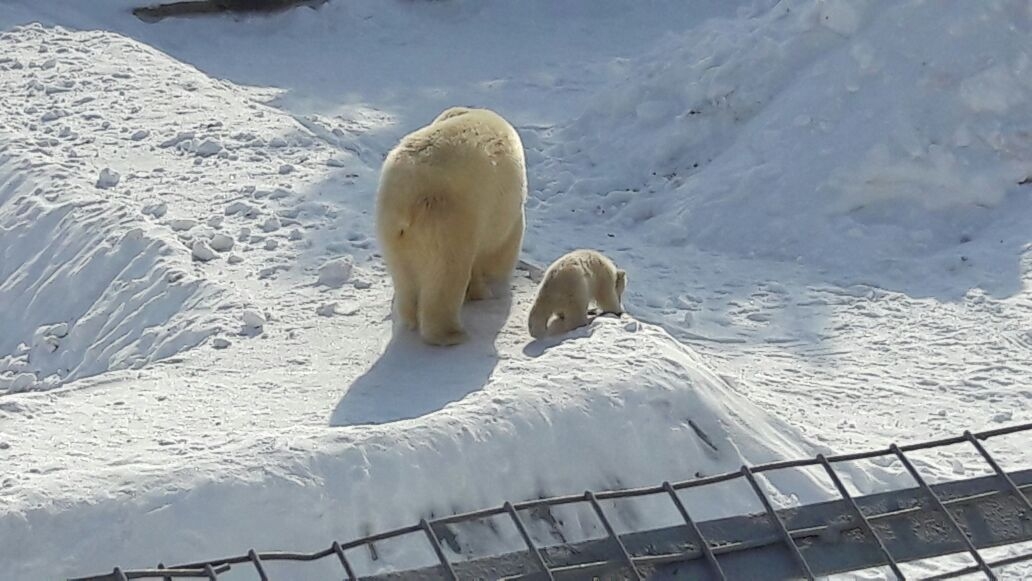
The cub’s development, from opening its eyes to taking its first steps and tasting fish, illustrates the complexity of learning for polar bears. Each milestone is a blend of instinctual behavior and learned skills. Kolymana’s role as a teacher, protector, and guide is central to this process. Her attentive care ensured that the cub learned essential survival skills while growing strong and confident.
Observers also noted the emotional dimension of this maternal bond. Polar bears, like many mammals, exhibit a range of social behaviors and attachments. Kolymana’s patient interactions with her cub, her protective interventions, and her teaching behaviors reveal a depth of emotional intelligence. The cub, in turn, responded with curiosity, playfulness, and trust, creating a dynamic that both fascinated and inspired zoo visitors.
This story underscores the importance of understanding animal behavior in captivity. Zoos must balance the need for safety and conservation with opportunities for natural behaviors to emerge. Kolymana’s successful mothering demonstrates that, with careful planning and respect for instinct, captive environments can support the physical, psychological, and social needs of animals.
The broader significance of Kolymana and her cub extends to public education. Visitors witnessing these interactions gain insight into the challenges faced by polar bears in the wild and the importance of maternal care for survival. They also learn about the critical role humans play in ensuring the welfare of captive animals, from providing appropriate diets to designing enriching environments.
Over time, the cub will continue to develop, learning to navigate its enclosure, play in the snow, and interact with other animals under careful supervision. Each stage of development is crucial, building the skills, confidence, and instincts necessary for a healthy and fulfilling life. Kolymana’s guidance ensures that the cub acquires these abilities naturally and safely.
The story of Kolymana and her cub reminds us of the wonders of the natural world and the beauty of parental care. Even in captivity, the deep bond between mother and offspring can be observed, studied, and appreciated. These moments of connection provide lessons in empathy, responsibility, and the importance of nurturing life, whether human or animal.
For the staff at Orto Doidu, the experience of witnessing Kolymana lead her cub on its first walks is deeply rewarding. It validates the years of careful preparation, enclosure management, and animal care. It also reinforces the importance of observing and respecting natural behaviors, allowing animals to teach their young in ways that reflect their species’ unique needs and instincts.
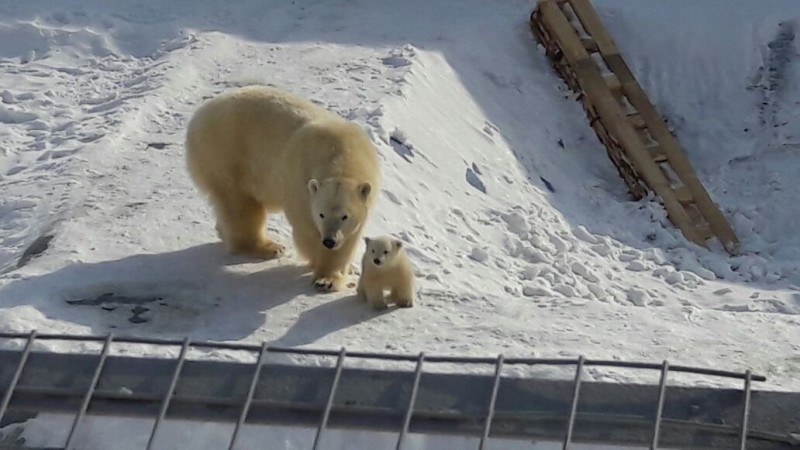
Kolymana’s story, and that of her cub, continues to inspire conservationists, educators, and the public. It demonstrates the resilience of wildlife, the depth of maternal instincts, and the potential for humans to positively influence the lives of animals under their care. Each step the cub takes alongside its mother is a testament to life, growth, and the enduring bond between parent and offspring.
As the cub grows stronger and more independent, the lessons learned from these early days will shape its behavior, confidence, and survival skills. Kolymana’s patient guidance ensures that these foundational experiences prepare the cub for a life of exploration, play, and self-sufficiency.
Ultimately, this story is more than a simple zoo update—it is a narrative of trust, growth, and the wonder of animal development. It highlights the responsibilities humans have when caring for wildlife, the importance of observation and intervention when necessary, and the extraordinary outcomes that can result from compassionate, knowledgeable stewardship.
Kolymana and her cub’s journey offers hope and inspiration. It reminds us that with care, patience, and understanding, animals can thrive even in challenging circumstances. It also encourages us to value and protect the natural behaviors that make each species unique, ensuring that future generations of animals can experience the full richness of life.
In the snowy expanses of Yakutia, the sight of Kolymana walking with her cub is more than a charming zoo moment—it is a living example of resilience, maternal care, and the remarkable adaptability of nature. Visitors leave with a sense of awe, carrying with them the knowledge that even in human-managed environments, the bonds of family, the lessons of survival, and the joy of discovery remain as strong as ever.
Kolymana and her cub have shown that love, guidance, and patience are universal, transcending species boundaries. Their story will continue to educate, inspire, and remind us all of the importance of compassion, responsibility, and the magical connections that exist in the animal kingdom.