
CONTENT NOTICE (Historical/Educational):
This article discusses sensitive historical events connected to political violence and an execution during the 1967 Bolivian campaign involving Ernesto “Che” Guevara. It is presented for educational and historical context only, to support understanding of the past and reflection on how societies can reduce political violence and injustice. It does not endorse, encourage, or glorify violence, armed struggle, or extremism.
Ernesto “Che” Guevara: Life, Bolivia Campaign, Capture, and Death (1967)
Ernesto “Che” Guevara (June 14, 1928 – October 9, 1967) was an Argentine Marxist revolutionary, physician, and guerrilla leader whose image became a global symbol associated with rebellion and anti-imperialism. He played a major role in the Cuban Revolution alongside Fidel Castro, helping overthrow Fulgencio Batista in 1959. After the revolution, Guevara served in senior positions in the Cuban government, including leadership roles related to industry and economic policy, before departing Cuba in 1965 to support revolutionary movements abroad.
Over time, Guevara became increasingly committed to exporting armed revolution beyond Cuba. After attempting to support insurgency efforts in other regions, he entered Bolivia in late 1966 under disguise to organize a guerrilla movement aimed at sparking a broader uprising. The effort struggled from the outset: the group faced isolation, limited local support, internal setbacks, and intensified pursuit by Bolivian security forces receiving external training and intelligence assistance.
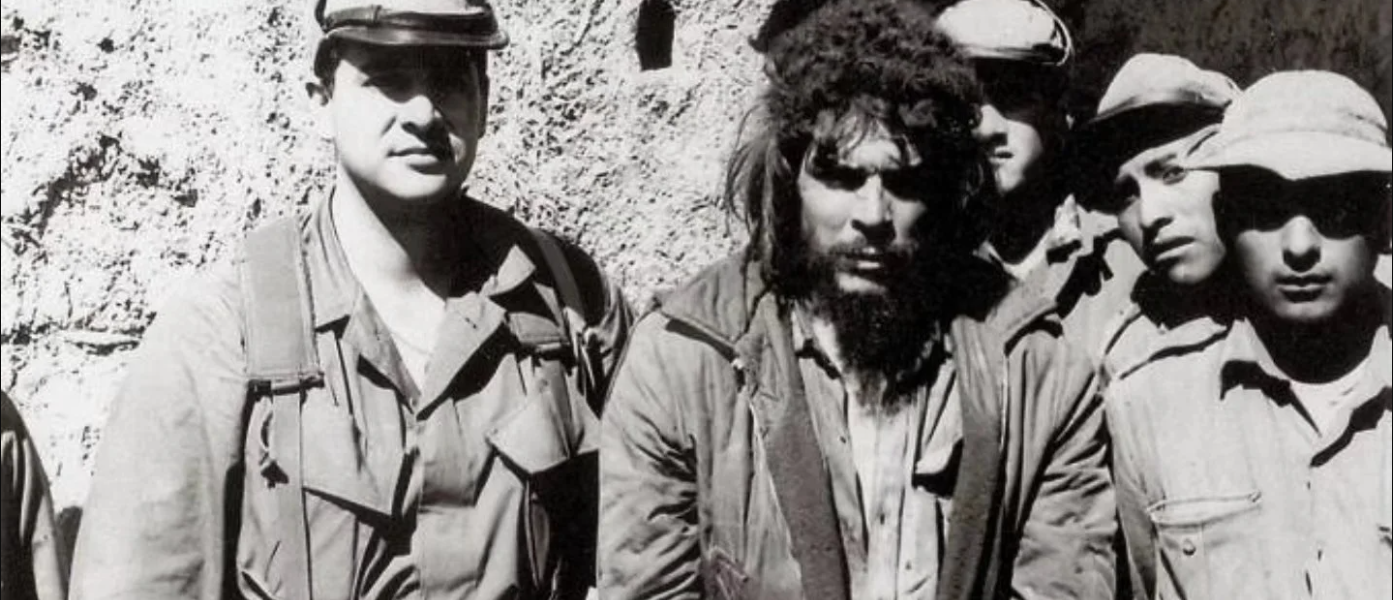
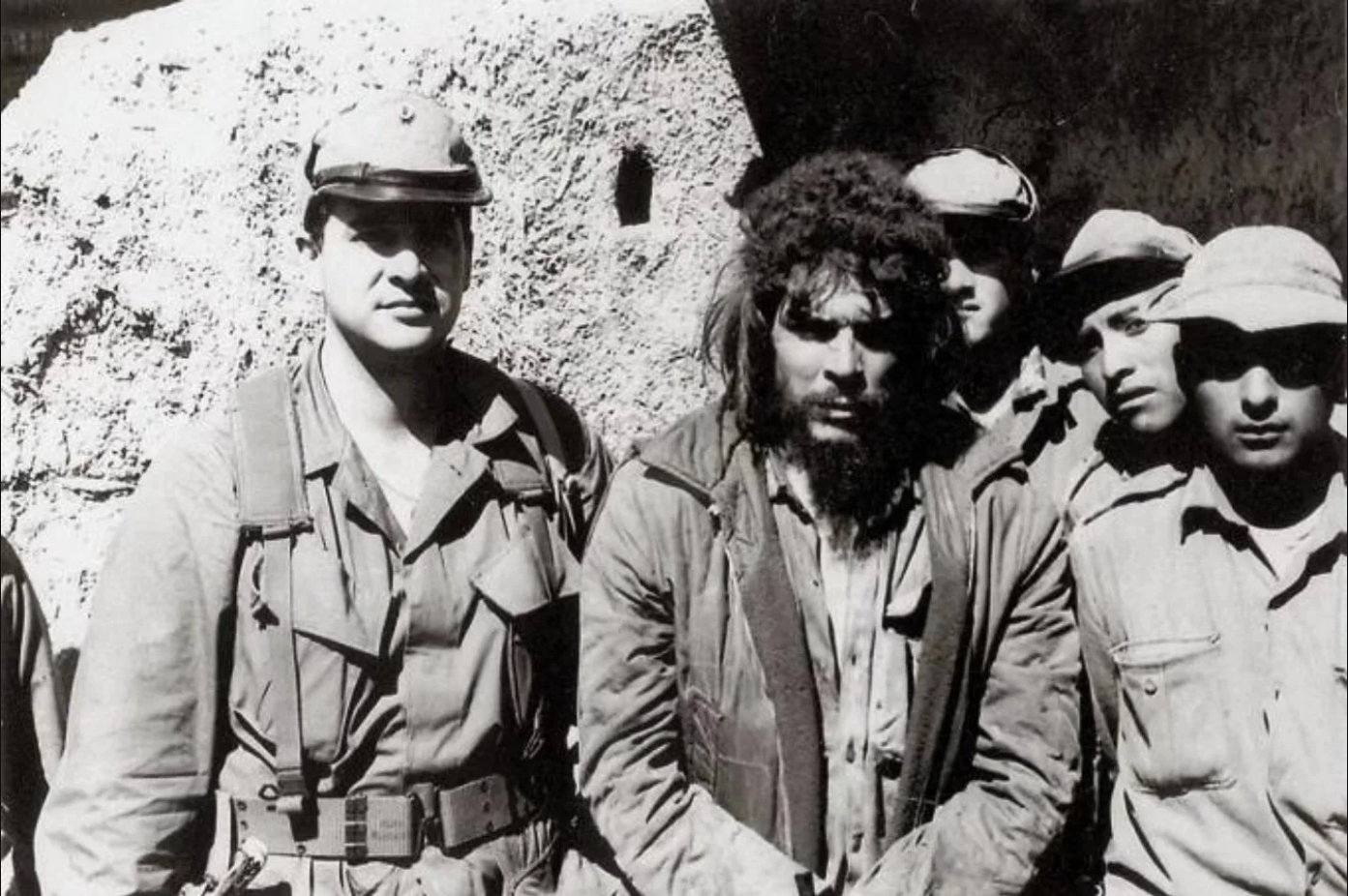
On October 8, 1967, Guevara was captured after being wounded during fighting in the Quebrada del Yuro area. He was taken to the village of La Higuera and held in a small schoolhouse. The following day, October 9, 1967, Bolivian authorities carried out his execution. Accounts indicate that the decision was made at high levels of the Bolivian government, with debate at the time and afterward regarding the role and influence of external advisers and intelligence personnel. Guevara’s reported final remarks differ slightly across sources, but they are widely described as defiant and focused on the idea that killing him would not end the broader political struggle he represented.
After his death, Bolivian authorities used physical identification methods to confirm his identity. His body was publicly displayed for verification before being buried secretly. In 1997, a set of remains identified as Guevara’s were located and returned to Cuba, where he was reinterred with official honors.
Guevara’s death had an immediate symbolic impact. To supporters, it reinforced his status as a martyr and international emblem of resistance. To critics, it marked the violent endpoint of a political project associated with armed struggle and revolutionary upheaval. Regardless of perspective, the episode remains a stark historical case study in how ideological conflict can escalate into irreversible outcomes, and how states and movements alike can contribute to cycles of violence.
Early Life and Path to Revolutionary Politics
Guevara was born in Rosario, Argentina, and studied medicine at the University of Buenos Aires, completing his degree in the early 1950s. His travels across Latin America—later popularized through writings associated with “The Motorcycle Diaries”—shaped his political worldview as he encountered widespread poverty and inequality. He became increasingly committed to Marxist ideas and developed strong opposition to foreign intervention and economic domination in the region.
In the mid-1950s, while in Mexico, he met Fidel Castro and joined the July 26 Movement. He later fought as a guerrilla in Cuba’s Sierra Maestra, where he gained a reputation for discipline, organizational ability, and battlefield leadership. After Batista’s fall in 1959, Guevara became part of the new revolutionary government and participated in major political and economic transformations, including land reform and nationalization policies. This period also included revolutionary tribunals and executions of former regime figures—an aspect of his legacy that remains heavily debated.
From Cuban Official to International Insurgent
During the early 1960s, Guevara held prominent posts in Cuba, advocating rapid economic transformation and emphasizing ideological commitment, austerity, and volunteer labor. Over time, he expressed frustration with geopolitical realities and ideological compromises, and he departed Cuba in 1965 to pursue revolutionary efforts abroad.
After an unsuccessful campaign attempt in Africa, he turned to Bolivia in 1966–1967. His objective was to build a guerrilla “foco” that could inspire wider regional rebellion. Instead, the project deteriorated under pressure: supply issues, difficult terrain, local political realities, and effective counterinsurgency operations steadily reduced his group’s capacity.
His capture and execution became a defining moment of Cold War-era Latin American history, raising enduring questions about sovereignty, foreign influence, counterinsurgency ethics, and the moral limits of political violence.
Historical Reflection
Che Guevara remains a polarizing figure: admired by many as an anti-imperialist revolutionary and condemned by others for endorsing and participating in political violence. A careful historical approach avoids myth-making in either direction. The most constructive lesson from his story is how quickly political conflict can move from ideology and rhetoric into human loss—and why strengthening democratic institutions, lawful processes, and non-violent civic channels is essential to preventing the cycles of retaliation that harm both “visionaries” and ordinary people.
Sources (as provided)
- National Security Archive: “The Death of Che Guevara: U.S. declassified documents”
- Zinn Education Project: “Oct. 9, 1967: Che Guevara Executed”
- U.S. Department of State: “Historical Documents on Che Guevara’s Death”
- Wikipedia: “Che Guevara”
- History.com: “Che Guevara is executed”
- Reddit r/socialism: “On this day in 1967, Che Guevara was executed”
- CheGuevara.org: “Che Guevara’s Death”
- YouTube: “Execution of Marxist revolutionary icon Ernesto ‘Che’ Guevara”
- The New Republic: “The Death of Che Guevara”
- Additional academic references on Che Guevara