
The morning sun had barely risen over Wichita, Kansas, on October 9, 2024, when the quiet of a family apartment was shattered.
Inside the modest East Harry Street home, chaos had replaced the usual hum of daily life.
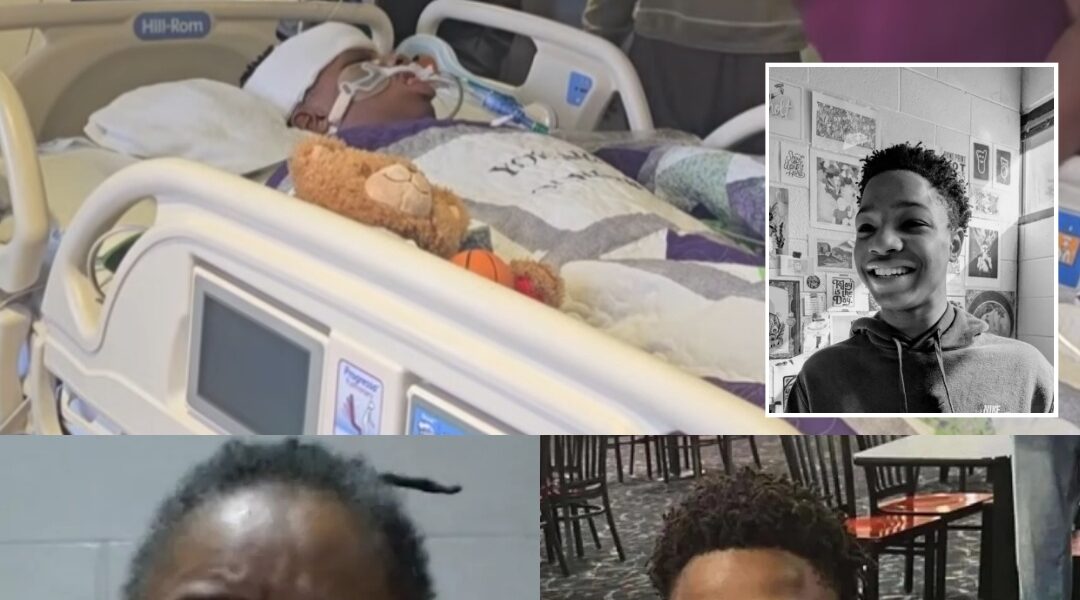
Sixteen-year-old Robert Florence lay on the living room floor with a single gunshot wound, a life interrupted before it had fully begun.
His mother, Tesha La Sha Florence, 46, had called 911 in a panic, reporting that she had shot her son.
Police and emergency responders rushed to the apartment, their sirens cutting through the still morning air.
Robert was transported to the hospital in extremely critical condition, where he fought for his life for two harrowing days.

On Friday morning, October 11, Robert succumbed to his injuries, leaving a family shattered and a community mourning a young life lost too soon.
The tragedy reverberated through the halls of the Wichita Police Department and beyond.
Chief Joe Sullivan spoke solemnly about the incident, emphasizing the ripple effects of gun violence.
“This is a tragic incident that has forever altered a family,” he said.
“Gun violence affects our entire community and cannot be tolerated.”
For Robert’s older brother, Kurtis Florence, 20, the loss was deeply personal and incomprehensible.

In a quiet, strained phone interview, he recalled his brother’s character with heartfelt reverence.
“Robert was just somebody you could trust,” Kurtis said.
“He kept it genuine at all times.”
“He was always able to point you to your truth. People lie a lot of times, but he could see through all that.”
Kurtis described his younger brother as a force within their community, a very loving, caring young man whose presence brought comfort to friends, family, and neighbors alike.
The Florence family had endured years of financial struggle.
Kurtis explained that since spring 2022, he, his mother, and his two younger brothers had been living together in his apartment to make ends meet.

Their mother had once worked as a certified nursing assistant, raising four sons as a single parent, but recent years had been a financial battle.
Tesha eventually took a night-shift factory job paying just ten dollars an hour.
With only one car for the family, Kurtis often found himself driving his girlfriend to work, then dropping his brothers at school, followed by a long commute to bring his mother to her job.
The long hours and exhausting schedules took a toll on Robert.
He often arrived late to school, his grades slipping as attendance suffered.
Despite his passion for basketball, the junior varsity player did not make the team as a junior, a blow that weighed heavily on the young teenager.

On the morning of October 9, Robert had decided to stay home from school.
He had no clean clothes, and the normal routine that sustained the Florence household had collapsed under the weight of small but cumulative hardships.
Kurtis had just returned from dropping off their other brother when he heard the wailing of sirens and the frantic knocking of police at his apartment door.
“My mom wasn’t the type to go off the rail,” he said, struggling to process the surreal scene.
Noting that his mother had immediately called 911, Kurtis added, “I’m convinced that it was an accident and that it wasn’t intentional.”
Police investigations later revealed a troubling pattern in the household.
Detectives learned that earlier this year, Tesha Florence had allegedly threatened her ex-husband and his girlfriend with a gun.

The incident in March 2024 had not been reported at the time, and Kurtis said he had no first-hand knowledge of it.
Authorities booked Tesha into Sedgwick County Jail at 4:34 p.m. on the day of the shooting.
She faced two counts of aggravated assault and one count of aggravated battery, with a professional surety bond set at one million dollars.
Following Robert’s death, charges were elevated to include second-degree murder.
The legal process began swiftly, with Tesha scheduled to appear before Judge Shawn Elliott on October 15.
For Kurtis, the grief of losing his youngest brother was compounded by upheaval in his own life.
Since the shooting, he had been forced out of his apartment and found himself living in a hotel, grappling with immense loss while trying to maintain family cohesion.

Despite the overwhelming sadness, Kurtis expressed determination to support his mother.
“My mom raised smart, strong Black men. She let us know who we are,” he said.
“I’ve always tried to be strong for my mom.”
He also created a GoFundMe page to raise funds for Robert’s burial, describing him as “a cherished son, sibling, and friend, who touched the lives of so many with his kindness, humor, and generous spirit.”
“We are devastated by this loss and are trying to navigate life without him,” Kurtis added in his post.

Robert’s story is a stark reminder of the fragility of life and the unforeseen moments that can alter families forever.
His brother’s words paint a picture of a young man who, despite hardships, embodied love, honesty, and compassion.
Though Robert is gone, his memory remains in the hearts of those who knew him, a testament to the impact of a life lived with care and authenticity.
The Florence family now faces the daunting path of grief, justice, and understanding.
Yet through the tears and turmoil, Kurtis’s resolve to honor his brother and stand by his mother speaks to the strength that family bonds can provide, even in the darkest of times.
In the end, Robert’s life, though tragically cut short, left an indelible mark on everyone who knew him.
His kindness, his honesty, and the love he showed will continue to ripple outward, a reminder that even in tragedy, the human spirit can shine.
Forever Fighting: Ania’s Battle With Genetics, Cancer Risk, and Hope.2169

A Little Girl Named Ania
When the phone rang with the results of Ania’s genetic tests, her parents braced themselves. They had been through so much already — hospital corridors, sleepless nights, whispers of fear and hope in equal measure — but nothing could have fully prepared them for the words they were about to hear.
The tests revealed damage to a gene and a very unfavorable mutation. For Ania, this meant living under the shadow of a constant threat: at any moment, another form of cancer could appear. Sarcoma was the word that chilled her parents the most — a rare, aggressive, and devastating type of tumor.
For a child so small, it felt unbearably unfair.
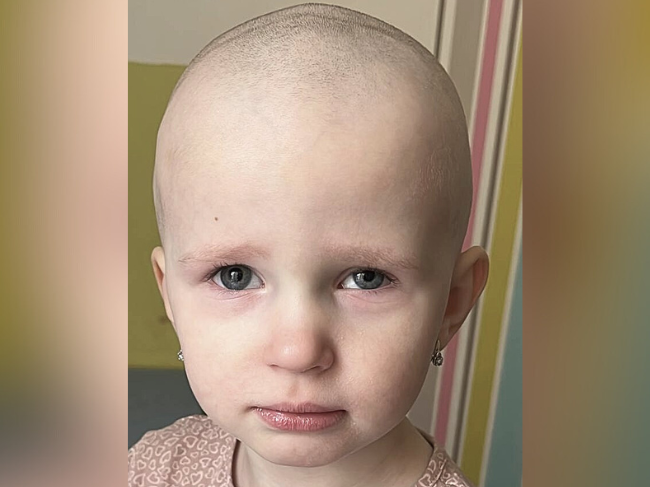
Ania’s parents were told that for the next years of her life, until she turned five, she would need monthly check-ups. Every four weeks, her little body would be examined, her scans reviewed, her blood drawn — all to make sure nothing new had taken hold. If, by God’s grace, no relapses appeared, the monitoring could be spaced to every three months. But the truth was unavoidable: for the rest of her life, Ania would be under permanent observation, because her risk of developing cancer would always remain high.
It was news that broke her parents’ hearts. To imagine their little girl growing up not with freedom, but with medical appointments as milestones — it was something no mother and father should have to endure. And yet, they had no choice but to carry it, for her sake.
Despite the diagnosis, life does not stop. Alongside the cancer risk, Ania has been fighting another battle — for her sight. On her right eye, she can see relatively well. But in her left eye, her vision is only about ten percent. For her parents, that ten percent is both a heartbreak and a lifeline. It is a reminder of what has been lost, and at the same time, of what might still be saved.
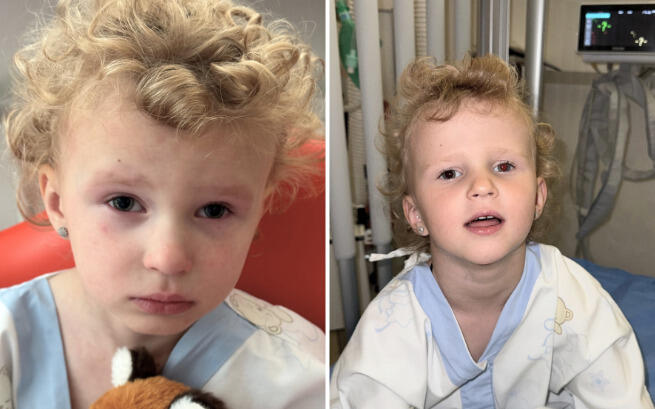
To give Ania any chance of improving her eyesight, daily exercises are required. Not quick or simple exercises, but long, grueling sessions of five to six hours each day. The method is difficult: to strengthen the weak eye, her parents must cover the healthy one with a patch, forcing her to use the eye that barely sees.
For Ania, it feels like darkness. She cries, she screams, begging her parents not to take away the only eye through which she can see clearly. To a child, it feels like cruelty. To her parents, it feels like torture too — to watch their daughter suffer in order to heal. But they know it is necessary. If there is even a chance of regaining part of her vision, they must try. And so, day after day, they hold her through the tears, whispering promises that it will help, reminding her of her strength.
Ania is more than her diagnoses, more than her struggles. She is a child who loves life. She loves to play with other children, to laugh, to run, to discover the world around her. She has a deep affection for animals and talks often about her dream: one day, to have a dog of her own. Her parents have promised her that when she is healthy, when the doctors finally say the danger is past, they will make that dream come true. They will bring home a puppy, a companion to remind her every day that joy still exists, that love and loyalty can heal in ways medicine cannot.
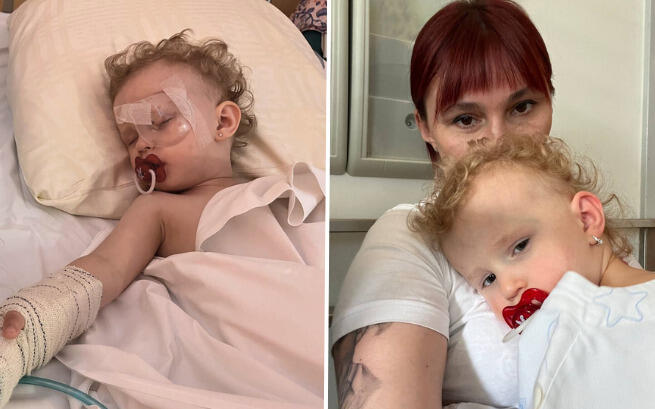
Her story is not only one of suffering, but of resilience. Every hospital stay, every tear-filled therapy session, every sleepless night has been endured with the hope of a brighter tomorrow. Her parents cling to that hope with everything they have. They believe, truly and deeply, that Ania can overcome this disease. They believe that one day she will not only survive, but thrive, living a happy, ordinary life filled with laughter, friendship, and freedom.
But the road is long, and the burden heavy. Treatments, therapies, scans, travel to specialists — all of it comes with immense financial cost. Much of what Ania has received so far has been funded by the family themselves, stretching every resource, every bit of strength. Some of the most important treatments and surgeries were possible only because of the generosity of others — people who believed in Ania’s fight and gave what they could to help.
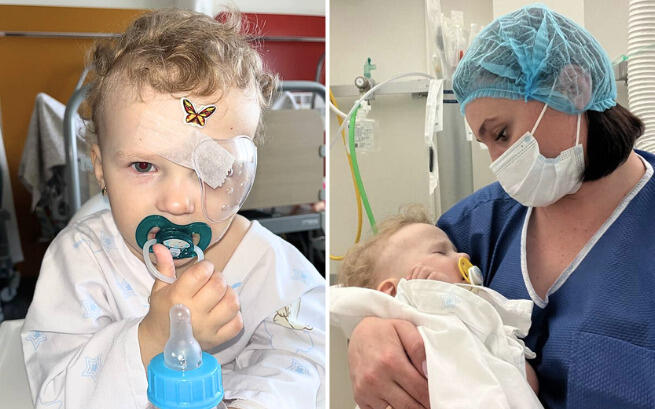
Now, her parents are reaching out once more. The fundraising campaign that supports her therapies is nearing its end, but it is not yet complete. Just a little remains, but without it, they cannot continue the next crucial steps of her care. And so they ask, humbly and with hope: please help us finish what we started.
Every contribution is not just money. It is a lifeline. It is another day of exercises, another specialist appointment, another chance for Ania to keep moving forward. It is a way to give a little girl the gift of sight, of health, of life itself.
To those who have helped already, her parents say thank you — a thousand times over. To those who may yet help, they say: your kindness could be the difference between fear and hope, between despair and healing.
Because Ania is not just a patient. She is a little girl with a smile that can melt hearts, a laugh that rings like music, a dream of holding a dog in her arms. She is a daughter, a sister, a friend. She deserves the chance to grow up, to live fully, to write her own story beyond hospital walls.
Her parents hold on to the belief that with enough care, enough support, enough love, she will get there. And one day, when the battle is behind her, Ania will run across the yard with her dog by her side, laughing in the sunlight, her life no longer defined by sickness, but by joy.
Until then, the journey continues. With courage. With faith. With the hope that together — family, doctors, community, and strangers who care — they can give Ania the future she deserves.
💛 Forever fighting. Forever hoping. Forever Ania.