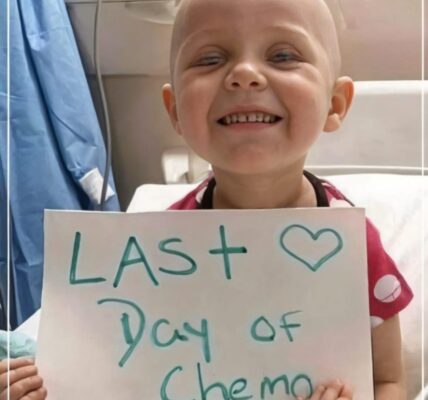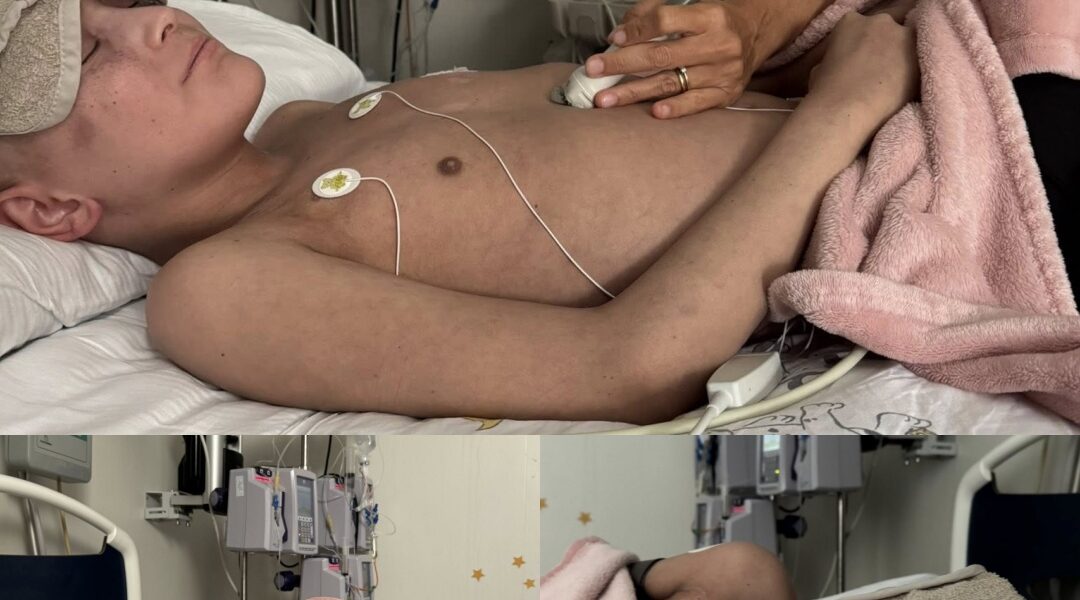

It was supposed to be an uneventful weekend, but for Branson and his family, peace feels like a distant dream, because even as the world outside moved quietly, inside the hospital room he fought against waves of exhaustion, unrelenting pain, and the kind of discomfort that no amount of shifting pillows, adjusting blankets, or whispered reassurances could ever soothe.

Day after day, his appetite has vanished, leaving meals untouched, his once-bright energy dimmed to nearly nothing, and his little body surrendering to sleep for hours on end—not the refreshing kind of sleep that restores, but the heavy, restless slumber that simply helps him escape the sharp edges of pain.

That pain, fierce and unforgiving, has become his constant companion, a shadow that never loosens its grip, joined by relentless stomach issues that churn and torment, robbing him of strength, keeping his parents on edge as they search for answers in every expression on his face and every weary sigh that slips past his lips.

Today, another battle looms as Branson is prepared to go under anesthesia for both a colonoscopy and an endoscopy, procedures that will search deep into his stomach and intestines, gathering samples that doctors hope will finally reveal the hidden cause of his suffering, tests his parents pray will not just explain, but also open the door to relief.

There is a fragile flicker of good news—his white blood cell count has climbed to 2,900, a number that might seem ordinary to anyone else but to a family walking this brutal cancer road, it feels like a small torch burning against the darkness, a reminder that his body is trying, even when he feels too weak to fight.

But cancer parents know too well how quickly hope can shift, how one promising number can crumble with the next blood draw, so they hold onto this progress gently, like glass that might shatter, while reminding themselves that every small rise is worth celebrating.

The adenovirus in his system remains high, stubborn and unyielding, a reminder that there are still unseen battles raging within, and though the doctors try to encourage them, the weight of waiting presses down hard, every hour stretched thin with worry and cautious hope.

One doctor explained that Branson’s lymphocytes should be seen like little antibiotics, mama cells rising to the call of battle, but they need time—ten to fourteen days to fully wake, grow strong, and march into the fight, and today marks day eight, so the prayers now are focused on those tiny unseen warriors, asking heaven to stir them awake, to give them the strength to go to war for their boy.

And then there is the heartbreak of his vision, the loss that still feels unreal; during his time in the ICU he suffered a retinal hemorrhage, leaving blood behind his eyes that now clouds his sight, and because his immune system is so fragile, his body cannot yet clear that blood, leaving him trapped in darkness where once he saw the world.

The deepest prayer of all is that as his immune system rebuilds, as those warrior cells awaken, his body will slowly, gently begin to heal, absorbing the blood, restoring the light to his eyes, returning to him the gift of vision that every child deserves, and his parents cling desperately to that hope.

For now, they live in the trenches—raw, relentless, exhausting trenches where each day feels heavier than the last, where fear often sits beside them, but where love and faith still hold them up when their knees feel too weak to stand.

They lean on the prayers of others, on messages of encouragement sent from near and far, on the reminders that they are not alone in this fight, and every note, every whispered prayer, every ounce of love sent their way becomes another layer of strength holding them steady in the storm.

In moments of silence, as machines hum and nurses move softly around the room, Branson’s parents bend low, pressing their foreheads against his, whispering promises that he is not alone, that every tear, every battle, every sleepless night is carried together, and that he is surrounded by a love stronger than any disease.

Outside these walls, the weekend may have passed quietly, but inside, time is measured differently—by blood counts, test results, prayers whispered at midnight, and the unshakable faith that tomorrow could bring healing, that better days are on the horizon, even when today feels unbearable.

And so, with tired hearts and trembling hands, they continue to ask for prayer—prayers for strength, for healing, for answers, for vision, for life itself, because they believe in the power of prayer, they believe in the God who hears, and they believe in the love of a community that refuses to let them walk this path alone.

“Thank you for standing with us,” they write, gratitude spilling through their words despite the heaviness, “we feel every single prayer, every message, every ounce of love you send our way, and it is what carries us through these days when we have no strength left of our own.”


For Branson, for his parents, for every person who loves him, this journey is far from easy, but love remains the anchor, hope remains the flame, and faith remains the hand that steadies them as they continue through the trenches, one day, one prayer, one breath at a time.
372 Days of Waiting, One Moment of Joy.233

For 372 days, he had waited.
Every morning, as the sunlight filtered through the shelter windows, he would sit at the edge of his kennel and watch the world pass by. Families strolled down the rows of cages, laughing, pointing, excited. Little hands pressed against the glass for tiny puppies, children coaxing timid dogs forward with soft whispers. He wagged his tail anyway, just in case. Maybe today, someone would see him. Maybe today, someone would choose him.
But day after day, week after week, the visitors moved on. They smiled at him, patted the kennel bars, said “good boy,” but then continued down the line. They were looking for something specific—a smaller dog, a fluffier coat, a breed they’d dreamed of. And each time, he watched them leave, curling back into the corner of his kennel, ears drooping, eyes searching for a spark of hope.

Still, he never stopped hoping. Somehow, somewhere deep inside, he knew the right person would come.
One quiet afternoon, when the shelter had slowed down and the hum of fluorescent lights filled the air, a man walked in. He didn’t rush, didn’t scan the kennels with a checklist. He moved slowly, deliberately, as if he were letting the shelter itself guide him. And then he stopped. Right in front of the cage. Not a word, not a sound—just stillness.
The dog tilted his head, ears pricking up. The man knelt, letting the dog see him at eye level, letting him choose. And for the first time in what felt like forever, the dog hesitated—not in fear, but in careful consideration. Then, slowly, he stepped forward. He pressed his head into the man’s lap, sighing with a weight that had been carried for far too long. Relief, recognition, trust—all wrapped into that small gesture.
It was in that moment that the dog knew: he had been seen. Truly seen. And the man, too, understood that this wasn’t just any dog—it was the dog he had been waiting for, though he didn’t realize it until now.
By the time they left the shelter, the sun was dipping low, casting a warm glow over the parking lot. The dog looked up at the man, tail wagging with quiet joy, and took a final glance at the cold, lonely kennels that had been his world for so long. No more cold floors. No more endless days of being passed by. Just a warm bed, a name, and a best friend who had finally come.
Some things in life are worth waiting for. Some moments, no matter how long the wait, are worth every lonely day, every hopeful glance, every sigh of longing. And this—this was one of them.