
Why Saddam Hussein Was Publicly Executed on Live TV *WARNING Disturbing Historical Content – Yo
For nearly 24 years, Saddam Hussein ruled Iraq with absolute power and a system built on fear. But in December 2006, the same man stood on a scaffold in Baghdad, sentenced to death after a public trial. A president who survived wars and international pressure ended up executed on camera for the world to see.
To understand why he ended up on a gallows, we have to go back long before he became the face of Iraq. Saddam was not someone who suddenly grabbed power overnight. He had been climbing toward it since he was a young man. His rise really began after the Ba’ath Party coup on July 17, 1968, when the Arab Socialist Ba’ath Party seized control of Iraq.
Ahmed Hassan al-Bakr became president, and Saddam, who was related to him through clan ties from Tikrit, quickly became one of the most powerful men in the country. Even though he did not hold the top title at first, he controlled key parts of the government, especially internal security. Throughout the 1970s, Saddam focused on strengthening the state’s security structure.
He helped build and expand the Mukhabarat, Iraq’s intelligence service, along with other security bodies like the General Intelligence Directorate and the Special Security Organization. These agencies monitored political rivals, army officers, religious leaders, and even ordinary citizens. Informers were everywhere. People learned quickly that private conversations were never truly private.
At the same time, Saddam shaped Iraq’s image. In 1972, Iraq nationalized the Iraq Petroleum Company, taking control of its oil industry from foreign interests. Oil prices rose sharply after the 1973 oil crisis, and Iraq’s revenues increased dramatically. Billions of dollars flowed into the country during the 1970s.
Saddam used that money to fund infrastructure projects, literacy campaigns, healthcare expansion, and modernization efforts. On the surface, Iraq looked like it was progressing fast. Education improved. Roads, hospitals, and schools were built. This helped Saddam gain public support, especially among urban Iraqis. But behind that progress was a system built on total control.
By the mid-1970s, Saddam had already shown how far he was willing to go against opponents. In 1974 and 1975, the Iraqi government crushed a Kurdish rebellion in the north. The conflict ended after the Algiers Agreement in March 1975 between Iraq and Iran, where border disputes were temporarily settled.
Once Iran stopped supporting Kurdish fighters, Baghdad moved hard against them. Thousands were displaced. Villages were destroyed. This was an early sign of how Saddam dealt with resistance. When President Ahmed Hassan al-Bakr began facing health problems in the late 1970s, Saddam’s influence only grew stronger.
On July 16, 1979, al-Bakr resigned, officially handing power to Saddam. From that day forward, Saddam was president, chairman of the Revolutionary Command Council, prime minister, and commander-in-chief of the armed forces. He concentrated all major roles in his own hands. But what happened just days later showed the world exactly what kind of ruler he would be.
On July 22, 1979, Saddam called a large meeting of senior Ba’ath Party members in Baghdad. During that gathering, he announced that a conspiracy had been uncovered within the party. A list of names was read out. Around 68 officials were accused of betrayal. Security officers entered the hall and began removing them one by one.
Many of those men were later executed after forced confessions and closed proceedings. The session was recorded and later shown publicly to send a warning across Iraq. From that moment, Iraq changed in a deep way. Saddam did not just rule through laws and institutions; he ruled through fear and loyalty to him personally.
He strengthened the Mukhabarat and created overlapping security agencies so no single group could challenge him. He placed trusted relatives and fellow clansmen from Tikrit into powerful positions. His half-brother, Barzan Ibrahim al-Tikriti, became head of the intelligence service and played a central role in suppressing opposition.
His cousin Ali Hassan al-Majid, who would later earn the nickname “Chemical Ali” for his role in the Anfal campaign against the Kurds in the late 1980s, rose through the ranks of the security forces and became one of Saddam’s most feared enforcers. Saddam also reshaped the military leadership. Officers were frequently rotated, promoted, or removed based on loyalty rather than skill.
Purges inside the armed forces ensured that no general could build an independent power base. The Republican Guard, an elite military unit, was expanded and kept especially loyal to him. At the same time, a massive personality cult began to grow. Saddam’s portraits appeared in schools, offices, and streets. Statues were built across Baghdad and other cities.
He was presented as a hero of Arab nationalism and a defender of Iraq’s pride. School textbooks were rewritten. The media praised him daily. The state carefully controlled newspapers, television, and radio. But Saddam did not rule quietly. He wanted to be seen as strong, unstoppable, larger than life. That ambition soon dragged Iraq into disaster.
On September 22, 1980, Saddam launched a full-scale invasion of Iran. Iraqi aircraft struck Iranian airbases, and ground forces crossed the border into Iran’s oil-rich Khuzestan province. Saddam believed Iran was weak after its 1979 Islamic Revolution, which had overthrown Shah Mohammad Reza Pahlavi and brought Ayatollah Ruhollah Khomeini to power.
Iran’s military had been shaken by purges and internal chaos. Saddam thought this was the perfect moment to strike. He expected a quick victory that would secure control over the disputed Shatt al-Arab waterway and position Iraq as the dominant power in the Persian Gulf. He thought it would be a short war. He was wrong.
Instead of collapsing, Iran mobilized. Hundreds of thousands of volunteers joined the fight, including young men inspired by revolutionary and religious messages. What followed became one of the longest and bloodiest conventional wars of the twentieth century. The Iran-Iraq War lasted eight brutal years, from 1980 to 1988.
The fighting included trench warfare, massive artillery battles, missile attacks on cities, and tanker attacks in the Persian Gulf. Both sides targeted oil facilities. Both sides attacked civilian areas during what became known as the “War of the Cities.” By the end, around one million people were dead or wounded across both countries. As the war dragged on, Saddam turned to increasingly brutal methods.
Iraq used chemical weapons during the conflict, including mustard gas and nerve agents like sarin and tabun. These weapons were used against Iranian troops, especially during major offensives in the mid-1980s. The international community was aware of these attacks, and United Nations investigations in 1984 and later confirmed the use of chemical agents.
Toward the end of the war, these weapons were also used inside Iraq against Kurdish civilians. The most infamous attack happened on March 16, 1988, in the town of Halabja, where chemical bombs killed an estimated 5,000 people in a single day and injured thousands more. Entire families died where they stood.
Images from Halabja shocked the world and later became key evidence against Saddam’s regime. The war drained Iraq’s economy at a terrifying pace. Oil revenues collapsed because oil facilities were damaged, and global prices fluctuated. Iraq spent hundreds of billions of dollars on weapons, ammunition, and military equipment.
Saddam borrowed heavily to fund the war effort, especially from Kuwait and Saudi Arabia, who saw Iraq as a shield against revolutionary Iran. By 1988, Iraq owed around $80 billion in foreign debt. The country that had enjoyed booming oil wealth in the 1970s was now financially exhausted. After years of stalemate and rising casualties, both sides were worn down.
On August 20, 1988, a United Nations-brokered ceasefire under UN Security Council Resolution 598 officially took effect. The borders largely returned to where they had been before the war. There was no clear winner. Saddam declared victory to his people, presenting himself as the defender of the Arab world against Iran.
But behind the speeches and parades, Iraq was financially broken, deeply in debt, and filled with families mourning their dead. And when a dictator is cornered by debt and pride, he looks for someone to blame. That someone would be Kuwait. On August 2, 1990, Iraqi forces invaded Kuwait. Around 100,000 Iraqi troops, supported by tanks and armoured vehicles, crossed the border in the early morning hours. Within two days, Kuwait City fell.
The ruling Emir, Sheikh Jaber al-Ahmad al-Sabah, fled to Saudi Arabia. Saddam quickly announced that Kuwait had become Iraq’s 19th province. Saddam publicly accused Kuwait of stealing Iraqi oil through slant drilling into the Rumaila oil field, which lies near the border. He also accused Kuwait of keeping oil production high, which pushed global oil prices down and hurt Iraq’s ability to repay its massive war debts.
But this was more than economics. Saddam wanted control of Kuwait’s vast oil reserves, which were among the largest in the world, and he wanted greater access to the Persian Gulf coastline. Controlling Kuwait would have dramatically increased Iraq’s oil power and regional influence. The world reacted fast.
On August 6, 1990, the United Nations imposed comprehensive economic sanctions through Security Council Resolution 661. The United States, under President George H. W. Bush, began building a military coalition. In total, 35 countries joined the effort, including the United Kingdom, France, Saudi Arabia, Egypt, and others. Hundreds of thousands of troops were deployed to Saudi Arabia under Operation Desert Shield to prevent further Iraqi expansion.
On January 17, 1991, Operation Desert Storm began. Coalition aircraft launched a massive bombing campaign targeting Iraqi command centers, air defenses, and military positions. For six weeks, Iraqi forces were pounded from the air. On February 24, coalition ground forces entered Kuwait and southern Iraq.
Within just 100 hours of ground combat, Iraqi forces collapsed. By February 28, 1991, Kuwait was liberated. Iraq’s defeat was humiliating and devastating. Thousands of Iraqi soldiers were killed, and many more were captured. Retreating Iraqi forces set fire to more than 600 Kuwaiti oil wells, causing environmental destruction that lasted months.
Much of Iraq’s military infrastructure was destroyed. The country faced crippling sanctions throughout the 1990s, which limited trade, froze assets, and restricted imports. Inside Iraq, anger and frustration exploded. In March 1991, Shiite uprisings broke out in southern cities like Basra and Najaf.
At the same time, Kurdish rebellions erupted in the north, especially around Erbil and Sulaymaniyah. Many Iraqis believed Saddam was weakened and could be overthrown. Instead, he responded with brutal force. Republican Guard units crushed the revolts. Helicopters and artillery were used against rebel-held cities. Tens of thousands were killed, and hundreds of thousands of Kurds fled toward the mountains near the Turkish and Iranian borders, creating a massive humanitarian crisis.
Despite the devastation, Saddam stayed in power. He tightened his grip again, relying on loyal security units and clan networks. International sanctions remained in place throughout the 1990s. Food shortages spread, medicine became scarce, and Iraq’s infrastructure deteriorated.
In 1996, the United Nations introduced the Oil-for-Food Programme, allowing Iraq to sell limited amounts of oil in exchange for humanitarian supplies. The program was meant to ease suffering among civilians. However, corruption followed. Members of Saddam’s inner circle benefited from smuggling and manipulation of contracts, while ordinary Iraqis continued to struggle with poverty and shortages.
Through all of this, Saddam survived. He controlled the security services, suppressed opposition, and projected strength through state media. Even after military defeat and economic collapse, he remained in the presidential palace. But the next turning point would not come from within Iraq. It would come after the September 11 attacks in the United States, when the global political climate shifted overnight. Nearly 3,000 people were killed in New York, Washington, D.C.
, and Pennsylvania on September 11, 2001. The shock was massive. President George W. Bush declared a global “War on Terror” and made it clear that the United States would go after not only terrorist groups, but also governments accused of supporting them or developing weapons of mass destruction.
In his January 2002 State of the Union address, Bush described Iraq, Iran, and North Korea as part of what he called an “Axis of Evil.” Iraq was back at the center of U.S. foreign policy. Iraq quickly came under the spotlight. Even though there was no proven operational link between Saddam Hussein and the 9/11 attacks carried out by al-Qaeda, U.S.
officials argued that Saddam’s history of aggression and use of chemical weapons made him too dangerous to ignore. The memory of the 1980s chemical attacks, especially Halabja in 1988, was repeatedly mentioned. The concern was that if Saddam still had chemical or biological weapons, he could pass them to extremist groups or use them again. U.S.
officials claimed Saddam possessed chemical and biological weapons and was trying to restart nuclear weapons programs that had been dismantled after the 1991 Gulf War. They argued he had violated United Nations resolutions since 1991, especially those requiring Iraq to fully disarm. The CIA and British intelligence presented reports suggesting Iraq had stockpiles of weapons and mobile biological labs.
Secretary of State Colin Powell presented intelligence claims to the United Nations Security Council on February 5, 2003, including satellite images and intercepted communications, arguing that Iraq was hiding prohibited weapons. Because of these concerns, the United Nations sent weapons inspectors back into Iraq in late 2002 under Resolution 1441.
The inspection teams were led by Hans Blix, head of the UN Monitoring, Verification and Inspection Commission, and Mohamed ElBaradei, director of the International Atomic Energy Agency. Their job was to search for chemical, biological, and nuclear weapons programs. They visited suspected sites, interviewed scientists, and reviewed documents. Inspections continued into early 2003.
Blix reported that Iraq was allowing access to many sites, but he also said cooperation was sometimes incomplete and slow. ElBaradei reported that there was no clear evidence of an active nuclear weapons program at that time. Despite this, the U.S. government said Iraq was not cooperating fully and argued that time had run out.
The Bush administration insisted that Saddam had failed to meet the final opportunity offered by the United Nations. Some countries, including France, Germany, and Russia, pushed for more time for inspections. But the United States and the United Kingdom decided to move forward. On March 20, 2003, the United States and coalition forces launched Operation Iraqi Freedom. The first strikes targeted leadership locations in Baghdad.
What followed was a large-scale bombing campaign often described as “shock and awe,” designed to overwhelm Iraqi command structures quickly. Cruise missiles and precision-guided bombs hit government buildings, communication centers, and military bases. Coalition ground forces entered Iraq from Kuwait in the south.
American units, including the 3rd Infantry Division and the 1st Marine Expeditionary Force, moved rapidly toward Baghdad. British forces focused on the southern city of Basra. Within three weeks, Iraqi forces collapsed again. Many units surrendered. Others abandoned their positions. On April 9, 2003, U.S. troops entered central Baghdad.
That same day, in Firdos Square, a large statue of Saddam Hussein was pulled down with the help of U.S. Marines and Iraqi civilians. Images of the statue falling spread across the world and became one of the most powerful symbols of the invasion. But Saddam himself had disappeared. There was no body. No official surrender. No clear sign of where he had gone.
The U.S. military quickly shifted focus from large-scale combat to tracking down former regime leaders. To make the search easier for troops, the Pentagon created a deck of playing cards featuring Iraq’s most wanted officials. Saddam Hussein was the Ace of Spades. For months, he moved between safe houses in the Sunni Triangle, a region north and west of Baghdad that included cities like Tikrit, Samarra, and Fallujah.
This area was known for strong tribal loyalty to Saddam and the Ba’ath Party. His hometown of Tikrit became a central focus. On December 13, 2003, U.S. forces launched Operation Red Dawn near the village of ad-Dawr, about 15 kilometers south of Tikrit. The mission involved members of the 4th Infantry Division and Special Operations units, including Task Force 121. They searched two sites code-named Wolverine 1 and Wolverine 2.
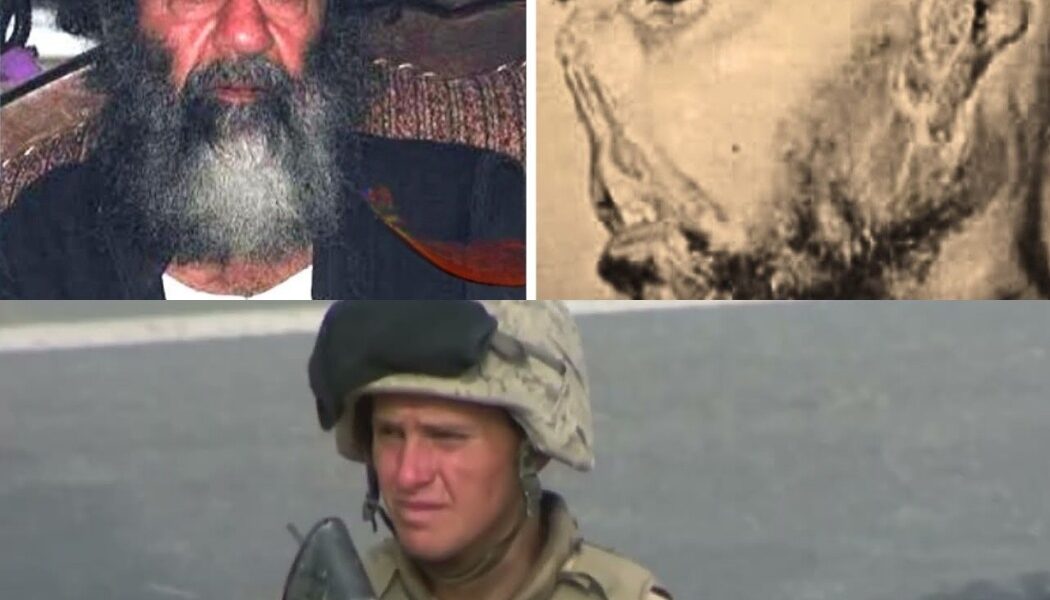
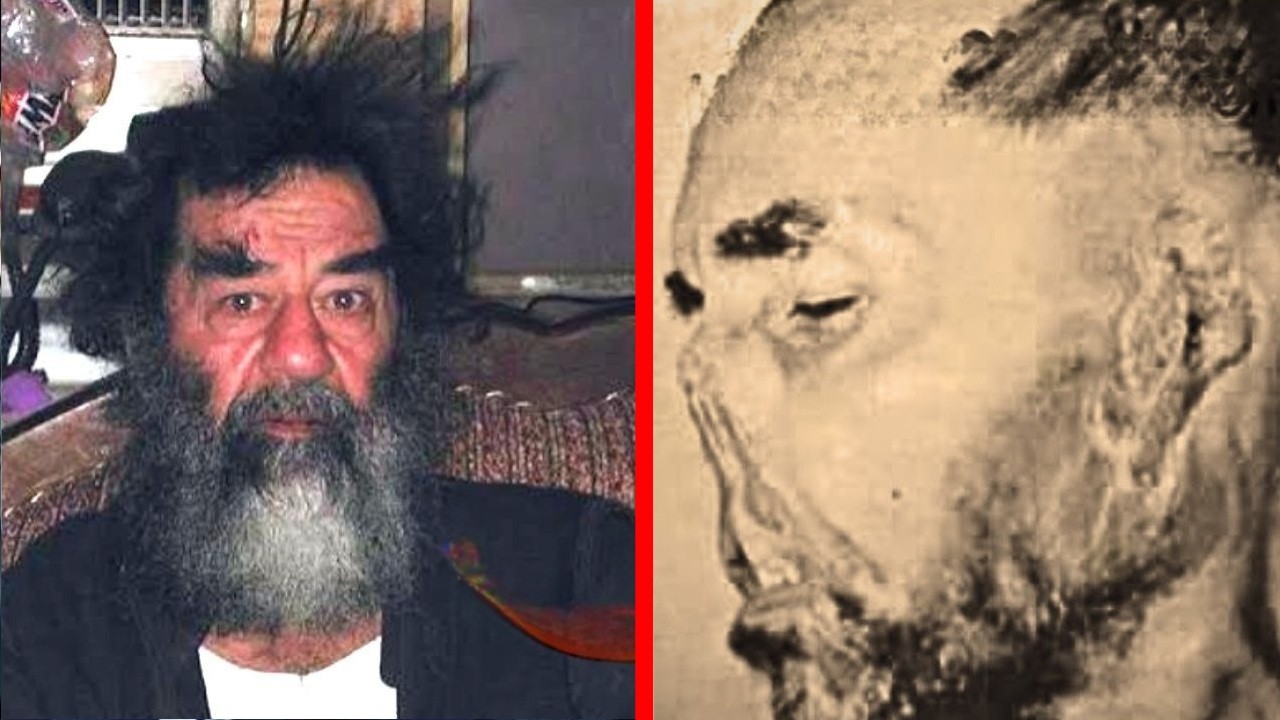
At first, nothing obvious appeared. Then soldiers noticed a small patch of disturbed earth near a farmhouse. They uncovered a narrow hole hidden beneath bricks and dirt. Inside was Saddam Hussein. The space was small, barely large enough for a person to lie down. It later became known as a “spider hole.
” Saddam was unshaven and looked tired, but he was alive. He was 66 years old at the time of his capture. He did not resist arrest. A pistol and some cash were reportedly found nearby, but he did not use the weapon. Capturing him was only the beginning. In December 2003, the Iraqi Governing Council established the Iraqi Special Tribunal to try Saddam and other former regime leaders for crimes against humanity, genocide, and war crimes.
The trial officially began on October 19, 2005, inside Baghdad’s heavily fortified Green Zone. And on November 5, 2006, Saddam was found guilty in the case of the Dujail Massacre of 1982. He was sentenced to death by hanging. The reason was that under Iraqi law, crimes against humanity carried the death penalty.
The Iraqi government argued that the scale and seriousness of Saddam’s crimes demanded the highest penalty available under national law. And once the sentence was confirmed, the execution had to be carried out within 30 days. The timing mattered. The execution took place just days before the Islamic holiday of Eid al-Adha, a major religious occasion marked by sacrifice and prayer. The government wanted to complete the process quickly.
In the early hours of December 30, 2006, Saddam Hussein was taken from his detention cell to an execution chamber in Baghdad. The location was inside a former military intelligence building in the Kadhimiya district, an area with strong Shiite significance. Security was tight. Iraqi officials oversaw the process.